



Catherine Deshayes «La Voisin»: The Affair of the Poisons, the Black Masses of Versailles, and the Pyres of Paris
Executive Summary
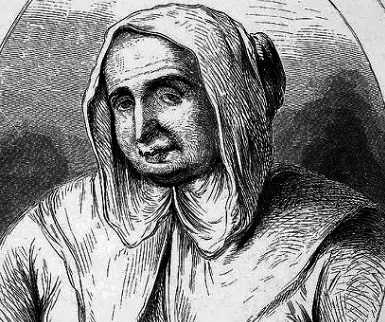
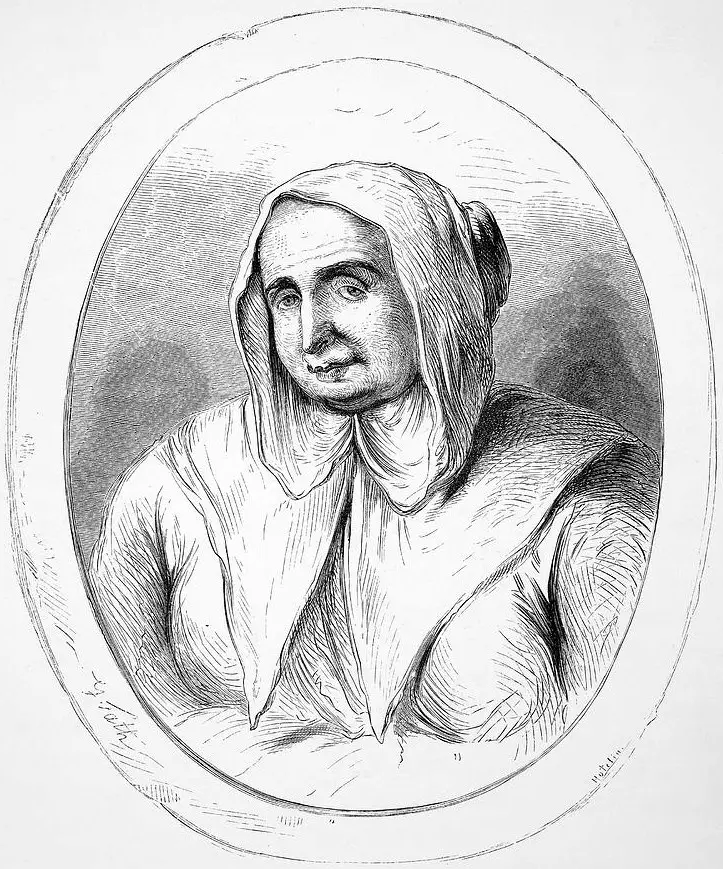
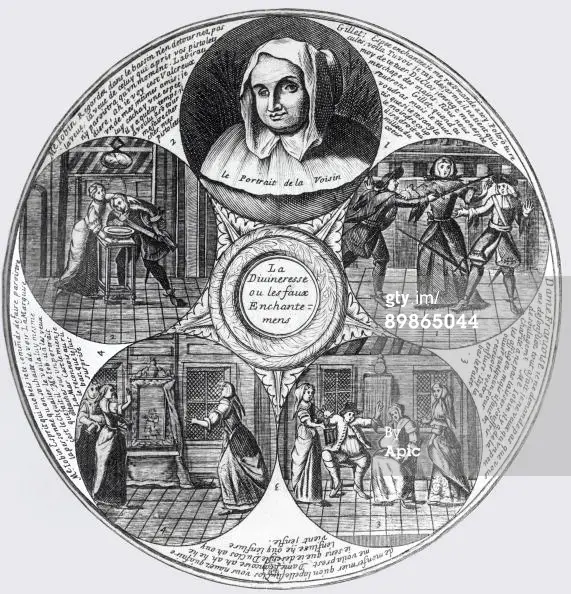
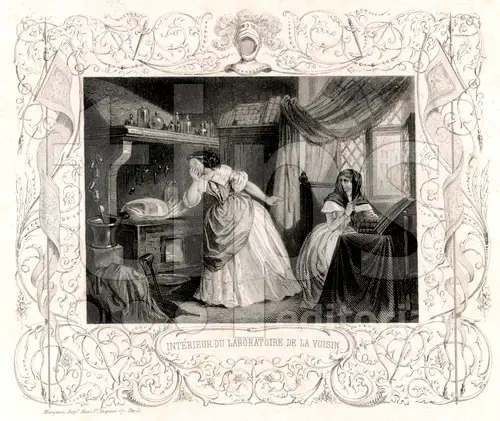
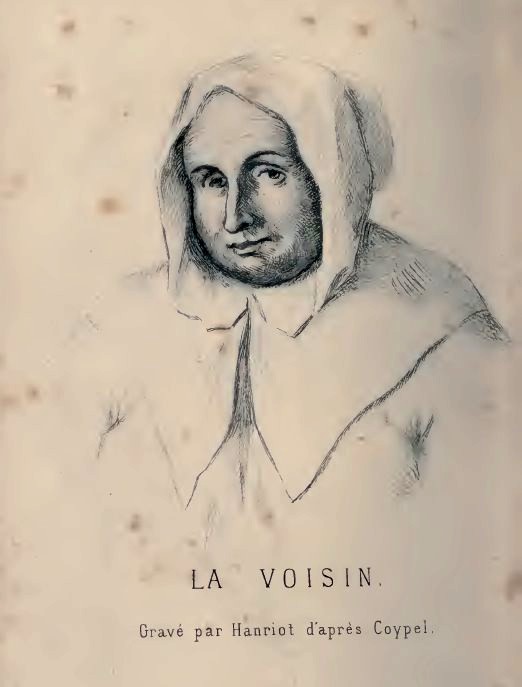
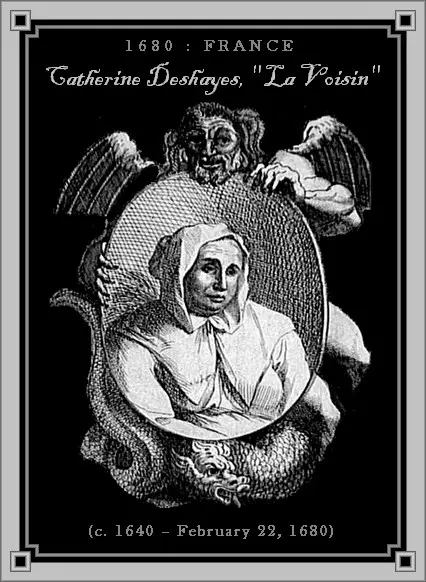
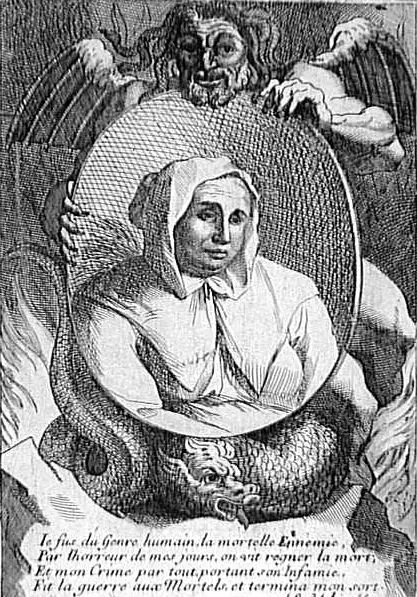
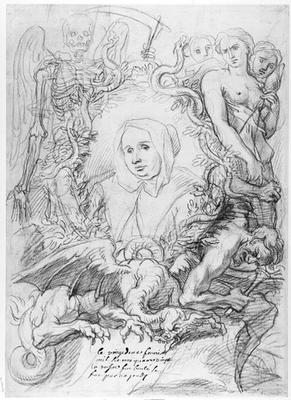
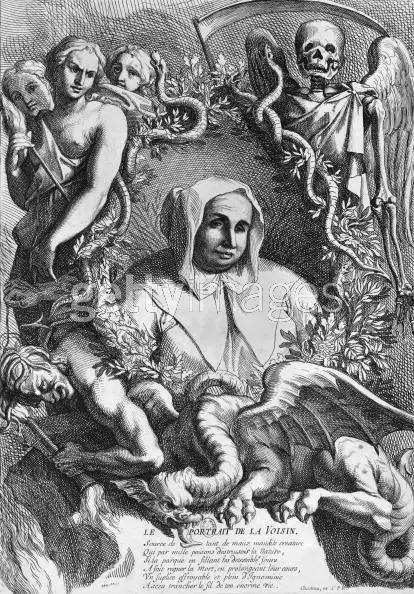
Catherine Deshayes (known universally by her married name Catherine Monvoisin or simply «La Voisin»; c. 1640 – February 22, 1680) was a French fortune-teller, palmist, midwife, and poison maker who served as the criminal mastermind and logistical nexus of the «Affair of the Poisons» (L'affaire des poisons), the most sensational political, judicial, and criminal scandal of King Louis XIV's court in the seventeenth century.
Operating under the cover of a chiromancer and spiritual advisor from her estate in Villeneuve-sur-Gravois, La Voisin built a sprawling clandestine enterprise supplying the highest echelons of Paris and Versailles aristocracy with secret abortions, aphrodisiac love philters, and «inheritance powders» (poudres de succession)—a court euphemism for lethal preparations of white arsenic, corrosive sublimate of mercury, and poisonous belladonna extracts used to eliminate unwanted spouses, romantic rivals, and wealthy elders. In league with apostate Roman Catholic priests such as the abbé Étienne Guibourg, La Voisin orchestrated sacrilegious black masses conducted over the nude bodies of court noblewomen serving as living altars, during which infants were ritually sacrificed and their blood mixed with consecrated hosts to secure royal favor.
La Voisin's arrest on March 12, 1679, outside the Church of Notre-Dame de Bonne-Nouvelle initiated a massive judicial inquiry led by Paris's first Lieutenant General of Police, Gabriel Nicolas de la Reynie, and tried by the special tribunal known as the Chambre Ardiente (The Burning Court). The investigation threatened the foundations of absolute monarchy when confessions revealed that La Voisin's most prominent client was Madame de Montespan, official royal mistress to the Sun King, who conspired with La Voisin to supply aphrodisiacs to Louis XIV and subsequently plotted regicide via a poisoned petition after being supplanted by a younger favorite. Convicted of witchcraft, poisoning, and homicide, Catherine Deshayes was burned alive at the stake in the Place de Grève on February 22, 1680. To avert royal dishonor, Louis XIV dissolved the tribunal, burned incriminating records, and imprisoned key witnesses for life under lettres de cachet.
Forensic & Criminological Matrix
| Parameter | Forensic Detail |
|---|---|
| Original Legal Identity | Catherine Deshayes |
| Married Identity | Catherine Monvoisin / Montvoisin |
| Public Identity | "La Voisin" / Catherine Deshayes |
| Criminological Aliases | "The Queen of the Sorceresses" / "The Poisoner of Versailles" |
| Date of Birth | c. 1640 (Paris, Kingdom of France) |
| Date of Execution | February 22, 1680 (Place de Grève, Paris; aged c. 40) |
| Criminological Classification | Contract Poisoner / Clandestine Abortionist / Occult Ritual Facilitator |
| Imputed Fatalities | Scores of aristocratic poisoning victims; hundreds of aborted fetuses and sacrificed infants |
| Criminal Motive | Massive financial lucre, court patronage, and occult power influence |
| Toxic Agents Used | "Inheritance powders" (arsenic trioxide, corrosive sublimate of mercury, antimony, cantharides, aconite, belladonna) |
| Operational Center | Mansion and gardens of Villeneuve-sur-Gravois / Rue Beauregard, Paris |
| Investigator and Magistrate | Gabriel Nicolas de la Reynie (Lieutenant General of Police of Paris) |
| Special Tribunal | Chambre Ardiente (The Burning Court, Arsenal of Paris) |
| Judicial Sentence | Convicted of sorcery, poisoning, and sacrilege; sentenced to death |
| Execution Method | Burned alive at the stake (Brûlée vive en place de Grève) |
From Chiromancy to the Poison Trade (1660–1675)
Around 1660, Catherine Deshayes married Antoine Monvoisin, a silk merchant and jeweler with a shop on the Pont-Marie in Paris. Following her husband's bankruptcy, Catherine supported the household by monetizing her skills in chiromancy, physiognomy, and astrology, arts she had practiced since youth.
Endowed with shrewd psychological insight and powers of observation, La Voisin transformed fortune-telling into a lucrative salon:
- She commissioned a ceremonial crimson velvet mantle embroidered with gold thread eagles at an extravagant cost of 1,500 livres to impress noble clients.
- Questioned in 1665 by priests of Saint Vincent de Paul's Congregation of the Mission, she defended her craft before Sorbonne theological professors as a natural divination gift, successfully dismissing ecclesiastical charges.
- In consultations, La Voisin identified three recurring demands among clients: winning unconditional romantic affection, expediting inheritances through family deaths, or disposing of husbands to remarry.
She expanded into clandestine midwifery and abortion services, terminating unwanted pregnancies for court ladies and bourgeois women using instruments and emmenagogues. Fetal remains were incinerated in an underground cellar furnace or interred in the gardens of her walled estate in Villeneuve-sur-Gravois.
The «Inheritance Powders»
Recognizing that talismans were insufficient for women seeking widowhood, La Voisin dispensed lethal "inheritance powders":
- Formulas adapted from Italian recipes perfected by Giulia Tofana (Aqua Tofana), composed of arsenic trioxide, corrosive sublimate of mercury, and powdered Spanish fly (cantharides).
- Odorless and tasteless, the toxins were added drop by drop to broths, wine, and pastries, inducing gradual gastrointestinal deterioration that seventeenth-century court physicians routinely diagnosed as gastritis, colic, or wasting fevers.
The Versailles Court of Miracles and the Black Masses
By 1670, La Voisin's salon became an elite underworld hub. By day, she held private audiences for high nobility; by night, she hosted lavish garden parties with violinists, attended by magistrates, aristocrats, and royal chambermaids.
To service clients seeking occult intervention, La Voisin organized a structured criminal syndicate:
- Magicians and Alchemists: Her lover and associate Adam Lesage (Adam Coeuret), who fabricated astrological talismans and staged rituals.
- Associate Poisoners: Catherine Trianon and Marguerite Joly, clandestine toxicologists supplying concentrated chemical poisons.
- Apostate Clergy: The elderly priest Étienne Guibourg (sacristan of Saint-Marcel), abbé Mariotte, and abbé Davot, who performed sacrilegious black masses.
The Demonic Liturgy of Guibourg
The rituals inverted traditional Catholic sacraments:
- A noblewoman lay completely naked across an altar draped in black velvet, her limbs extended while holding black wax tapers.
- A chalice was placed upon the woman's abdomen. Abbé Guibourg, clad in an inverted chasuble embroidered with blasphemous symbols, chanted invocations to infernal spirits like Astaroth and Asmodeus.
- In documented extreme rituals, an infant—purchased from destitute unwed mothers—was brought forward: Guibourg slit the infant's throat over the chalice, catching the blood to knead consecrated hosts mixed with powdered toads and cantharides.
The Montespan Connection and the Regicide Conspiracy
La Voisin's most influential and regular client was Françoise-Athénaïs de Rochechouart, Marquise de Montespan, official mistress to Louis XIV and mother of seven of his legitimized children.
- Winning the Sun King (1667): Assisted by her confidante Claude de Vin des Œillets, Montespan turned to La Voisin in 1667 to supplant the reigning royal favorite, Louise de La Vallière. Montespan served as the altar in black masses conducted by Mariotte and Guibourg in a house on the Rue de la Tannerie, secretly slipping aphrodisiac powders into Louis XIV's meals and wine. The scheme succeeded: that same year, the King made her his primary mistress.
- Waning Favor (1673–1679): As the King's affections drifted toward younger beauties (such as Mademoiselle de Fontanges), Montespan desperately returned to La Voisin, commissioning repeated black masses and more potent love potions.
- The Plot to Poison Louis XIV (1679): Realizing that the King was completely captivated by the Duchess of Fontanges, Montespan plotted revenge. She conspired with La Voisin, Catherine Trianon, and poisoner Bertrand to assassinate both Louis XIV and Fontanges.
- They engineered a poisoned petition: soaking a written memorial in a volatile, corrosive contact poison designed to kill upon physical handling by the King at Saint-Germain-en-Laye.
- On March 5, 1679, La Voisin traveled to court to present the petition. However, crowds of petitioners prevented her from approaching the King directly; frustrated, she returned to Paris, instructing her daughter to burn the document while preparing an alternative plot.
The Notre-Dame Arrest and the Chambre Ardiente
Mounting suspicious deaths among the nobility and the 1676 execution of the Marquise de Brinvilliers had put Versailles on high alert. Louis XIV appointed Gabriel Nicolas de la Reynie, Lieutenant General of Police, to dismantle Paris's poison trade.
In January 1679, authorities arrested fortune-teller Marie Bosse, who drunkenly boasted of selling poisons to aristocrats. Under interrogation, Bosse exposed the underworld network, identifying Catherine Deshayes as its chief operator.
On Sunday, March 12, 1679, after attending mass at the Church of Notre-Dame de Bonne-Nouvelle, La Voisin was arrested by La Reynie's archers. Soon after, her daughter Marguerite Monvoisin, her lover Adam Lesage, abbé Guibourg, and dozens of confederates were detained at Vincennes.
The Chambre Ardiente Investigations
In April 1679, Louis XIV instituted the Chambre Ardiente (The Burning Court), an extraordinary royal tribunal meeting in the Arsenal of Paris:
- Arrest warrants were issued for leading court figures, including Olympe Mancini (Countess of Soissons), Marie Anne Mancini (Duchess of Bouillon), and Marshal François-Henri de Montmorency (Duke of Luxembourg).
- To prevent La Voisin from revealing royal connections and the regicide plot under interrogation, magistrates were instructed to withhold severe physical torture. La Voisin admitted to fortune-telling, illegal abortions, and selling poisons, but maintained silence regarding Madame de Montespan.
The Execution at the Place de Grève (February 22, 1680)
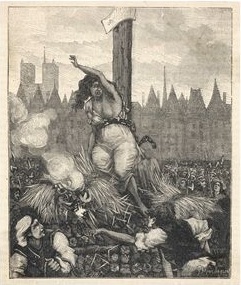
Following eleven months of proceedings, the Chambre Ardiente convicted Catherine Deshayes of witchcraft, poisoning, and sacrilege, sentencing her to be burned alive after making the amende honorable before Notre-Dame Cathedral.
On February 22, 1680, dressed in a white penitential shirt, barefoot, and heavily guarded, La Voisin was transported by cart to the Place de Grève:
- She rejected the crucifix offered by a Jesuit confessor and hurled curses at the surrounding clergy.
- Bound to the stake over a pyre of wood and straw, the executioner set the fire. La Voisin kicked away burning straw from her legs until smoke and flames engulfed her.
Royal Cover-Up and the Silence of Versailles
Rather than quelling the scandal, La Voisin's execution opened the floodgates:
- In July 1680, her daughter Marguerite Monvoisin, alongside Guibourg and Lesage, revealed to La Reynie Madame de Montespan's direct involvement in black masses and the assassination plot against the King.
- Stunned by the scandal and fearing for the legitimacy of his royal children, Louis XIV intervened personally: he suspended public sessions of the Chambre Ardiente, seized all compromising testimonies, and personally burned vital interrogation transcripts.
- The Chambre Ardiente was abolished in 1682, having investigated 442 suspects and condemned 36 to death. To silence surviving witnesses who could implicate Montespan (including abbé Guibourg and Marguerite Monvoisin), Louis XIV issued royal lettres de cachet, imprisoning them for life in chains inside remote fortresses (such as Besançon and Belle-Île) with strict orders to whip them should they utter the King's former mistress's name.
Selected Nominal Register: Key Figures in the Affair of the Poisons
| Name / Title | Role in the Syndicate | Connection to La Voisin | Judicial Disposition |
|---|---|---|---|
| Catherine Deshayes («La Voisin») | Ring mastermind, fortune-teller, abortionist, poison maker | Principal organizer | Burned alive at the Place de Grève (February 22, 1680) |
| Abbé Étienne Guibourg | Defrocked priest of Saint-Marcel | Officiated black masses and child sacrifices | Imprisoned for life via lettre de cachet at Besançon; died 1686 |
| Françoise de Rochechouart (Mme. de Montespan) | Official royal mistress to Louis XIV | Wealthiest aristocratic client; instigator of rituals and regicide | Shielded from trial by the King to protect the Crown; forced into retirement in 1691 |
| Adam Lesage (Adam Coeuret) | Necromancer and ritual magician | Lover and chief lieutenant of La Voisin | Sentenced to galleys for life; commuted to life imprisonment at Besançon |
| Marguerite Monvoisin | Daughter of Catherine Deshayes | Accomplice in disposing of fetuses and poison distribution | Incarcerated for life via lettre de cachet at Belle-Île-en-Mer |
| Marie Bosse | Rival fortune-teller and poisoner | Competitor who exposed syndicate during interrogation | Burned alive at the stake (May 8, 1679) |
| Gabriel Nicolas de la Reynie | Lieutenant General of Police of Paris | Lead magistrate and director of the Chambre Ardiente | Preserved official secret case dossiers |