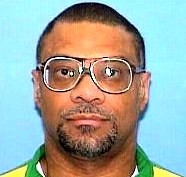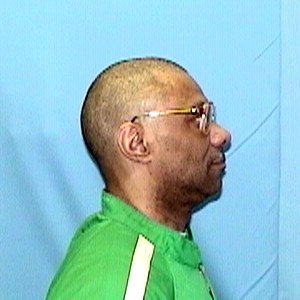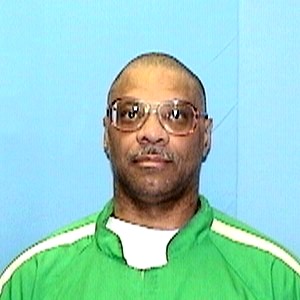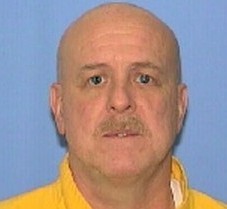



Forensic & Criminological Matrix
| Parameter | Forensic Detail |
|---|---|
| Forensic Heading / Aliases | The I-57 Killer |
| Legal Identity | Henry Brisbon Jr. |
| Confirmed Victims | 4 (three in 1973, one in correctional custody in 1978) |
| Attributed / Indicted Victims | 4 |
| Active Timeline | 1973 - 1978 |
| Jurisdiction / Area of Operations | Illinois, United States |
| Criminological Classification | Serial / Institutional Murderer |
| Forensic Modus Operandi | Highway vehicle ambushes, armed coercion, sexual assault, and summary executions; subsequent lethal stabbing inside maximum-security prisons |
| Weapon / Mechanism of Death | 12-gauge pump shotgun, improvised sharp instruments (shanked soup ladle handle) |
| Motive / Behavioral Dynamics | Antisocial personality disorder, severe misanthropy, and entrenched racial hostility |
| Judicial Outcome | Sentenced to 1,000 to 3,000 years imprisonment, serving a life sentence within the Illinois Department of Corrections |
1. Background and Profile
Henry Brisbon Jr. was born in 1956 in Illinois as the third of thirteen children. His upbringing was heavily influenced by his strict father, a follower of the Black Muslim movement who indoctrinated his children with strong racial animosity toward white people. Over time, this early conditioning evolved into an absolute and generalized misanthropy. In clinical interviews, Brisbon stated that as he matured, he simply "didn't like anybody," exhibiting a cold, detached, and profoundly antisocial behavioral pattern devoid of affective empathy.
2. Crime Spree and Modus Operandi
The culmination of his violent street crimes occurred on the night of June 3, 1973. Acting alongside accomplices, Brisbon forced a car off Interstate 57 (I-57) in southern Cook County, Illinois. The female driver was ordered out, stripped, and led past a barbed-wire fence, where Brisbon thrust a 12-gauge shotgun into her body and discharged it, finishing her off with a blast to the throat.
Less than an hour later, the group ambushed a second vehicle carrying an engaged couple. Forcing them to lie on the shoulder, Brisbon stated, "Kiss your last kiss," before shooting both in the back. Their total loot from these horrific crimes amounted to $54, two watches, and two rings. Years later, while incarcerated, Brisbon proved his violent volatility remained unchecked by murdering a fellow inmate at Stateville Correctional Center in 1978 using a sharpened soup ladle handle.
3. Investigation and Arrest
The investigation into the I-57 murders mobilized local and state law enforcement due to the extreme brutality and random nature of the highway attacks. Rigorous evidence gathering, witness testimonies, and ballistic forensics enabled prosecutors to successfully build a solid case against Brisbon and his co-conspirators, leading to their prompt apprehension.
4. Legal Proceedings and Outcome
Brisbon was brought to trial in 1977 following the reinstatement of the death penalty in Illinois. Because of legal technicalities regarding capital punishment retroactivity, the presiding judge imposed a staggering sentence of 1,000 to 3,000 years in prison. Throughout his confinement, Brisbon engaged in numerous assaults against guards and inmates, culminating in his trial and conviction for the 1978 prison murder, cementing his status as one of the most incorrigible offenders in the state's penal history.
5. Psychiatric Evaluation and Outcome
Forensic psychiatrists and prosecutors, such as Edward Petka, characterized Brisbon as a walking testament of severe psychopathy and extreme antisocial behavior. Refusing to show remorse, Brisbon maintained a defiant attitude, describing himself simply as an antisocial individual. His case remains a chilling study in predatory violence and institutional incorrigibility within the American criminological record.