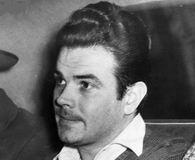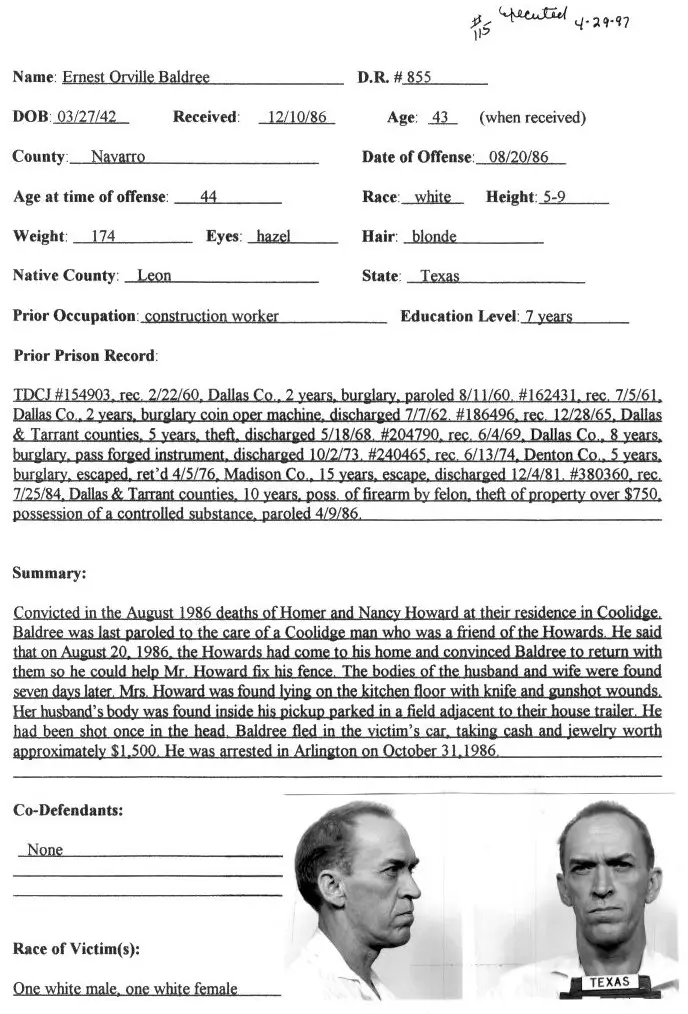




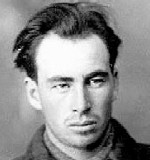
Forensic & Criminological Matrix
| Parameter | Forensic Detail |
|---|---|
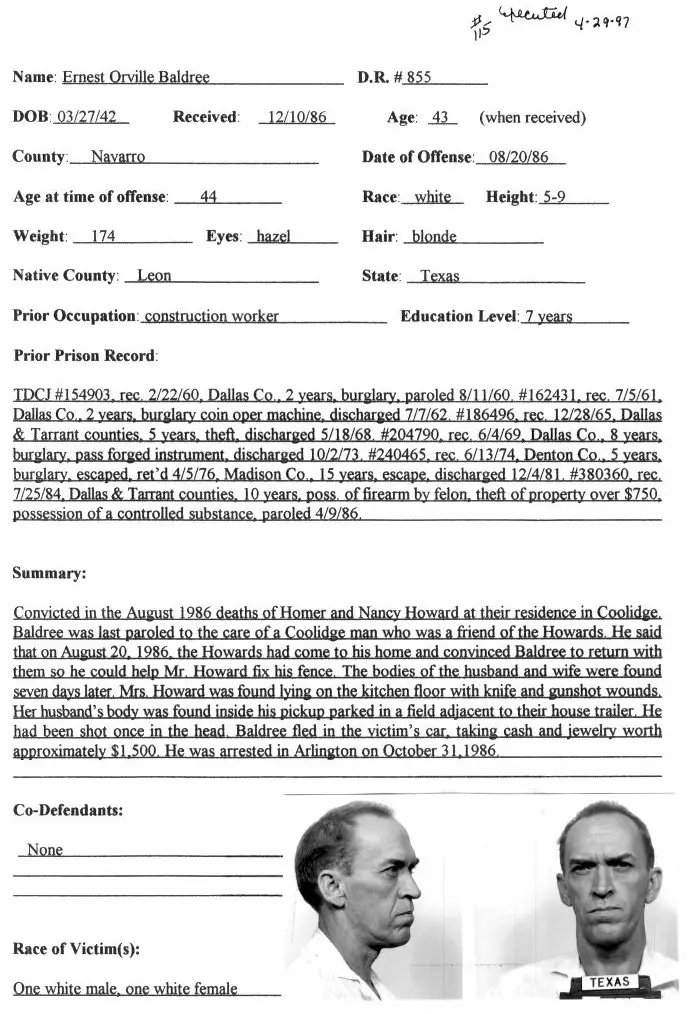
| Forensic Heading / Aliases | Ernest Orville Baldree |
| Legal Identity | Ernest Orville Baldree |
| Confirmed Victims | 2 (Homer and Mrs. Howard) |
| Attributed / Indicted Victims | 2 |
| Active Timeline | 1986 |
| Jurisdiction / Area of Operations | Navarro County, Texas, United States |
| Criminological Classification | Profit-motivated murderer / Murder during the commission of a robbery |
| Forensic Modus Operandi | Targeting acquaintances, committing homicides for financial gain, and stealing personal property and vehicles (white Cadillac) subsequently fenced or offered for sale. |
| Weapon / Mechanism of Death | Firearm / Blunt force trauma (capital murder trial records) |
| Motive / Behavioral Dynamics | Financial gain and asset theft |
| Judicial Outcome | Sentenced to death on December 8, 1986, by the 13th Judicial District Court of Navarro County, Texas; executed in 1997 following exhausted federal habeas corpus appeals. |
1. Background and Profile
Ernest Orville Baldree was born in 1942 in the United States. Operating primarily within the state of Texas, his criminal background reflected a progression toward acquisitive crimes and severe violence driven by financial desperation and criminal association.
2. Crime Spree
In 1986, Baldree murdered Homer Howard and his wife in Navarro County. His modus operandi centered on exploiting personal acquaintanceships to gain access, committing the homicides, and fleeing with valuable property, jewelry, and the victims' white Cadillac, which he attempted to liquidate to local buyers.
3. Investigation and Manhunt
Law enforcement agencies in Navarro County spearheaded a rigorous investigation that linked Baldree to the stolen property. Witnesses, including individuals approached to buy the jewelry and vehicle, provided crucial circumstantial and direct evidence. Although several witnesses later submitted recantation affidavits alleging police coercion during the initial investigation, state and federal authorities corroborated the original testimonies.
4. Legal Proceedings and Outcome
On December 8, 1986, a Navarro County jury convicted Baldree of capital murder and sentenced him to death. His appellate team spent a decade filing federal habeas corpus petitions, arguing prosecutorial misconduct and coerced witness statements. The U.S. Court of Appeals for the Fifth Circuit ultimately denied relief in late 1996, affirming the validity of the state court's factual findings.
5. Psychiatric Evaluation and Final Disposition
Baldree's legal challenges failed to overturn his conviction. Having exhausted all judicial remedies under state and federal jurisdiction, Ernest Orville Baldree was executed in Texas in 1997.