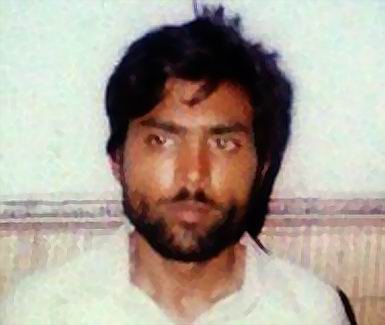



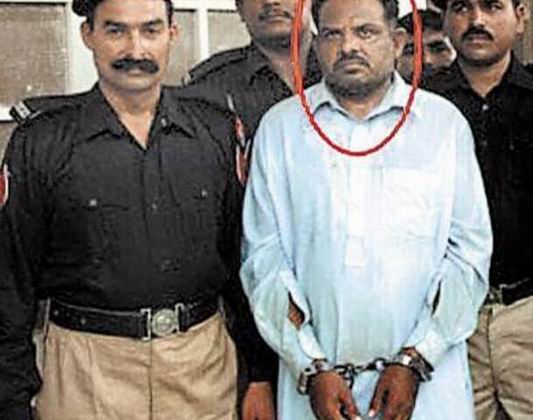
Amir Qayyum: «The Brick Killer» of Lahore
Executive Summary
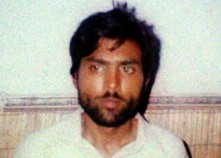
Amir Qayyum (born 1981), dubbed by Pakistani law enforcement and the press as «The Brick Killer», was a serial killer who terrorized the metropolis of Lahore—Pakistan's second-largest city—during the summer of 2005. Over three weeks between June 20 and July 19, 2005, Qayyum carried out at least 14 confirmed homicides and inflicted critical traumatic injuries on two survivors, exclusively targeting homeless men, day laborers, and vagrants sleeping on city sidewalks.
Qayyum's modus operandi was marked by primitive, lethal violence: prowling commercial avenues and markets in the predawn darkness, he sought out sleeping vagrants. He then gathered heavy concrete masonry blocks, building bricks, or curbstones—weighing between 10 and 35 kilograms (22 to 77 pounds)—and hurled them downward onto the victims' heads, crushing their craniums and causing instant fatal brain trauma. When questioned by police about his weapon choice, Qayyum replied with chilling detachment: «When free weapons are available on the street, why spend money?».
Qayyum rationalized his spree as blind retribution against society following the unsolved September 2003 shooting death of his maternal uncle, Dr. Shahid. His arrest on July 19, 2005, near the Azam Cloth Market—after being tackled by a private night watchman and local residents—sparked a fierce medical and ethical debate when Lahore police officials deliberately blocked forensic psychiatric evaluations to prevent an insanity defense. On May 10, 2006, an Anti-Terrorism Court (ATC) in Lahore convicted Qayyum and sentenced him to death by hanging.
Forensic & Criminological Matrix
| Parameter | Forensic Detail |
|---|---|
| Legal Identity | Amir Qayyum (transliterated as Aamir Qayum in police records) |
| Criminological Moniker | "The Brick Killer" |
| Year of Birth | 1981 (Lahore, Punjab Province, Pakistan) |
| Criminological Classification | Spree / Serial Killer / Psychopathic Social Retribution |
| Confirmed Fatalities | 14 homeless individuals murdered |
| Surviving Victims | 2 survivors with severe neurological trauma (including Ishtiaq) |
| Active Criminal Span | June 20, 2005 – July 19, 2005 (less than one month) |
| Geographic Locations | Lahore, Pakistan (Nasserabad, Rang Mahal, Walled City, United Christian Hospital, Shadbagh) |
| Victim Demographics | Adult homeless men, indigent laborers, and beggars sleeping outdoors |
| Modus Operandi | Crushing sleeping victims' skulls using masonry bricks, concrete curbstones, and paving slabs (10–35 kg) |
| Stated Motive | Pathological resentment against society following his uncle's unsolved murder in 2003 |
| Forensic Diagnosis | Antisocial personality disorder with severe psychopathy and substance dependence |
| Judicial Disposition | Sentenced to death by Anti-Terrorism Court in Lahore on May 10, 2006 |
| Penal Status | Inmate on death row within the Punjab correctional system |
Family Background and the Genesis of Grievance
Amir Qayyum was born in 1981 into an impoverished Lahore household. His father was completely blind, which severely compromised parental authority. From childhood, Amir displayed aggressive conduct: he was expelled from school for brawling with teachers and peers, and routinely assaulted his five sisters and brother at home. Unable to manage his violent temper, his family cast him out.
Amir was taken in by his maternal uncle, Dr. Shahid, a respected physician with whom he developed his only stable attachment. However, on September 25, 2003, unidentified gunmen ambushed Dr. Shahid's car, shooting him dead alongside his companion, Punjab Police Inspector Khwaja Rizwan.
The murder shattered Qayyum's life. Cut off from financial support, he drifted into a rented room in the working-class Shadbagh quarter, succumbing to opioid addiction and petty crime (arrested in 2004 for narcotics possession). Qayyum developed the conviction that society owed him vengeance, deciding that the city's most defenseless residents would pay for his misery.
The Reign of Terror in Lahore (June – July 2005)
During the sweltering summer of 2005, over 200,000 migrant laborers and homeless men slept outdoors on Lahore's sidewalks. Starting June 20, bodies began appearing at dawn with crushed skulls:
- Weapon Selection: Qayyum carried no knives or firearms. He scavenged road construction debris: kilned bricks, concrete slabs, and paving curbstones weighing 10 to 35 kilograms.
- Ambush Technique: Approaching sleeping victims wrapped in sheets, he raised the masonry block over his head and dropped it squarely onto the victim's skull, repeating the impact if movement persisted.
- Identity Stripping: Qayyum looted identity documents and pocket money, purposely reducing victims to anonymous John Doe remains.
- Dissociative Double Life: Senior Superintendent of Police (SSP) Aamir Zulfiqar revealed that after each murder, Qayyum washed cars at Liberty Market (earning 130 rupees daily), ate street food, and played street cricket with local youths without showing agitation.
The Capture in Rang Mahal (July 19, 2005)
The spree ended in the predawn hours of July 19, 2005:
- 23:00 (July 18): Qayyum searched for victims near United Christian Hospital (UCH). Finding a large rock chained to the ground as a traffic barrier, he aborted and walked to Kalma Chowk for a 15-rupee meal.
- 02:30 (July 19): In Nasserabad, he located a homeless man, crushed his skull with a paving slab, and took a rickshaw to the historic Walled City.
- 03:30: In the commercial district of Rang Mahal, he threw a heavy stone at the head of a sleeping man named Ishtiaq.
Private security guard Abdul Wakeel Khan witnessed the attack and charged Qayyum, shouting «Murderer!». Qayyum broke away and sprinted toward Azam Cloth Market, but the guard, off-duty police, and neighborhood residents—including Ahsan Khan—intercepted and pinned him to the ground. Ishtiaq survived with permanent brain damage.
Psychiatric Controversy and Judicial Verdict
Following his arrest, senior Lahore police commanders described Qayyum as a "ruthless psychopath" but took the controversial step of denying any official psychiatric evaluation:
"We will not allow him to be examined by psychiatrists. He shows no clinical madness, and an evaluation would only allow his lawyers to claim insanity and escape the rope."
— SSP Chaudhry Shafqat Ahmad, July 2005 press briefing.
This stance drew condemnation from Pakistani medical bodies. Renowned psychiatrists such as Dr. Haroon Rasheed and Dr. Saima Niaz protested that bypassing psychiatric evaluation violated fundamental due process.
The prosecution proceeded before Lahore's Anti-Terrorism Court (ATC). On May 10, 2006, the court sentenced Amir Qayyum to death by hanging, and he was placed on death row in Punjab.