



Forensic & Criminological Matrix
| Parameter | Forensic Detail |
|---|---|
| Forensic Heading / Aliases | Edward Adams, "Eddie" |
| Legal Identity | Edward J. Adams (born W. J. Wallace) |
| Confirmed Victims | 7 homicides (including three Wichita police officers) |
| Active Timeline | 1920 - 1921 |
| Jurisdiction / Area of Operations | Kansas, Missouri, and Iowa, USA |
| Criminological Classification | Recidivist criminal / Armed robber and serial spree killer |
| Forensic Modus Operandi | Armed robberies of banks, trains, and commercial establishments, followed by violent escapes, indiscriminate shootings at law enforcement, and execution of uncooperative witnesses or civilians. |
| Weapon / Mechanism of Death | Short-range firearms (revolvers and pistols) and blunt-force trauma (pistol-whipping). |
| Motive / Behavioral Dynamics | Financial gain through predatory crime, antisocial psychopathy, severe impulsivity, and absolute disregard for human life. |
| Judicial Outcome | Fatally shot by police on November 22, 1921, after resisting arrest in Wichita, Kansas. |
1. Background and Profile
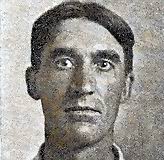
Edward J. "Eddie" Adams was born in 1887 on a farm in Hutchinson, Kansas, as W. J. Wallace. Following his biological father's early death and his mother's remarriage, Adams harbored intense disdain for his stepfather and physical labor. He trained as a barber and relocated to Wichita in the early 1900s, quickly abandoning legitimate employment to engage in bootlegging, petty theft, and grand larceny. His charismatic demeanor attracted a network of criminal associates and loose acquaintances, though his relentless illegal activities and infidelities caused his wife to leave him.
2. Crime Spree
Forming an alliance with outlaws through local connections, Adams established a gang that preyed on banks and trains across Kansas, Missouri, and Iowa, earning a reputation as a premier Midwest bandit at the onset of Prohibition. On September 5, 1920, during an attempted daytime robbery of a Kansas City gambling den owned by Harry Trusdell, a fierce shootout resulted in the death of gambler Frank Gardner. Identified as the gunman, Adams was sentenced to life imprisonment in February 1921.
3. Investigation and Arrest
While being transported to the Missouri State Prison, Adams executed a daring escape by leaping from a moving train. Days later, he partnered with Julius Finney to rob a general store and bank in Cullison, Kansas. Captured after a car crash near Garden Plain, he was incarcerated at the Kansas State Prison in Lansing. On August 13, 1921, Adams sabotaged the prison power plant and scaled the walls alongside fellow inmates, reconstituting the Adams Gang.
During an aggressive autumn crime spree in 1921, the gang struck banks in Rose Hill, Haysville, and Osceola. In Haysville, Adams brutally pistol-whipped 82-year-old James Krievell, who later succumbed to a fractured skull. His war against law enforcement escalated on November 5 when he cold-bloodedly murdered patrolman A.L. Young in Wichita over a disputed love interest. Following a lucrative Santa Fe train robbery yielding $35,000, a botched joyride on November 20 led to another shootout that killed patrolman Robert Fitzpatrick, followed by the murder of farmer George Oldham when Adams attempted to steal his vehicle.
4. Legal Proceedings and Outcome
The manhunt culminated on November 22, 1921, when Adams was recognized at a garage while planning to flee Wichita during fallen officer Fitzpatrick's funeral. Confronted by three officers, Adams opened fire, mortally wounding detective Charles Hoffman and striking officer Charles Bowman. Officer D.C. Stuckey, hiding behind a pillar, returned fire and killed Adams on the spot.
5. Psychological Evaluation and Aftermath
Dead at age 34, Edward Adams was held responsible for seven murders—including three Wichita police officers—committed in just over fourteen months of violent rampaging, while wounding at least a dozen others. Eighteen accomplices and hangers-on were arrested and prosecuted. Adams' corpse was publicly displayed at a local undertaking parlor, where over 9,000 morbid onlookers viewed the termination of the Midwest's most ruthless outlaw's reign of terror.