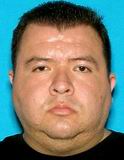
Forensic & Criminological Matrix
| Parameter | Forensic Detail |
|---|---|
| Forensic Heading / Aliases | The Micheng School Bomber |
| Legal Identity | Kuang Yingxue |
| Confirmed Victims | 5 fatalities (plus 43 injured) |
| Attributed / Indicted Victims | 5 fatalities |
| Active Timeline | April 3, 1998 |
| Jurisdiction / Area of Operations | Micheng Town, Midu County, Yunnan Province, China |
| Criminological Classification | Mass murderer / Workplace revenge bomber |
| Forensic Modus Operandi | Suicidal detonation of an improvised explosive device inside an institutional public ceremony |
| Weapon / Mechanism of Death | Improvised Explosive Device (IED) |
| Motive / Behavioral Dynamics | Aggrieved entitlement, workplace rejection, narcissistic injury from being passed over for a teaching award |
| Judicial Outcome | Prosecution terminated due to the perpetrator's death at the scene (Suicide) |
1. Background and Psychopathy
Kuang Yingxue was born in 1959 in Yunnan Province, China. He worked as an elementary school instructor at Micheng's No. 3 Primary School in Midu County. Within his professional circle, Kuang was known as a rigid, highly competitive teacher who placed immense personal value on official commendations and state recognition. Prior to April 1998, Kuang had been recommended for a prestigious regional award honoring outstanding educators, a citation that conferred social standing and professional promotion.
However, when the local educational committee finalized the list of honorees, Kuang was passed over. This rejection triggered severe narcissistic trauma and acute resentment. Lacking functional psychological coping mechanisms to process professional disappointment, Kuang began viewing his colleagues and regional superiors as targets for lethal retaliation.
2. Crime Spree and Forensic Modus Operandi
On April 3, 1998, an official commendation ceremony was convened in the town of Micheng to honor top-performing instructors from across Midu County. The assembly was attended by dozens of teachers, alongside senior municipal officials, including the Communist Party chief of Micheng town and the local vice-mayor.
Kuang Yingxue entered the assembly hall covertly carrying an improvised explosive device (IED). As the ceremony got underway and the audience gathered near the main stage, Kuang moved into position and detonated the charge. The violent explosion produced an intense blast wave and fragmentation field inside the enclosed space.
The blast instantly killed Kuang Yingxue and five fellow teachers. Furthermore, 43 individuals sustained severe injuries from blast trauma and flying debris, including 41 teachers, the Micheng town Communist Party chief, and the vice-mayor.
3. Police Investigation and Forensic Reconstruction
Following the blast, Chinese law enforcement units and emergency responders secured the scene at Micheng. Forensic explosive technicians examined the blast site, mapping shockwave patterns and recovering metallic and chemical residue from the improvised device.
Post-mortem examinations and forensic reconstruction pinpointed the blast epicenter to the exact physical location occupied by Kuang. Witness testimony from surviving staff members at No. 3 Primary School swiftly established Kuang's motive of workplace grievance, confirming he had acted alone in constructing and detonating the device.
4. Legal Proceedings and Outcome
Because Kuang Yingxue died instantly in the explosion, criminal charges could not be formally filed or adjudicated under Chinese procedural law. Official investigative reports issued by the Midu County public security department formally closed the criminal inquiry, attributing sole authorship and execution of the attack to Kuang.
5. Psychiatric Assessment and Criminological Conclusion
From a criminological perspective, Kuang Yingxue represents a classic case of a workplace mass murderer driven by catastrophic narcissistic injury. His decision to detonate an explosive device during an awards ceremony highlights a desire for maximum symbolic destruction at the precise moment and place where his professional recognition had been denied.