


Forensic & Criminological Matrix
| Parameter | Forensic Detail |
|---|---|
| Full Legal Name | Vincenzo Verzeni |
| Criminological Monikers | The Vampire of Bergamo, Il vampiro della Bergamasca, The Bottanuco Strangler |
| Nationality | Italian |
| Date of Birth | April 11, 1849, Bottanuco, Bergamo, Lombardy, Italy |
| Date of Death | December 31, 1918 (aged 69), in psychiatric custody |
| Incarceration Facility | Judicial Psychiatric Hospital of Montelupo Fiorentino / Civitavecchia Penal Colony |
| Confirmed Murder Victims | 2 (Giovanna Motta, aged 14; Elisabetta Pagnoncelli) |
| Documented Non-Fatal Attacks | At least 3 survivors (Barbara Pagnoncelli, Maria Galli, Maria Previtali) |
| Modus Operandi & Weapons | Manual and ligature strangulation using neckerchiefs, human biting, post-mortem abdominal evisceration, blood drinking (vampirism), necrophilia |
| Criminological Significance | Foundational historical case for modern criminal anthropology; extensively studied by Cesare Lombroso to develop his "Born Criminal" theory in L'Uomo Delinquente (1876) |
| Judicial Sentence | Life penal servitude with hard labor (lavori forzati a vita); spared the gallows due to psychiatric evaluation |
Clinical Profile and Family Antecedents
Vincenzo Verzeni was born into a severely impoverished peasant household in Bottanuco, Lombardy. His lineage documented multiple instances of cognitive disabilities, alcohol dependence, and epilepsy. From early adolescence, Verzeni exhibited extreme psychopathic behaviors, sexually torturing and eviscerating barnyard birds and livestock while deriving intense sexual arousal from the blood and death struggles of his animal victims.
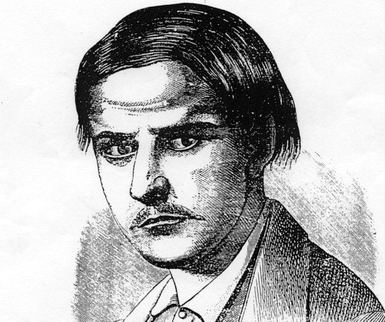
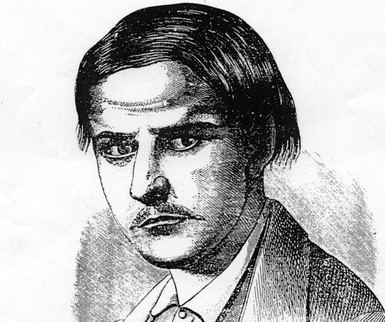
Physically, he exhibited marked cranial asymmetries, a prominent prognathic jaw, and low facial symmetry—physical anomalies later interpreted by Italian criminologist Cesare Lombroso as biological markers of degenerative atavism.
Crimes and Serial Pattern (1867–1872)
- Preliminary Assaults (1867–1869): Verzeni engaged in stalking behavior against young rural women. In 1867 he assaulted his sleeping cousin Marianna Verzeni, attempting asphyxiation. In 1869 he ambushed 16-year-old Barbara Pagnoncelli along a ditch, attempting to bite her throat and throttle her before being frightened off by approaching farmhands.
- The Murder of Giovanna Motta (December 8, 1870): 14-year-old Giovanna Motta was walking between Suisio and Bottanuco when Verzeni ambushed her. He dragged her into an isolated drainage ditch and throttled her into unconsciousness with a scarf. Once dead, he stripped her corpse, violently bit out sections of flesh from her legs and calves, drank the resulting blood, and performed abdominal evisceration, scattering intestines across nearby fields. Four days later, her butchered remains were discovered.
- Murder of Elisabetta Pagnoncelli (August 24, 1871): A peasant woman strangled in a cornfield, bearing heavy ligature marks, bite contusions across her chest, and severe genital mutilation.
- Assault on Maria Galli (1872): Verzeni tackled Maria Galli in broad daylight, biting into her throat while attempting strangulation. She fought back aggressively, survived, and delivered a precise facial description to the local Carabinieri.
Confession and Psychiatric Examination
Arrested in Bottanuco in early 1873, Verzeni confessed without reluctance or remorse, explicitly detailing his eroticized necro-sadism to investigators:
"I felt an immense pleasure while squeezing their throats. Feeling their dying gasps and their bodies cooling off under my hands brought a sensation far superior to any normal sexual act. I bit into Giovanna’s flesh and drank her blood because it produced an uncontrollable inner thrill."
The Bergamo Trial and Lombrosian Legacy
The 1873 trial in Bergamo attracted international scientific attention due to the forensic evaluation conducted by Cesare Lombroso, then-director of the Pesaro psychiatric asylum and pioneer of criminological positivism.
Lombroso examined Verzeni’s craniometry, reflexes, hereditary genealogy, and psychiatric profile. He diagnosed Verzeni with necrophilic sadism, cretinism, and congenital criminality, formulating the cornerstone of his seminal treatise L'Uomo Delinquente (The Criminal Man, 1876).
Verzeni was sentenced to life imprisonment with hard labor (ergastolo a vita), spending the remaining four decades of his life in prison institutions and at the Montelupo Fiorentino criminal asylum until his death in 1918.