


Forensic & Criminological Matrix
| Parameter | Forensic Detail |
|---|---|
| Birth Legal Name | Kristian Larssøn Vikernes |
| Subsequent Legal Names | Varg Vikernes (1993), Louis Cachet (naturalized in France) |
| Criminological & Artistic Monikers | Count Grishnackh, Burzum, The Count |
| Nationality | Norwegian |
| Date of Birth | February 11, 1973, Bergen, Hordaland, Norway |
| Current Penal Status | Paroled in May 2009 after serving 15.5 years of maximum 21-year statutory sentence |
| Date of Homicide | August 10, 1993 (approximately 03:00 AM) |
| Crime Scene | Apartment stairwell at Tøyengata 52, Oslo, Norway |
| Fatal Victim | Øystein Aarseth (Euronymous, aged 25), Mayhem guitarist and founder of Deathlike Silence Productions |
| Murder Weapon | Pocket folding knife and fixed blade (inflicted 23 stab wounds) |
| Associated Arson Convictions | Arson of three historic stave churches (Holmenkollen, Skjold, and Åsane); unlawful possession of 150 kg of commercial explosives |
| Judicial Sentence | 21 years imprisonment (lovens strengste straff, statutory maximum under Norwegian law in 1994) |
The Norwegian Early Black Metal Movement and the Inner Circle
In the early 1990s, Norway became the global crucible for second-wave black metal, an underground subculture characterized by raw production, pagan nationalism, and fervent anti-Christian ethos. The central figure of this movement was Øystein Aarseth, known stage-named Euronymous, lead guitarist of seminal band Mayhem and proprietor of the underground record shop Helvete ("Hell") in Oslo, which housed a radical extremist youth collective termed the Inner Circle or Black Circle.
In 1991, Kristian Vikernes, an 18-year-old musician from Bergen performing under the solo project moniker Burzum, adopted the pseudonym "Count Grishnackh" and entered Euronymous's inner circle. Vikernes recorded and released foundational Burzum albums through Aarseth's independent imprint, Deathlike Silence Productions.
Ideological fanaticism quickly crossed into domestic terrorism. Between 1992 and 1993, a wave of coordinated arson attacks consumed historic medieval Christian stave churches (stavkirke), irreplaceable cultural heritage dating to the 12th century. Vikernes personally incinerated Holmenkollen Chapel in Oslo, Skjold Church in Rogaland, and Åsane Church in Bergen, infamously utilizing a photograph of the charred ruins of Fantoft Stave Church as the cover art for his 1993 EP Aske ("Ashes").
Fractured Alliances and Escalating Paranoia
By mid-1993, relations between Vikernes and Aarseth collapsed into bitter animosity. Financial grievances were acute: Vikernes accused Aarseth of embezzling Burzum record royalties to cover personal operating debts of his boutique and label. Simultaneously, toxic rivalry raged over philosophical and social hegemony within the black metal scene.
Mutual paranoia reached a fever pitch. Intermediary acquaintances informed Vikernes that Aarseth had voiced plots to lure him to a remote woodland, subdue him with a stun gun, tie him to a tree, and torture him to death while recording the act on video. Concurrently, Aarseth voiced terror over potential physical violence from Vikernes.
The Nocturnal Slaying in Tøyen, Oslo
On the evening of August 9, 1993, Vikernes and associate Snorre Ruch (Blackthorn of the band Thorns) departed Bergen in a rented automobile, undertaking a 500-kilometer cross-country drive over the mountains to Oslo. Vikernes carried a pocket knife, a signed record contract, and car rental receipts to fabricate an alibi.
Arriving at Aarseth's apartment building at Tøyengata 52 in Oslo around 3:00 AM on August 10, Vikernes buzzed the intercom while Ruch waited at street level. Aarseth answered the door in his undergarments.
A heated physical altercation erupted inside the doorway. According to forensic reconstruction and witness testimony, as Aarseth turned and fled toward the kitchen, Vikernes drew his knife and stabbed him.
Bleeding profusely, Aarseth escaped into the communal apartment stairwell, screaming and knocking on neighbors' doors for assistance. Vikernes pursued him down the stairwell, repeatedly plunging the blade into his body. The chase concluded on the fourth-floor landing, where Aarseth collapsed backwards onto broken lightbulb glass; Vikernes drove a final thrust directly through the victim's cranium, penetrating the brain tissue.
The official forensic autopsy documented 23 stab wounds: two to the head, five to the neck, and sixteen to the back. Vikernes and Ruch immediately fled Oslo, driving back to Bergen that morning.
Judicial Trial, Sentencing, and Mass Weapon Seizure
The homicide sent shockwaves across Scandinavian society and led to the dismantling of the Black Circle. Oslo police detectives arrested Vikernes on August 19, 1993. A search of his residence in Bergen yielded a massive arms depot containing 150 kilograms of stolen military-grade explosives and thousands of rounds of ammunition, purportedly intended for attacks against Nidaros Cathedral in Trondheim and a leftist enclave in Oslo.
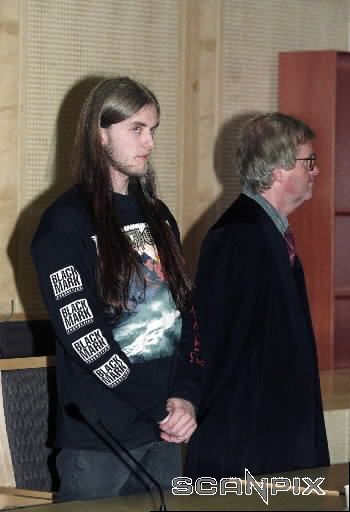
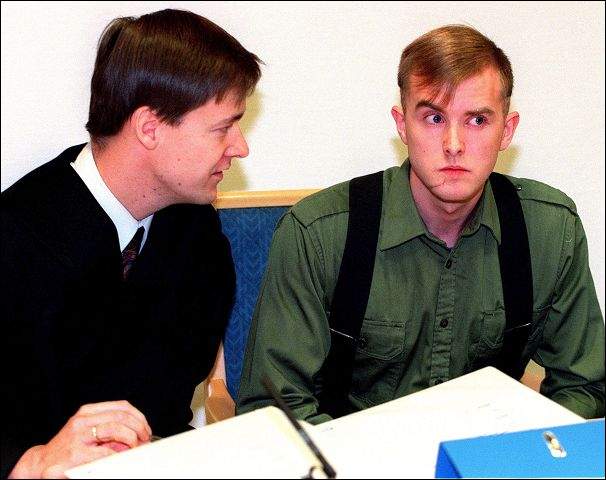
Vikernes stood trial at the Eidsivating Court of Appeal in Oslo in May 1994. He claimed self-defense, asserting Aarseth had initiated the assault. The judicial panel unanimously rejected his claim based on incontrovertible medical forensic evidence demonstrating the majority of fatal wounds were delivered from behind as the victim fled.
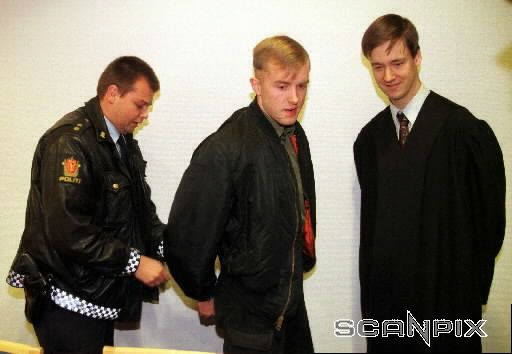
Vikernes was convicted of first-degree murder, the aggravated arson of three stave churches, and illegal explosives possession. He received 21 years of imprisonment, the absolute statutory maximum permissible under Norwegian criminal law. Co-defendant Snorre Ruch received eight years for complicity.
Incarceration, Prison Escape, and Post-Release Trajectory
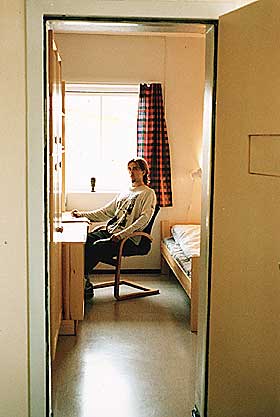
Throughout his confinement in Ullersmo and Tromsø high-security prisons, Vikernes continued producing ambient synthesizer music under the Burzum moniker and authored ideological texts. In October 2003, he failed to return from weekend leave, carjacking a vehicle at gunpoint before being intercepted by tactical police units armed with weapons and camouflage gear.
After serving fifteen and a half years of continuous incarceration, Vikernes was granted parole in May 2009. He relocated permanently to rural France with his family, legally changing his name to Louis Cachet.