Forensic & Criminological Matrix
| Parameter | Forensic Detail |
|---|---|
| Forensic Heading / Aliases | None |
| Legal Identity | George Victor Townley |
| Confirmed Victims | 1 |
| Attributed / Indicted Victims | 1 |
| Active Timeline | 1863 |
| Jurisdiction / Area of Operations | Wigwell Grange, Derbyshire, United Kingdom |
| Criminological Classification | Passionate Homicide |
| Forensic Modus Operandi | Stabbing with a knife to the throat |
| Weapon / Mechanism of Death | Knife |
| Motive / Behavioral Dynamics | Broken engagement / Spurned lover |
| Judicial Outcome | Death sentence commuted to life; suicide in prison |
1. Background and Profile
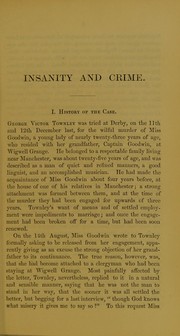
George Victor Townley was a member of a respectable upper-middle-class family. His case became a focal point for legal and psychiatric debate in Victorian England, involving high-profile legal representation and expert medical testimony regarding his mental state.
2. Crime Spree
On August 21, 1863, at Wigwell Grange, Townley confronted Elizabeth Caroline Goodwin, who had recently ended their engagement. During the encounter, he stabbed her in the throat, resulting in her immediate death. He surrendered to the victim's grandfather shortly thereafter.
3. Investigation and Arrest
Townley was apprehended on the day of the murder and held at the Old Lock Up in Wirksworth. The investigation focused on his mental state at the time of the crime, leading to a trial at the Derby Assizes.
4. Legal Proceedings and Outcome
Despite a guilty verdict, his family's influence and the use of the 'Further Provision for the Confinement and Maintenance of Insane People' act allowed for a reprieve from the death penalty. This caused significant public outrage, as it was perceived as a privilege afforded to the gentry.
5. Psychiatric Assessment and Final Disposition
While serving a life sentence at Pentonville Prison, Townley committed suicide on February 12, 1865, by jumping from a staircase railing onto a stone floor, sustaining fatal head injuries.