


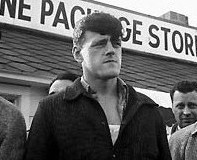
Forensic & Criminological Matrix
| Parameter | Forensic Detail |
|---|---|
| Forensic Heading / Aliases | Kid Kramer |
| Legal Identity | George Sidney Sitts |
| Confirmed Victims | 3 |
| Attributed / Indicted Victims | 3 |
| Active Timeline | 1945-1946 |
| Jurisdiction / Area of Operations | Minnesota and South Dakota, USA |
| Criminological Classification | Cop killer / Fugitive |
| Forensic Modus Operandi | Armed robbery followed by tactical homicide to avoid arrest |
| Weapon / Mechanism of Death | Handgun (close-range shooting) |
| Motive / Behavioral Dynamics | Evasion of justice and antisocial behavior |
| Judicial Outcome | Executed by electric chair |
1. Background and Profile
George Sidney Sitts was born in 1914 in LeRoy, Minnesota. Known as a quiet and studious youth, he developed a romanticized obsession with outlaw literature and boxing, competing under the moniker "Kid Kramer." His criminal trajectory began at age 19, escalating from petty theft to burglary. Despite various incarcerations, his inability to conform to societal norms led to a life of recidivism.
2. Criminal Career and Modus Operandi
On December 12, 1945, Sitts murdered liquor store clerk Erik Johansson in Minneapolis. While serving a life sentence, he escaped the Hennepin County Jail on January 20, 1946, after sawing through his cell bars. During his flight, he committed multiple vehicle thefts. On January 24, 1946, he encountered a police roadblock near Spearfish, South Dakota, where he executed Special Agent Tom Matthews and Sheriff Dave Malcolm to prevent his recapture.
3. Investigation and Arrest
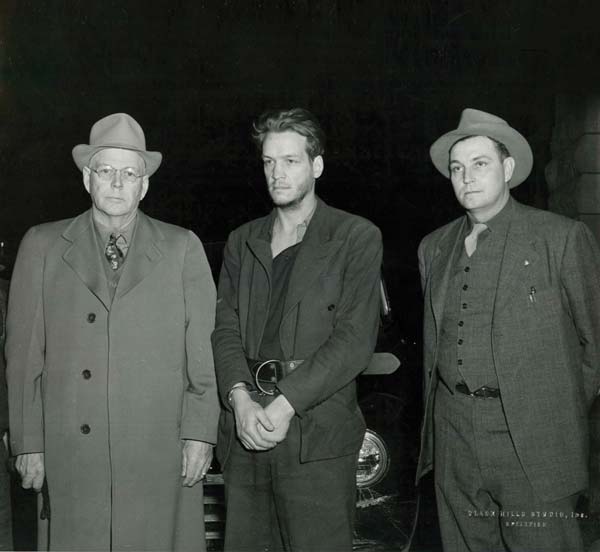
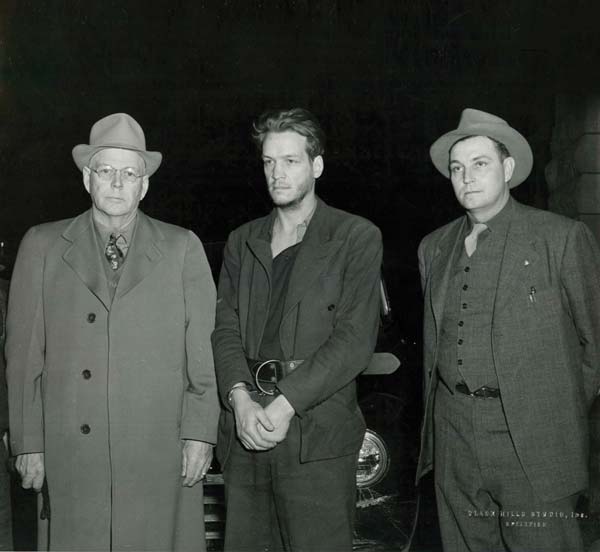
A massive five-state manhunt ensued. Sitts evaded capture for eleven days, hiding in an abandoned schoolhouse and later in the basement of a former police chief's home. He was apprehended on February 6, 1946, near Lysite, Wyoming, after mistakenly identifying law enforcement officers as local ranchers.
4. Legal Proceedings and Outcome
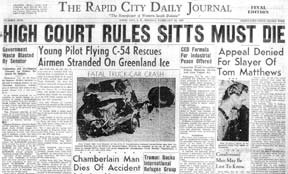
Sitts was tried in Lawrence County, South Dakota, for the murder of Tom Matthews. Convicted on March 22, 1946, he was sentenced to death by Judge Charles Hayes. He was executed on April 8, 1947, at the South Dakota State Penitentiary. His final statement was a cynical remark regarding the prison authorities. He remains the only person executed by electric chair in South Dakota history.