



Forensic & Criminological Matrix
| Parameter | Forensic Detail |
|---|---|
| Full Legal Name | Sipho Agmatir Thwala |
| Registered Monikers | The Phoenix Strangler |
| Nationality | South African |
| Date and Place of Birth | January 1, 1968, KwaMashu, Durban, South Africa |
| Current Legal Status | Incarcerated serving a 506-year sentence with zero parole eligibility |
| Detention Facility | C-Max Supermax Correctional Facility, Pretoria, South Africa |
| Criminal Classification | Sadistic sexual serial killer / Serial rapist / Arson concealment predator |
| Active Offense Span | 1996 – 1997 |
| Primary Crime Scenes | Sugarcane plantations of Phoenix, Mount Edgecombe, and KwaMashu, KwaZulu-Natal |
| Confirmed Adjudicated Victims | 16 counts of murder and 10 counts of aggravated rape |
| Suspected Toll | Forensically tied to at least 19 female victims |
| Modus Operandi | Lured unemployed women with promises of hotel/maid employment; led them into dense sugarcane fields; violent sexual assault; ligature strangulation using the victims' own undergarments; setting fire to surrounding crops to destroy biological evidence |
| Judicial Sentence | Sentenced on March 31, 1999, at the High Court in Durban to 506 years imprisonment |
The Sugarcane Lure in Post-Apartheid KwaZulu-Natal
In the mid-1990s, against a backdrop of acute economic hardship in South African townships, Sipho Agmatir Thwala embarked on a deadly serial murder campaign around Durban. Operating out of the KwaMashu township, Thwala stalked commercial transportation hubs, targeting young, destitute women seeking domestic employment.
Thwala approached his marks claiming to be a recruitment agent for luxury hotels and affluent estates in Mount Edgecombe. Offering competitive cleaning and catering positions, he persuaded his victims to accompany him on foot across sugarcane paths to avoid bus fares.
Field Assaults, Ligatures, and Arson
The towering, dense sugarcane fields of Phoenix—rising over two meters in height—provided perfect auditory insulation and visual obscurity. Once secluded inside the crop rows, Thwala attacked his victims from behind.
After incapacitating and sexually violating the women over protracted periods, Thwala fashioned lethal ligatures from the victims' own underwear, bras, or petticoats, twisting them around their throats until death occurred via mechanical asphyxiation. Before departing the scenes, Thwala ignited the dry sugarcane stalks surrounding the bodies, attempting to incinerate the remains and obliterate semen and touch-DNA traces in agricultural fires.
Police Mobilization and Police Station Escape
Beginning in 1996, agricultural workers harvesting cane fields in Mount Edgecombe began discovering charred, decomposed skeletons. The South African Police Service (SAPS) Serial Murder Investigation Unit, led by Superintendent Bushie Engelbrecht, identified a consistent forensic signature: victims' hands and ankles were bound with their own apparel, and identical knot patterns were present on cervical ligatures.
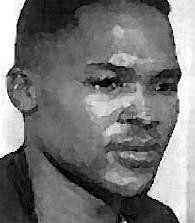
In 1997, a surviving victim who fought off Thwala and fled through the cane provided detectives with a facial composite. Thwala was arrested in August 1997; however, he escaped from custody at the KwaMashu police station, triggering severe public outrage across Durban.
Recapture and 506-Year Incarceration
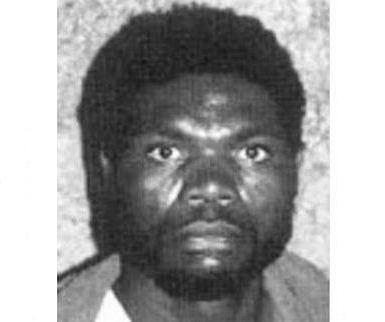
A nationwide manhunt ended in 1998 when SAPS investigators tracked Thwala to Welkom in the Free State, arresting him under an assumed name.
Forensic DNA matching on unburned semen samples confirmed Thwala's direct culpability in the murders. Facing incontrovertible scientific evidence, Thwala confessed to 19 homicides, leading forensic pathologists to undocumented burial sites in the cane.
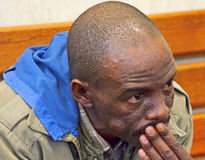
On March 31, 1999, Durban High Court Judge Vivienne Niles-Dunker convicted Thwala on 16 murder counts and 10 rape counts, imposing a sentence of 506 years imprisonment. Thwala remains incarcerated under strict isolation at Pretoria's C-Max Supermax facility.