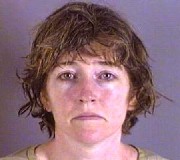
Forensic & Criminological Matrix
| Parameter | Forensic Detail |
|---|---|
| Forensic Heading / Aliases | Dorothy Sherwood |
| Legal Identity | Dorothy O. Sherwood (née Caskey) |
| Confirmed Victims | 1 (her two-year-old son, Jimmy) |
| Active Timeline | August 20, 1935 |
| Jurisdiction / Area of Operations | Newburgh, New York State, United States |
| Criminological Classification | Filicide / Socioeconomic Despair Homicide |
| Forensic Modus Operandi | Intentional drowning of the child victim in a natural waterway (Moodna Creek) followed by voluntary self-surrender |
| Weapon / Mechanism of Death | Water immersion (asphyxia by drowning) |
| Motive / Behavioral Dynamics | Extreme poverty, eviction, severe psychosocial collapse, and alleged temporary insanity |
| Judicial Outcome | Initial death sentence by electrocution set aside on appeal; pleaded guilty to first-degree manslaughter (6 to 15 years); paroled after serving over 3 years |
1. Background and Profile
Dorothy Sherwood was born in St. Louis, Missouri, the third child of a Scotch-Irish foundry worker who married six times. Following her mother's death when Dorothy was nine years old, she was placed in an orphanage. In her youth, she joined the Salvation Army, singing gospel hymns across various southern states. Later, she transitioned briefly into burlesque entertainment as a chorus dancer, where she met James Sherwood, a stagehand and electrician for the troupe.
After the burlesque company disbanded, the couple relocated to Newburgh, New York, James's hometown. Their socioeconomic standing was continuously precarious; James suffered from tuberculosis and worked intermittently as a motion picture operator, while Dorothy was employed as a waitress. They had two children, with their older daughter residing with her paternal grandmother, while the infant son, Jimmy, remained with them. Following James's death in a sanitarium, Dorothy's fragile stability collapsed completely: she lost her job, her engagement to a local political agent was broken off, and she was evicted from her lodgings for non-payment.
2. Crime Spree and Modus Operandi
On August 20, 1935, engulfed by severe destitution and psychological distress regarding her inability to provide for her infant, Sherwood brought two-year-old Jimmy to Moodna Creek in Newburgh, where she drowned him. The modus operandi lacked sophisticated criminal planning or sadistic intent; it constituted an impulsive act of filicide driven by acute financial collapse and psychological breakdown.
3. Investigation and Law Enforcement Response
Formal police investigation was minimal due to the offender's immediate self-surrender. Directly after committing the act, Sherwood walked into the Newburgh police headquarters carrying her deceased child's body. She presented the corpse to officers and delivered the statement that characterized the entire case: 'It was too hard to make a living for myself and the baby.' Her immediate confession eliminated any investigative uncertainty regarding perpetrator identification.
4. Legal Proceedings and Trial
1The case gained widespread notoriety as the first-degree murder trial involving a female defendant in the history of Orange County, New York. In January 1936, presided over by Judge Jonathan D. Wilson, the defense mounted a plea of temporary insanity, supported by two psychiatric experts, while two prosecution psychiatrists testified to her sanity.
The jury returned a first-degree murder conviction accompanied by a recommendation for mercy, citing her arduous life history. However, New York state statutes mandated a death sentence by the electric chair at Sing Sing Prison.
5. Psychiatric Evaluation and Final Outcome
Following the death sentence, a public clemency campaign emerged, championed by war veteran associations and civic groups urging Governor Herbert Lehman to grant an unconditional pardon. Simultaneously, the defense pursued a legal appeal.
On July 8, 1936, the New York Court of Appeals set aside the first-degree murder conviction and ordered a new trial. On September 2, 1936, Sherwood pleaded guilty to first-degree manslaughter and received a sentence of six to fifteen years at Westfield State Farm (Bedford Hills Correctional Facility for Women). Having served three years and three months—during which she maintained exemplary conduct and performed clerical work for the Salvation Army—she was granted parole in 1939, successfully re-entering society and restoring contact with her surviving daughter.