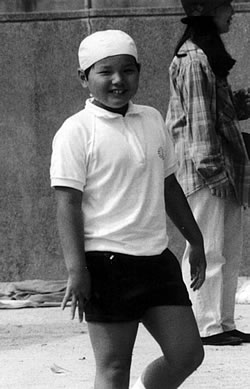




Forensic & Criminological Matrix
| Parameter | Forensic Detail |
|---|---|
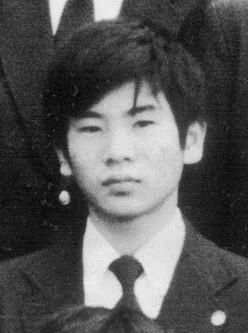
| Forensic Heading / Aliases | The Kobe School Killer, Onibara |
| Legal Identity | Legally withheld (referred to as 'Boy A') |
| Confirmed Victims | 2 |
| Attributed / Indicted Victims | 2 |
| Active Timeline | February - May 1997 |
| Jurisdiction / Area of Operations | Kobe, Hyogo Prefecture, Japan |
| Criminological Classification | Juvenile serial killer |
| Forensic Modus Operandi | Physical assault, strangulation, decapitation, and mutilation |
| Weapon / Mechanism of Death | Steel pipe, survival knife, scissors |
| Motive / Behavioral Dynamics | Sexual sadism, conduct disorder, social resentment |
| Judicial Outcome | Sentenced to medical reformatory; paroled in 2004 |
1. Background and Profile
Known legally as 'Boy A', the perpetrator displayed early signs of severe psychopathy. During elementary school, he carried weapons and documented his desire to use them to relieve irritation. By age 12, he engaged in animal cruelty, including mutilating cats and pigeons. His psychological profile was later associated with hikikomori syndrome and an obsession with violent media.
2. Crime Spree
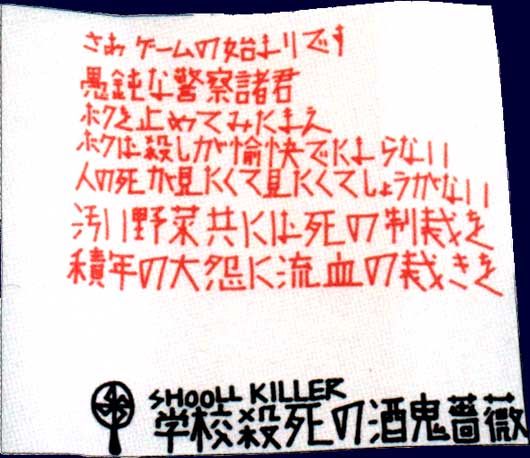
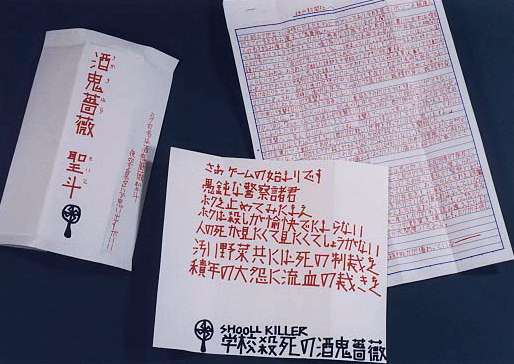
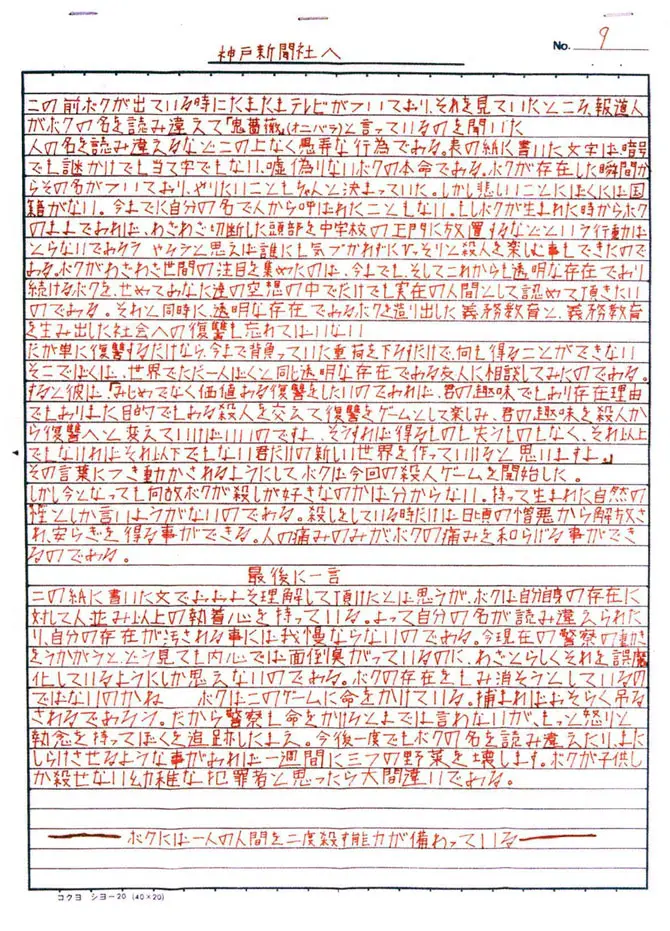
In 1997, he targeted children in Kobe. On March 16, he bludgeoned 10-year-old Ayaka Yamashita to death. On May 24, he abducted, strangled, and decapitated 11-year-old Jun Hase, placing the head at a school gate. He sent taunting letters to the press, signing them 'Seito Sakakibara' and using symbols reminiscent of the Zodiac Killer.
3. Investigation and Arrest
The investigation focused on the letters sent to the Kobe Shimbun. The perpetrator's confession followed his arrest on June 28, 1997. The case caused a national outcry, leading to the identification of the suspect as a 14-year-old student.
4. Legal Proceedings and Outcome
Under Japanese law at the time, he could not be tried as an adult. He was sent to a medical reformatory for psychiatric treatment. The case prompted the Japanese Diet to lower the age of criminal responsibility from 16 to 14 in 2000.
5. Psychiatric Evaluation and Release
After years of rehabilitation, he was paroled on March 10, 2004. His release remains a subject of intense public debate, with the government maintaining secrecy regarding his identity and location to facilitate his reintegration into society.