Forensic & Criminological Matrix
| Parameter | Forensic Detail |
|---|---|
| Forensic Heading / Aliases | Rajulu, Ramesh, Venkatesh, Jack the Ripper |
| Legal Identity | Umesh Reddy |
| Confirmed Victims | 9 |
| Attributed / Indicted Victims | 18 |
| Active Timeline | 1996-2002 |
| Jurisdiction / Area of Operations | Karnataka, Maharashtra, Gujarat (India) |
| Criminological Classification | Serial killer, serial rapist |
| Forensic Modus Operandi | Home invasion, knife-point threat, binding, rape, and murder |
| Weapon / Mechanism of Death | Knife / Strangulation |
| Motive / Behavioral Dynamics | Paraphilia (transvestism), sexual sadism, robbery |
| Judicial Outcome | Death sentence (upheld by Karnataka High Court in 2009) |
1. Background and Profile
Umesh Reddy, born in 1969 in Basappa Malige, Chitradurga, was a former police constable who became one of India's most feared serial offenders. After serving in the Central Reserve Police Force (CRPF) in Kashmir and later the District Armed Reserve (DAR), he utilized his knowledge of police procedures to evade capture. His criminal trajectory indicates a severe personality disorder characterized by predatory sexual violence.
2. Criminal Career and Modus Operandi
Reddy targeted isolated women during daylight hours. His modus operandi involved gaining entry through deception, threatening victims with knives, and binding them before committing rape and murder. A key forensic finding was his collection of stolen women's undergarments, which he used for his own sexual gratification, confirming a deep-seated paraphilia.
3. Investigation and Arrest
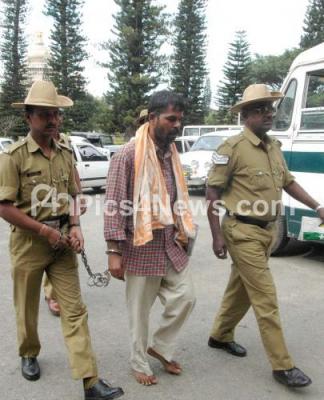
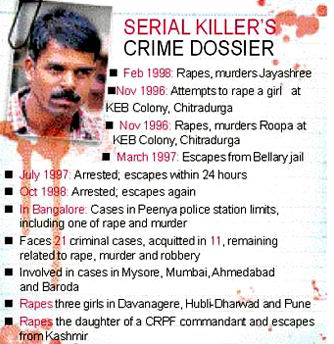
Reddy's case was marked by his ability to escape police custody six times, leading to a massive manhunt across several Indian states. He was finally apprehended on May 17, 2002, in a barbershop in Yeshwanthpur after being recognized by a local citizen, ending his years of evasion.
4. Legal Proceedings and Outcome
Facing 25 criminal charges, Reddy was convicted in 9 cases. The 1998 rape and murder of Jayashree Maradi Subbaiah became the cornerstone of his prosecution. In 2009, the Karnataka High Court upheld his death sentence, citing his habitual offending and lack of potential for rehabilitation as justification for the capital punishment.