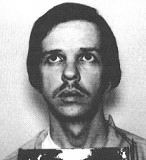





Forensic & Criminological Matrix
| Parameter | Forensic Detail |
|---|---|
| Forensic Heading / Aliases | None |
| Legal Identity | Billy Daniel Raulerson Jr. |
| Confirmed Victims | 3 |
| Attributed / Indicted Victims | 3 |
| Active Timeline | May 1993 |
| Jurisdiction / Area of Operations | Ware County, Georgia, USA |
| Criminological Classification | Multiple murderer / Sexual predator |
| Forensic Modus Operandi | Ambush in isolated areas, use of .22 caliber firearm, kidnapping, and necrophilia |
| Weapon / Mechanism of Death | .22 caliber rifle and knife |
| Motive / Behavioral Dynamics | Robbery, sexual gratification, and sadistic violence |
| Judicial Outcome | Sentenced to death in March 1996 |
1. Background and Psychopathy
Born in 1969, Billy Daniel Raulerson Jr. had a history of minor criminal offenses prior to his 1993 killing spree. During his trial, the defense claimed he suffered from mental retardation with an IQ of 69, but the State countered with evidence of an IQ of 83 at age 15, successfully arguing that he was not suffering from a severe mental illness that would mitigate his criminal responsibility.
2. Crime Spree
On May 30, 1993, Raulerson encountered Charlye Dixon (18) and her fiancé Jason Hampton (19) at a remote 'lovers' lane' in Ware County. He shot Hampton, kidnapped Dixon, transported her to a wooded area, executed her, and committed necrophilia. The following day, he broke into the home of Teresa Gail Taylor (40), killing her during a struggle before stealing her purse.
3. Investigation and Arrest
Law enforcement linked Raulerson to the murders seven months later following his arrest on unrelated assault charges. DNA analysis of semen recovered from Dixon matched the blood sample provided by Raulerson. Ballistics evidence from a .22 caliber rifle found in his home and stolen property from the victims provided the final evidentiary link.
4. Legal Proceedings and Outcome
Raulerson confessed to the murders after being confronted with the DNA evidence. He was tried in Chatham Superior Court. Despite defense motions to suppress evidence based on his alleged mental state, he was convicted of three counts of murder, burglary, kidnapping, and necrophilia. He was sentenced to death in March 1996, a verdict upheld by the Georgia Supreme Court in 1997.