



Forensic & Criminological Matrix
| Parameter | Forensic Detail |
|---|---|
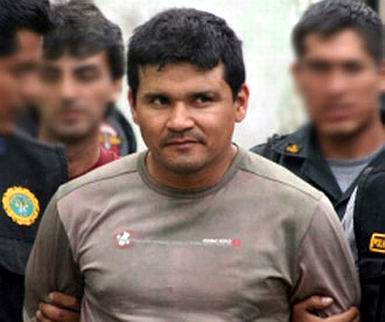
| Full Legal Name | Pedro Pablo Nakada Ludeña (born Pedro Pablo Mesías Ludeña; legally assumed the Japanese surname Nakada). |
| Criminal Moniker | The Apostle of Death (El Apóstol de la Muerte), The Monster of Huaral. |
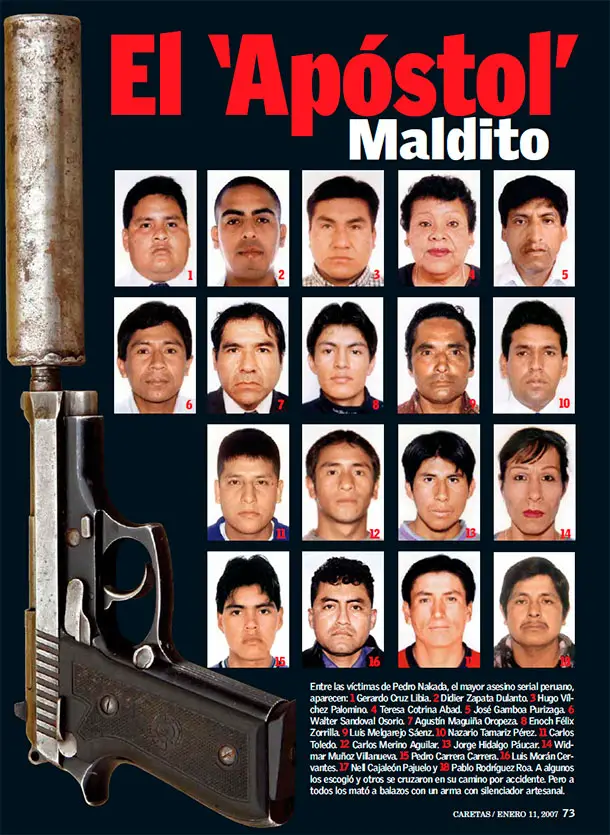
| Criminological Landmark | The deadliest court-confirmed serial killer in contemporary Peruvian penal history, executing at least 17 victims over two years using homemade firearm suppressors. |
| Criminological Classification | Mission-oriented serial killer / Delusional messianic exterminator. |
| Active Criminal Span | January 2005 – December 2006. |
| Geographical Theater | Huaral, Chancay, Huacho, and Barranca (Lima Region, Peru). |
| Confirmed Fatalities | 17 court-proven homicides (confessed to 25 murders; forensic ballistics linked his weapon to 21 distinct crime scenes). |
| Weapons Employed | 9mm semiautomatic pistol and .38-caliber revolver fitted with improvised suppressors fabricated from metal bicycle pumps, fiberglass insulation, and rubber washers. |
| Forensic Motive | Chronic paranoid schizophrenia with messianic mission delusions and imperative auditory hallucinations ("God commanded me to cleanse the earth of human filth"), heavily conditioned by catastrophic childhood physical and sexual abuse. |
| Judicial Disposition | Sentenced in 2007 by the Superior Court of Huaura to 35 years' imprisonment (the statutory maximum penalty under the Peruvian Penal Code). Incarcerated in the psychiatric pavilion of Lurigancho Prison. |
Introduction: The Phantom of the Peruvian Coast
Between 2005 and 2006, a pattern of silent, seemingly random executions terrorized the rural agrarian valleys and coastal highways north of Lima. Along dusty irrigation ditches, deserted beaches, and unpaved bypasses, local police discovered the bodies of three-wheeled motorized rickshaw drivers (mototaxistas), street sex workers, addicts, and vagrants. Each had been dispatched with a single point-blank gunshot to the temple or base of the skull, with surrounding communities reporting complete absence of gunfire noise.
Regional authorities initially suspected contract hits orchestrated by coastal drug syndicates or rogue paramilitary death squads. The arrest of the perpetrator in December 2006 uncovered an unexpected reality: the killer was a 33-year-old auto mechanic and night watchman who believed himself a divine archangel charged with cleansing Peruvian society of moral decay.
Traumatic Upbringing and Delusional Radicalization
Born in Lima in February 1973 into extreme poverty, Pedro Pablo Nakada suffered a childhood marked by sustained torment. His alcoholic father beat him severely with heavy steel cables and forced him to sleep in dirt alcoves; Nakada and his siblings were repeatedly subjected to sexual abuse by older relatives.
Rejected from enlistment in the Peruvian National Police and Armed Forces due to psychological instability, Nakada attempted to migrate as a factory laborer to Japan in 2003, legally changing his surname to Nakada through a paid fraudulent adoption scheme (his biological brother, Vayron Jonathan Nakada Ludeña, would later perpetrate the 2015 Kumagaya massacre in Japan, killing six civilians). After Japanese immigration authorities denied his visa due to prior illegal firearms convictions, Nakada descended into religious fanaticism, reading the Old Testament obsessively and fixating on divine wrath.
The Bicycle-Pump Silencer and The Spree
Operating from a modest mechanical repair shack in Huaral, Nakada engineered an efficient, improvised sound suppressor. By gutting metal bicycle tire pumps and packing the interiors with dense layers of fiberglass wool, polyurethane foam, and rubber gaskets, he dampened the acoustic signature of high-velocity 9mm rounds.
Between 2005 and 2006, Nakada prowled the rural perimeters of Huaral and Barranca:
- Target Selection: Nakada singled out individuals whom his delusional dogma deemed "sinful": prostitutes, homosexuals, addicts, and taxi drivers drinking alcohol on shift.
- Execution Method: Approaching quietly from the rear or posing as a paying passenger requesting transit to rural bypasses, Nakada pressed his improvised suppressor against the victim's skull in the darkness, firing a single muffled round.
- Ideological Signature: He rarely stole money or personal belongings; his motive was purely exterminatory. Following each slaying, Nakada knelt beside the corpse, delivered a brief prayer of thanksgiving to God, and departed on a bicycle.
Capture in Huaral
The investigation shifted through ballistic science. Forensic examiners with the Criminal Investigation Directorate (Dirincri) in Lima established that cartridge casings recovered across fifteen separate homicides bore identical firing-pin indentations and rifling impressions from a single 9mm handgun.
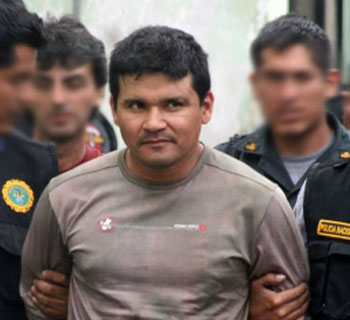
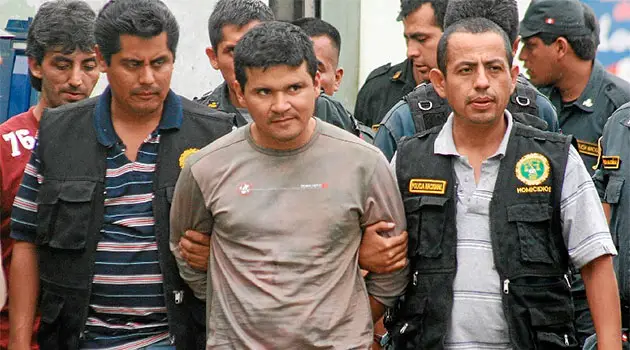
On December 28, 2006, specialized homicide detectives raided Nakada's auto repair workshop on Calle Derecha in Huaral. Cornered, Nakada drew a pistol and initiated a firefight with detectives before being subdued and disarmed. Police seized two modified firearms, hundreds of rounds of ammunition, and several carbon-stained bicycle-pump suppressors.
Unrepentant Confessions and Sentencing
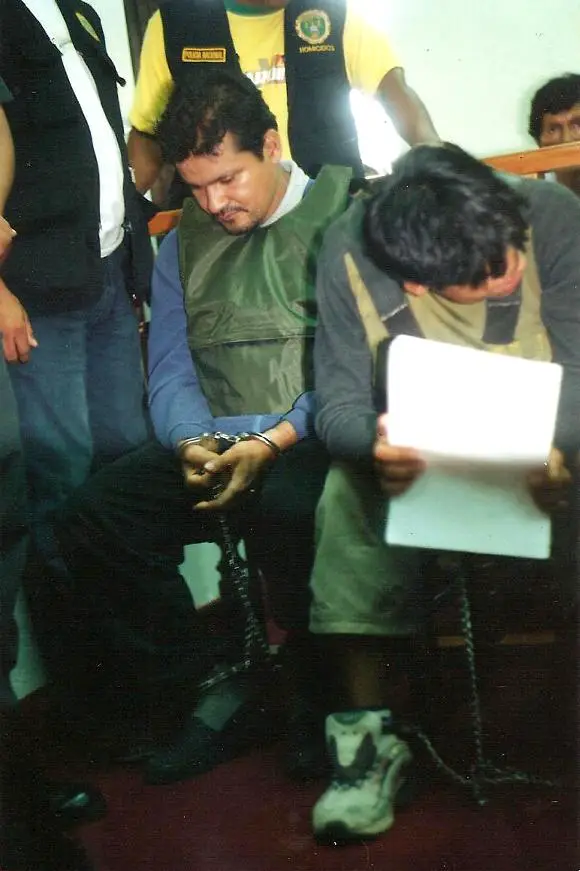
Before television cameras and investigating magistrates, Nakada exhibited pride in his crimes:
"I am not a murderer; I am an apostle. God commanded me to clean the earth of human garbage: addicts, thieves, prostitutes, and degenerates. I cleaned them all. If they release me, I will continue cleaning, because that is God's divine command."
Psychiatric evaluations determined that while Nakada suffered from severe chronic paranoid schizophrenia, he maintained cognitive appreciation of the illegality of his acts and exercised deliberate covert planning, rendering him legally competent for trial.
In 2007, the Huaura Superior Court sentenced Pedro Pablo Nakada Ludeña to 35 years' imprisonment, the absolute maximum penalty permitted under Peruvian law. He remains segregated in the psychiatric ward of Lurigancho Prison, recognized as the most lethal serial killer in modern Peruvian history.