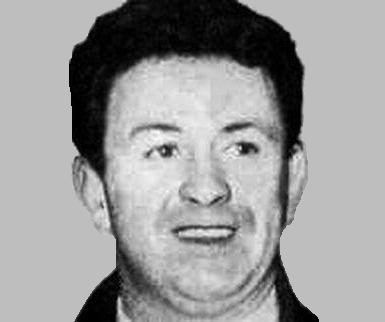




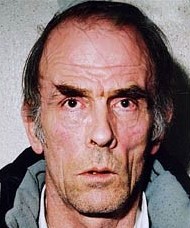
Forensic & Criminological Matrix
| Parameter | Forensic Detail |
|---|---|
| Full Legal Name | Patrick Byrne. |
| Criminal Moniker | The YWCA Decapitator, The Edgbaston Butcher. |
| Foundational Jurisprudential Landmark | Landmark legal authority R v Byrne [1960] 2 QB 396; the foundational precedent in common law establishing the modern test for "abnormality of mind" and shaping the defense of diminished responsibility under Section 2 of the Homicide Act 1957. |
| Criminological Classification | Sadistic sexual murderer / Necrophilic decapitator driven by irresistible psychopathic impulses. |
| Date of Crime | Christmas Eve Eve, Wednesday, December 23, 1959. |
| Crime Scene | Young Women's Christian Association (YWCA) hostel, Wheeley's Road, Edgbaston, Birmingham (England). |
| Fatal Victim | Stephanie Baird (aged 29, hostel assistant warden and volunteer coordinator). |
| Surviving Victim | Margaret Brown (hostel resident assaulted by Byrne in a corridor). |
| Weapons / Instruments | Manual strangulation, heavy carving knife, and kitchen bread-knife saw. |
| Forensic Signature | Total post-mortem decapitation, severe sexual genital mutilation, and staging of threatening handwritten notes placed upon the victim's remains. |
| Judicial History | Convicted of capital murder at Birmingham Assizes in March 1960 and sentenced to hang; overturned on landmark appeal by the Court of Criminal Appeal (Lord Parker CJ), which substituted a conviction of manslaughter on grounds of diminished responsibility and imposed life imprisonment. |
Introduction: The YWCA Christmas Nightmare
On the evening of December 23, 1959, the city of Birmingham was gripped by horror following one of the most grotesque sexual killings in English penal history. Inside an annex of the YWCA hostel in upscale Edgbaston—a sheltered sanctuary for single professional women—the decapitated and mutilated corpse of 29-year-old assistant warden Stephanie Baird was discovered in her private room.
The ferocity of the mutilation shocked veteran Home Office pathologists. Beyond its grim forensic brutality, the trial of Patrick Byrne became the cornerstone of modern common-law psychiatry, establishing the enduring legal boundary separating criminal malice from medically diminished responsibility.
The Events of December 23, 1959
At approximately 9:00 PM, Patrick Byrne, a 28-year-old Irish construction laborer residing in local lodgings, was prowling Wheeley's Road in the grip of violent sexual arousal. Spotting an illuminated ground-floor window at the YWCA residence, he climbed the sill and slipped inside:
- Entering the room of Stephanie Baird, Byrne ambushed her from behind, crushing her trachea with manual strangulation until she asphyxiated.
- Leaving the corpse, Byrne navigated to the hostel's communal kitchen, retrieved a carving knife, and returned to sever Baird's head from her torso.
- He subsequently subjected the body to extensive sexual mutilations and scrawled a threatening note in red ink beside the remains: "This is only the beginning. There will be more tonight."
- Exiting into the hallway, he encountered resident Margaret Brown and attempted to throttle her, but her screams alerted other occupants, compelling Byrne to flee through the garden window into the dark.
Investigation and Spontaneous Confession
The discovery of the crime scene ignited the largest manhunt in West Midlands history, with detectives fingerprinting over 20,000 local men and inspecting construction barracks across the industrial perimeter.
On February 9, 1960, without being named a suspect, Byrne walked into a police station and unburdened his conscience. He calmly detailed the killing to Scotland Yard detectives:
"I couldn't help it. For years I have had violent desires to strangle women and cut off their heads. When I climbed through that window, it was like something outside my own will taking over."
Latent fingerprint impressions recovered from the window frame matched Byrne's prints across all classification points.
The Landmark Precedent: R v Byrne (1960)
At trial at the Birmingham Assizes before Mr. Justice Stable in March 1960, three eminent defense psychiatrists testified that Byrne was a chronic sexual psychopath driven by compulsive violent perversions that completely extinguished his capacity for willpower and self-control.
However, Justice Stable instructed the jury that moral perversion or difficulty curbing sexual passion could not satisfy the statutory definition of an "abnormality of mind" under the Homicide Act 1957. The jury convicted Byrne of capital murder, and he was sentenced to death.
Byrne's counsel appealed to the Court of Criminal Appeal. In a celebrated ruling delivered by Lord Chief Justice Parker, the appellate bench quashed the capital murder verdict:
- The court held that "abnormality of mind" covers any state of mind so different from that of ordinary human beings that a reasonable person would term it abnormal.
- Crucially, the court established that this definition includes an individual's inability to exercise willpower to control physical impulses.
- If a psychiatric disorder impairs a defendant's capacity to control his conduct to a substantial degree, the defense of diminished responsibility is legally established.
The appellate court substituted a conviction of manslaughter and sentenced Patrick Byrne to life imprisonment. He spent the remainder of his life in secure psychiatric institutions, including Broadmoor Hospital.