


Forensic & Criminological Matrix
| Parameter | Forensic Detail |
|---|---|
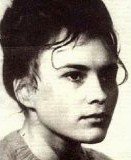
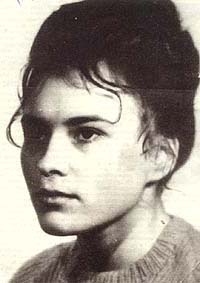
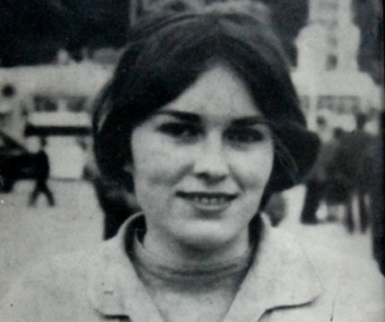
| Full Legal Name | Olga Hepnarová. |
| Criminal Moniker | The Prague Truck Killer. |
| Historical Penal Landmark | The last woman executed by capital punishment in the judicial history of Czechoslovakia (and a pioneering historical precursor in the tactical weaponization of heavy motor vehicles against pedestrians). |
| Criminological Classification | Mass murderer / Lone-wolf vehicular avenger / Misanthropic grievance-driven killer. |
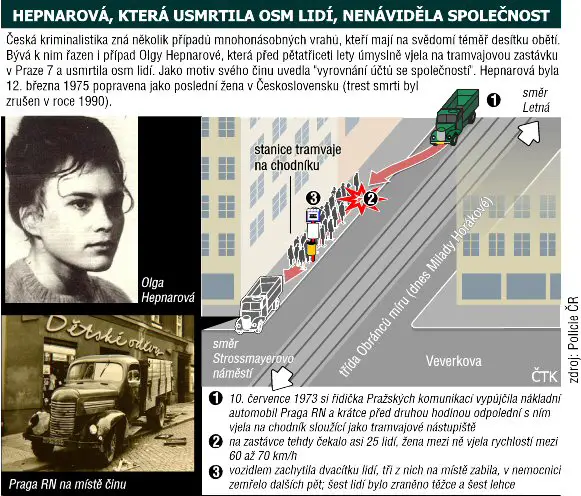
| Date of Attack | Tuesday, July 10, 1973 (1:30 PM). |
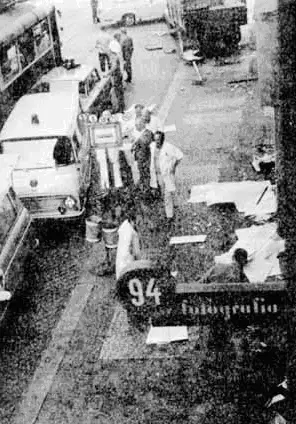
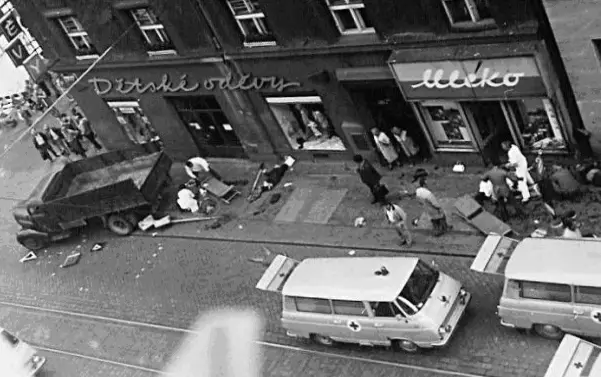
| Scene of the Crime | Tram stop on Trída Obráncu Míru (now Milady Horákové Street), Prague 7 (Czechoslovak Socialist Republic). |
| Casualties | 8 fatalities (3 killed at the scene, 5 succumbed in intensive care units) and 12 severely wounded victims, predominantly elderly citizens and retirees. |
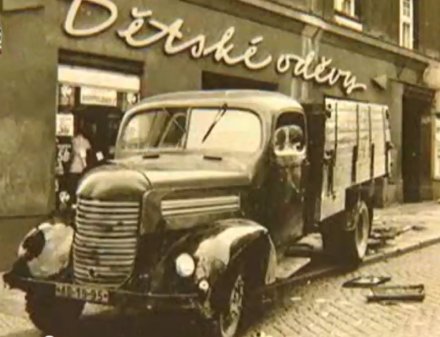
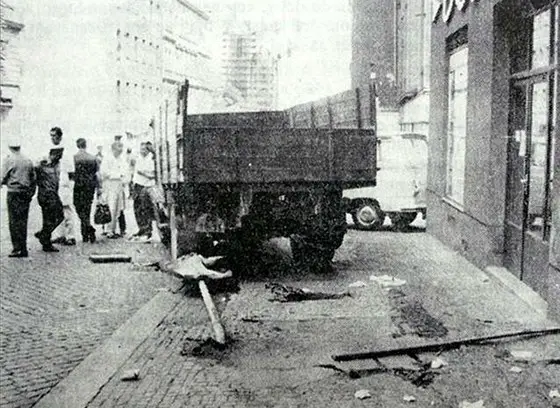
| Weapon Utilized | Leased Praga RN commercial flatbed truck (multi-ton payload). |
| Motive | Consuming misanthropic revenge and existential retribution against human society ("the abusers" / prznitelé) for severe bullying, social alienation, and perceived psychological torture experienced throughout her youth. |
| Judicial Disposition & Execution | Sentenced to death on April 6, 1974, by the Prague City Court; appeals for clemency rejected; executed by short-drop hanging at Pankrác Prison on March 12, 1975, at age 23. |
Introduction: The Precursor of Vehicular Mass Murder
On July 10, 1973, decades before heavy commercial vehicles became a recognized tactical weapon in modern mass terrorism, the Czechoslovak capital witnessed an extraordinary act of individualistic, premeditated vehicular slaughter. In broad daylight, a commercial flatbed truck deliberately mounted a pedestrian sidewalk in the center of Prague, plowing at full throttle into an unsuspecting crowd awaiting a public tram.
When the vehicle ground to a halt, the person emerging from the cab was neither an intoxicated driver nor a panicked victim of mechanical failure, but a frail 22-year-old woman clad in black and smoking a cigarette: Olga Hepnarová. Calmly leaning against the cab, she waited for responding police units to proclaim that she had just delivered her formal death sentence upon human society.
Youth, Alienation, and The "Abusers"
Born in Prague in June 1951 into an educated family (her father was a bank clerk and her mother a dentist), Hepnarová exhibited profound social maladaptation from early childhood. Withdrawn, hypersensitive, and reclusive, she became the target of relentless bullying and physical beatings from classmates.
At age thirteen, she attempted suicide by ingesting barbiturates, prompting her involuntary committal to the Opava psychiatric institution for juveniles. Her experiences there cemented a rigid persecution complex: she viewed herself as an innocent, defenseless victim and categorized humanity as a malicious collective of tormentors (prznitelé).
Severing ties with her family, she qualified as a licensed heavy vehicle driver for municipal transport enterprises. Living in an isolated, unheated rural cabin, Hepnarová nurtured a grievance that eventually evolved into a calculated blueprint for mass retaliation.
The Letters and The Manifestos
In early July 1973, Hepnarová resolved to carry out her attack. Unable to obtain firearms under Czechoslovakia's strict Communist regulations, she chose her daily occupational tool: a heavy truck.
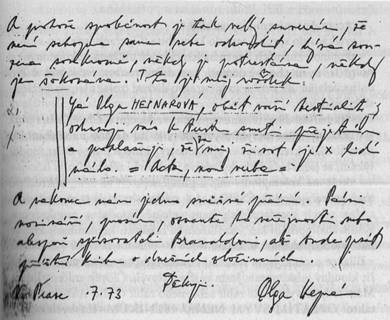
On the morning of July 10, 1973, after renting a multi-ton Praga RN truck, she mailed two identical letters to the editorial desks of the newspapers Svobodné Slovo and Mladý Svet. Her manifesto laid bare her clinical motivation:
"I am a loner. A human being destroyed by other people. I have a choice: to destroy myself or to destroy others. And I choose revenge against my tormentors. It would be far too easy to depart this world as an anonymous suicide. Society is brutal and unforgiving. My verdict is: I, Olga Hepnarová, victim of your bestiality, sentence you to death."
The Tram Stop Massacre
Knowing the letters would not be delivered until the afternoon, Hepnarová drove to Trída Obráncu Míru. She made a preliminary reconnaissance pass and observed that the tram platform was sparse; she circled the block until a dense crowd of approximately thirty commuters gathered.
At 1:30 PM, she accelerated down the sloping incline, violently swung the steering wheel onto the elevated sidewalk, and crushed the pedestrians:
- The truck barreled down the pavement for dozens of meters, pinning bodies against masonry shopfronts and pulverizing tram infrastructure.
- Three commuters died instantly under the chassis; five others perished in hospital trauma centers from catastrophic pelvic and thoracic trauma.
- Twelve additional individuals suffered permanent disabling injuries.
When bystanders rushed forward thinking the truck's accelerator had jammed, Hepnarová stated with chilling composure: "It was not an accident. I did it intentionally."
Trial, Rejection of Insanity, and Execution
Throughout her proceedings at the Prague City Court, Hepnarová aggressively rebuffed her court-appointed defense attorney's attempts to establish legal insanity. She insisted she was fully rational, experienced no remorse, and demanded the death penalty as validation of her act.
Psychiatric evaluations conducted at the Bohnice Psychiatric Hospital concluded that while Hepnarová suffered from severe borderline and schizotypal personality traits, she was free of psychosis and retained full cognitive appreciation of the illegality of her conduct.
On April 6, 1974, she was convicted of mass murder and sentenced to death. Following the rejection of her mother's appeal for presidential clemency by President Gustav Husák, Olga Hepnarová was executed by hanging at Pankrác Prison on March 12, 1975, at the age of 23, securing a grim, historic distinction as the final woman executed in Czechoslovakia.