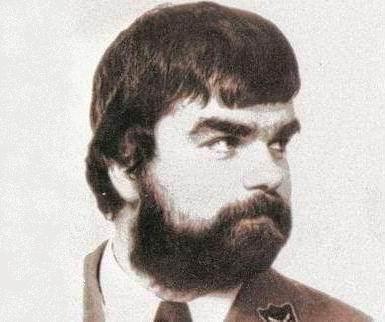




Forensic & Criminological Matrix
| Parameter | Forensic Detail |
|---|---|
| Full Legal Name | Norbert Hans Poehlke. |
| Criminal Moniker | The Hammer-Killer (Der Hammermörder). |
| Criminological Classification | Serial killer / Armed bank robber / Familicide-suicide perpetrator operating under active police credentials. |
| Active Criminal Span | May 1984 – October 1985. |
| Geographical Theater | Baden-Württemberg (West Germany) and Torre Canne / Brindisi (Puglia, Italy). |
| Confirmed Fatalities | 6 murdered victims (plus his own suicide): |
| Weapons Used | Official police service Walther P5 9x19mm Parabellum semiautomatic pistol, industrial sledgehammer (Vorschlaghammer), and sawed-off shotgun. |
| Motive | Astronomical personal debts exceeding 500,000 Deutsche Marks from home construction and medical costs of a deceased child, coupled with moral deterioration and narcissistic personality fragmentation. |
| Judicial Disposition | Case terminated due to perpetrator's suicide by gunshot in Italy following the extermination of his family and flight from a federal BKA arrest warrant. |
Introduction: The Policeman Behind the Sledgehammer
In the mid-1980s, the prosperous southwestern West German state of Baden-Württemberg was terrorized by a succession of bank robberies executed with militaristic precision. An armed assailant wielding a heavy sledgehammer smashed through reinforced teller safety glass, swept cash into sacks, and vanished in vehicles whose owners were subsequently found shot execution-style in nearby forest tracts.
German tabloids labeled the phantom bandit "Der Hammermörder" (The Hammer-Killer). National shock reached unprecedented heights when criminalistics laboratories unmasked the perpetrator: he was neither an underground criminal nor a left-wing militant, but Norbert Hans Poehlke, an active Chief Master Sergeant (Polizeihauptmeister) in the Stuttgart highway patrol division, respected as a model officer and precision firearms instructor.
Professional Background and Financial Ruin
Born in Stuttgart in September 1951, Poehlke joined the Baden-Württemberg state police as a young recruit. Dedicated, punctilious, and physically imposing, he rose to senior traffic supervisor, earning the respect of superiors and colleagues for tactical steadiness under pressure.
Behind this exemplary professional facade, catastrophe struck the household when his infant daughter Caroline developed acute leukemia. Striving to provide experimental treatments and constructing a luxurious detached home in Backnang-Strümpfelbach, Poehlke amassed private debts exceeding half a million Deutsche Marks. Following the child's death in 1984, financial institutions initiated foreclosure proceedings and wage garnishments. Incapable of accepting public insolvency, Poehlke deployed his tactical police skills to mount an armed expropriation spree.
Modus Operandi: Cold-Blooded Vehicle Procurements
Poehlke implemented a ruthless predatory system to insulate his identity:
- First Killing (May 3, 1984 - Erbstetten): He ambushed Siegfried Pfitzer, a 47-year-old motorist resting at a woodland layby. Without warning, Poehlke fired a single 9mm bullet through Pfitzer's temple using his issued Walther P5 service pistol, concealed the body in bushes, and utilized Pfitzer's Ford Granada to raid the Volksbank branch in Erbstetten, shattering the glass barrier with a sledgehammer to seize cash.
- Second Killing (December 21, 1984 - Ilsfeld): He executed traveling salesman Eugene Heim (55) near Marbach am Neckar to seize his vehicle, subsequently demolishing the bank counter at Ilsfeld with his sledgehammer.
- Third Killing (July 22, 1985 - Spiegelberg): He shot 26-year-old Wilfried Scheider in the neck inside his car, abandoning the victim in dense woods before executing his third sledgehammer raid.
For fifteen months, the special homicide commission "Soko Hammer" was stymied: the rifling marks on bullets recovered from all three deceased drivers were uniquely characteristic of a Walther P5 pistol—the standard-issue sidearm of the Baden-Württemberg police. Internal investigators stubbornly resisted the hypothesis that the killer was one of their own.
Investigation Closes In and Familicide
The breakthrough occurred in late September 1985 following an attempted robbery in Cleebronn, where alert witnesses recorded the registration of a red Fiat Panda driven by a man in police traffic trousers. Motor vehicle registers tied the car directly to Norbert Poehlke.
On October 13, 1985, a superior visited Poehlke's home in Strümpfelbach to question him regarding the vehicle. Realizing his disguise had unraveled, Poehlke feigned severe gastrointestinal distress and requested three days of medical sick leave.
The following morning, October 14, he carried out the annihilation of his family:
- Inside the master bedroom, he shot his 38-year-old wife Ingeborg through the temple.
- Moving to the children's room, he executed his four-year-old son Adrian in his bed.
- He placed his eldest son Gabriel (8) into his Mercedes sedan and fled south across the Alps through Austria into Italy.
The Italian Finale at Torre Canne
When a tactical police squad entered the Poehlke residence on October 16, they uncovered the shrouded bodies of Ingeborg and Adrian, prompting the Federal Criminal Police Office (BKA) to issue an international red alert.
On October 22, 1985, in a gravel parking area near the Adriatic beach of Torre Canne, south of Brindisi, Italian carabinieri inspected Poehlke's parked Mercedes:
- In the passenger seat lay eight-year-old Gabriel, dead from a gunshot to the chest.
- Behind the wheel sat Norbert Poehlke, deceased from a self-inflicted gunshot wound through the mouth, his service Walther P5 gripped in his hand.
Comparative ballistics performed by the BKA forensic laboratory in Wiesbaden established that the service weapon in Poehlke's deceased hand was the identical firearm that ended the lives of the three motorists and his family, closing the darkest chapter in the history of German law enforcement.