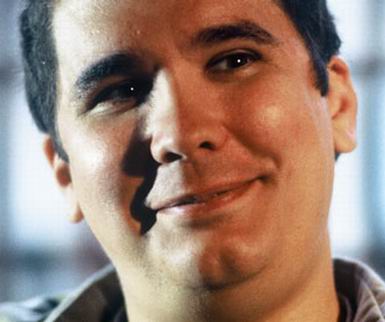




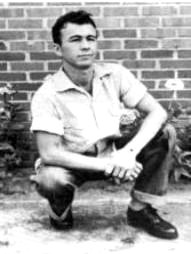
Forensic & Criminological Matrix
| Parameter | Forensic Detail |
|---|---|
| Full Legal Name | Michael Bruce Ross |
| Media Monikers | The Roadside Strangler, The Egg Man |
| Nationality | American |
| Date of Birth | July 26, 1959, Putnam, Connecticut, United States |
| Date of Death | May 13, 2005 (aged 45, executed by lethal injection at Osborn Correctional Institution, Somers, Connecticut) |
| Historical Penal Status | Sentenced to death in 1987 for multiple counts of capital felony murder; executed in 2005 as a volunteer inmate who waived all judicial appeals |
| Confirmed Murder Victims | 8 young women and adolescents: Dzung Ngoc Tu (25), Paula Perrera (16), Tammy Williams (17), Debra Smith Taylor (23), Robin Stavinsky (19), April Brunias (14), Leslie Shelley (14), and Wendy Baribeault (17) |
| Active Criminal Era | May 1981 to June 1984 |
| Geographic Jurisdiction | Eastern Connecticut rural roads and the Cornell University campus (Ithaca, New York) |
| Educational Pedigree | B.S. in Agricultural Economics with honors from Cornell University (Ivy League) |
| Lethal Modus Operandi | Coercive vehicular abduction of hitchhikers and pedestrians; extreme physical and sexual assault (anal/vaginal rape); protracted manual and ligature strangulation |
| Jurisprudential Significance | The first judicial execution conducted in Connecticut and New England in over 45 years (since 1960); direct catalyst for Connecticut's statutory abolition of capital punishment in 2012 |
| Diagnostic Motive | Severe sadistic sexual paraphilia, coercive paraphilic hypersexuality, and uncontrollable compulsion to strangle female victims |
1. Criminological Trajectory and Ivy League Background
Michael Bruce Ross was raised on a poultry farm in Brooklyn, Connecticut, earning him the media moniker "The Egg Man". Growing up in an austere, emotionally distant family environment, Ross compensated through academic excellence. He was admitted to Cornell University, graduating with honors in 1981 with a degree in Agricultural Economics.
Beneath his intellectual pedigree, Ross experienced severe sexual pathology from adolescence. He suffered recurring obsessive-compulsive sadistic fantasies wherein orgasm was achieved solely through physical terrorization, sexual violation, and the manual asphyxiation of young women.
2. Cornell and Connecticut Serial Slayings (1981–1984)
- The Cornell Homicide (May 12, 1981): During his senior undergraduate year at Cornell in Ithaca, New York, Ross ambushed 25-year-old Vietnamese graduate student Dzung Ngoc Tu in a campus stairwell, raping and strangling her to death. The case remained an unsolved cold case for three years.
- Connecticut Roadside Predation (1982–1984): Relocating to eastern Connecticut and working as a securities and insurance agent, Ross utilized his vehicle to patrol rural transit corridors:
- In 1982, he abducted and murdered Tammy Williams (17) and Debra Smith Taylor (23).
- In 1983, he raped and strangled Robin Stavinsky (19) in Norwich.
- In summer 1983, he carried out the double homicide of April Brunias and Leslie Shelley, two 14-year-old girls hitchhiking in Griswold, strangling both in adjacent woodland.
- The Wendy Baribeault Murder (June 1984): On June 13, 1984, Ross abducted 17-year-old Wendy Baribeault, strangling her on a secluded dirt lane in Griswold. A witness noted his vehicle's license plate.
- Apprehension: On June 28, 1984, Connecticut State Police arrested Ross. During interrogation, he broke down and confessed to eight homicides and dozens of uncharged sexual batteries.
3. Capital Sentence and the "Volunteer" Decision
Ross was tried and convicted in 1987, receiving the death sentence:
- Psychiatric debriefings confirmed a severe paraphilic coercive disorder coupled with profound remorse during lucid intervals.
- Ross spent nearly twenty years on death row at Northern Correctional Institution in Somers. He authored extensive confessional essays characterizing his inner sadism as a "malignant mental disease."
- In 2004, Ross discharged his appellate defense attorneys and formally waived all pending constitutional appeals (volunteer for execution), declaring that prolonging the appellate process caused unconscionable torment to the victims' surviving families.
- The ACLU and Ross's father intervened to stay the execution, alleging incompetence; however, federal and state judicial examinations validated that Ross possessed full cognitive competence to waive his appellate remedies.
4. Execution at Osborn and Abolition Legacy
At 2:25 AM on May 13, 2005, Michael Bruce Ross was escorted to the lethal injection gurney at Osborn Correctional Institution in Somers:
- He offered no final statement. Pronounced dead at 2:41 AM, Ross was the first person put to death in New England in 45 years.
- The intense public controversy and legal turbulence surrounding the execution galvanized the Connecticut General Assembly, culminating in April 2012 with the formal statutory repeal of the death penalty in the state of Connecticut.