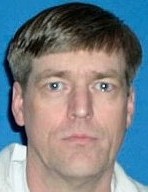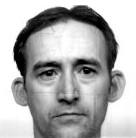




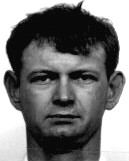
Forensic & Criminological Matrix
| Parameter | Forensic Detail |
|---|---|
| Forensic Heading / Aliases | null |
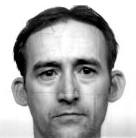
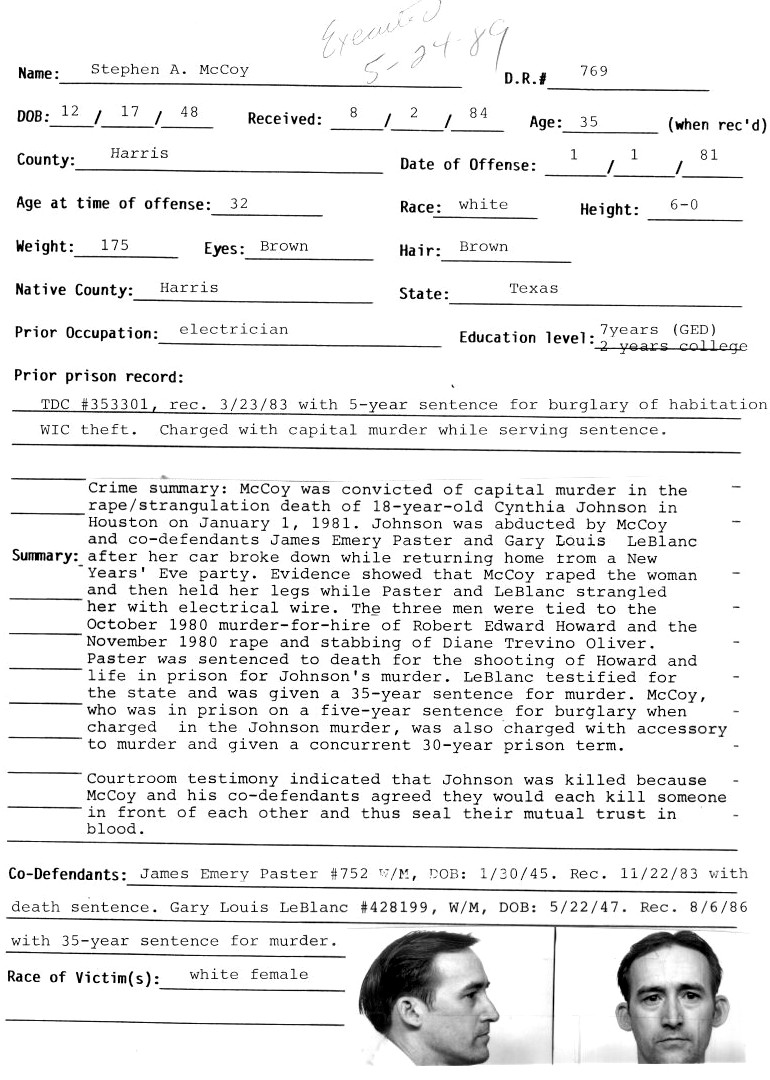
| Legal Identity | Stephen Albert McCoy |
| Confirmed Victims | 3 |
| Attributed / Indicted Victims | 3 |
| Active Timeline | 1980 - 1981 |
| Jurisdiction / Area of Operations | Houston, Texas, USA |
| Criminological Classification | Serial Killer / Contract Killer |
| Forensic Modus Operandi | Kidnapping, sexual assault, and homicide (strangulation/stabbing) |
| Weapon / Mechanism of Death | Electrical wire, knife, firearm |
| Motive / Behavioral Dynamics | Financial gain and criminal pact of silence |
| Judicial Outcome | Death penalty via lethal injection |
1. Background and Profile
Stephen Albert McCoy (1948–1989) was an American criminal whose violent career culminated in a series of murders in Houston, Texas. An electrician by trade with some college education, McCoy became part of a criminal trio with James Emery Paster and Gary LeBlanc. His profile is defined by a cold, calculated approach to violence, driven by a "blood oath" intended to eliminate any witnesses to their criminal activities.
2. Criminal Career and Modus Operandi
The group's criminal spree began in October 1980 when they were hired to kill Robert Edward Howard for $1,000. On October 25, 1980, they sabotaged Howard's truck and Paster shot him in the head. Following this, the group adopted a policy of killing witnesses. In mid-November 1980, they abducted Diana Trevino Oliver, raped her, and McCoy stabbed her to death. On January 1, 1981, they abducted 18-year-old Cynthia Darlene Johnson from the roadside, took her to a warehouse, raped her, and strangled her with an electrical cord.
3. Investigation and Arrest
The investigation relied heavily on the testimony of Gary LeBlanc, who turned state's evidence in exchange for a 35-year sentence. LeBlanc's testimony provided the forensic link between the three men and the series of murders. The investigation uncovered a pattern of kidnapping and systematic elimination of witnesses, which led to the swift identification and apprehension of McCoy and Paster.
4. Legal Proceedings and Outcome
McCoy was convicted for the murder of Cynthia Darlene Johnson. Despite his claims that he was merely present and did not participate in the final act of strangulation, the prosecution successfully argued that his involvement in the abduction and sexual assault made him equally culpable. His appeals were exhausted, and the U.S. Supreme Court denied a stay of execution by a 5-to-4 vote.
5. Forensic Conclusion and Execution
Stephen McCoy was executed by lethal injection at the Walls Unit in Huntsville, Texas, on May 24, 1989. He declined to make a final statement. His execution was the 31st in Texas since the resumption of capital punishment in 1976. His accomplice, James Paster, was executed later that same year, ending the reign of a group defined by their extreme brutality and lack of remorse.