Forensic & Criminological Matrix
| Parameter | Forensic Detail |
|---|---|
| Forensic Heading / Aliases | N/A |
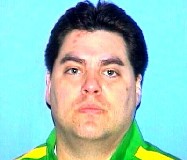
| Legal Identity | Eric Dawon Matthews |
| Confirmed Victims | 4 |
| Attributed / Indicted Victims | 4 |
| Active Timeline | 1990-1998 |
| Jurisdiction / Area of Operations | Louisiana, Indiana, Michigan, USA |
| Criminological Classification | Serial Killer |
| Forensic Modus Operandi | Manual strangulation and sexual assault |
| Weapon / Mechanism of Death | Strangulation |
| Motive / Behavioral Dynamics | Schizophrenia and impulse control disorder |
| Judicial Outcome | Life imprisonment without parole |
1. Background and Profile
Eric Dawon Matthews (born 1974) was identified by authorities as an individual suffering from severe schizophrenia. His criminological profile emerged following a series of violent acts that culminated in 1998. Despite his mental health issues, he managed to evade detection for several years until his final crime spree.
2. Crime Spree
Matthews' criminal activity peaked in May 1998. On May 18, he murdered his 20-year-old wife, Lashann Matthews, at their trailer home in Hammond, Louisiana. He then fled with her two children, Rosalyn and James. The body of 18-month-old James was discovered two days later in a trash bin behind a church in a New Orleans suburb. Matthews later confessed to strangling the boy in a fit of rage. Furthermore, he admitted to committing two rapes in Indiana and Louisiana, as well as the murders of two ex-girlfriends in the early 1990s in the Indianapolis and Michigan areas.
3. Investigation and Arrest
Matthews was arrested on May 21, 1998, in Chicago. At the time of his arrest, his stepdaughter Rosalyn was found unharmed in his custody. During subsequent interrogations, Matthews provided a full confession, detailing his involvement in the aforementioned homicides and sexual assaults.
4. Legal Proceedings and Outcome
The legal proceedings against Matthews lasted over eight years. Despite his full cooperation and confession, the District Attorney of Tangipahoa Parish initially sought the death penalty. Defense teams from the Louisiana Capital Assistance Center (LCAC) and GRACE presented extensive evidence of his severe mental illness and the victims' families' opposition to the death penalty. On August 30, 2006, a plea agreement was reached, resulting in a sentence of life imprisonment without the possibility of parole.