




Forensic & Criminological Matrix
| Parameter | Forensic Detail |
|---|---|
| Full Legal Name | Marcelo Costa de Andrade |
| Media Monikers | The Vampire of Niterói (O Vampiro de Niterói), The Rio Child Slayer |
| Nationality | Brazilian |
| Date of Birth | January 2, 1967, Rio de Janeiro, Brazil |
| Current Penal Status | Declared criminally non-imputable due to severe psychotic disorder with sadistic necrophilic paraphilia; committed indefinitely under security detention at Heitor Carrilho Psychiatric Prison Hospital, Rio de Janeiro |
| Confirmed Murder Victims | 14 young boys (aged 6 to 13) |
| Active Criminal Span | April 1991 – December 1991 (eight-month intensive child predation wave) |
| Geographic Jurisdiction | Niterói, São Gonçalo, and Itaboraí, State of Rio de Janeiro, Brazil |
| Forensic Lethal Mechanics | Mechanical asphyxiation via manual strangulation and t-shirt ligatures; cervical incised wounds |
| Aberrant Signatures | Active hematophagy (directly drinking spurting arterial and venous blood from neck wounds) and post-mortem necrophilia |
| Diagnosed Criminal Motive | Severe mystic-delusional psychosis, clinical vampirism syndrome, violent pedophilia, and compulsive necrophilia |
1. Criminological Trajectory and Psychopathology
Marcelo Costa de Andrade represents one of the most clinically aberrant and lethal cases of psychotic child predation and hematophagy in international forensic literature. Raised in squalor and chronic neglect in Rio de Janeiro's northern suburbs, Andrade suffered relentless sexual assault and physical brutality at the hands of older youths and relatives during childhood.
Entering adulthood, he labored sporadically as a hospital orderly and farmhand, sinking into social isolation and religious obsession. He developed a bizarre mystic-delusional construct: perceiving himself as inherently grotesque and damned, he believed that by drinking the warm blood of beautiful young boys, he would absorb their purity and youth, while simultaneously elevating their innocent souls directly into heaven as angels.
2. Modus Operandi and Predatory Mechanics
Over eight months in 1991, Andrade terrorized the coastal municipality of Niterói:
- Luring Vulnerable Boys: He patrolled public beaches, soccer fields, and evangelical church perimeters, approaching boys aged 6 to 13 with gentle warmth. He enticed them with ice cream, candies, or promises of discovering exotic birds' nests in the surrounding forested hills.
- Abduction to Wilderness Hillsides: He led the victims into secluded ravines, dense scrub forests, and abandoned brickworks across the hills of Niterói and São Gonçalo.
- Sexual Assault and Strangulation: In total isolation, Andrade overpowered the children, subjected them to violent sexual assault, and manually throttled them or strangled them using their own shirts.
- Ritual Hematophagy and Necrophilia: Slashing or biting into the jugular vein during the agonal dying phase, Andrade drank the flowing blood directly from the neck wounds. He subsequently engaged in post-mortem necrophilia before concealing the corpses beneath dried foliage.
3. Apprehension and Macabre Guided Tour
The serial disappearance of children sparked widespread terror in Niterói. Following the December 18, 1991 discovery of a boy's body bearing human bite marks on the neck, witnesses described seeing the victim walking toward the forest accompanied by a scarred young man.
Rio de Janeiro Civil Police detectives intercepted Andrade that same afternoon:
- Andrade exhibited eerie calm, offering an immediate, unprompted confession in a serene, conversational whisper.
- He confessed to killing fourteen boys, stating: "They were too beautiful to suffer in this cruel world... by drinking their blood, I transformed them into angels."
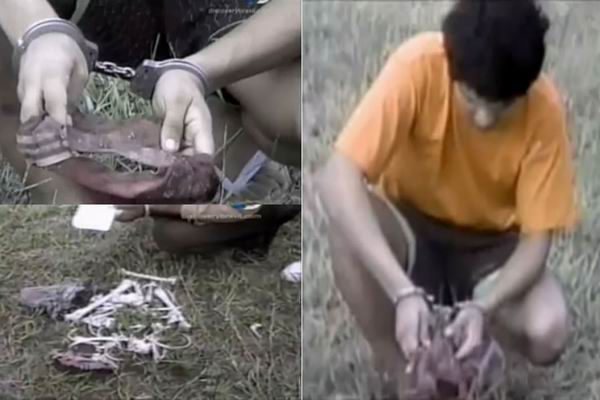
- Over the following week, Andrade guided forensic recovery squads through the hills, leading to the recovery and identification of fourteen child skeletal remains.
4. Psychiatric Evaluation and Legal Non-Imputability
The horrific nature of the crimes prompted comprehensive psychiatric evaluations by the Rio de Janeiro Institute of Forensic Medicine:
- Medical examiners unanimously determined that Andrade suffered from profound chronic psychosis and clinical vampirism, entirely lacking the capacity to appreciate the illicit nature of his actions.
- The court ruled him criminally insane (inimputable), ordering his indefinite custodial confinement in a psychiatric prison hospital.
5. Indefinite Confinement
Confined for more than thirty years at the Heitor Carrilho Psychiatric Prison Hospital, periodic forensic evaluations have consistently deemed Andrade untreatable, citing an unmitigated risk of violent recidivism. His case remains a foundational global reference on criminal hematophilia and predatory necrophilia.