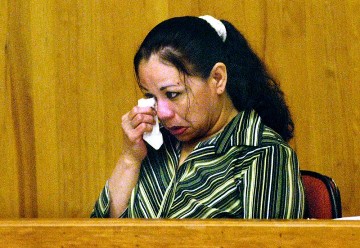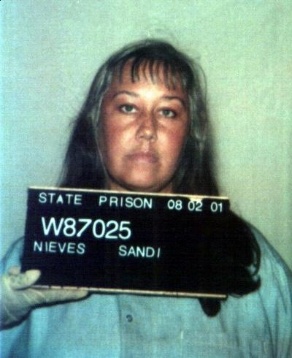


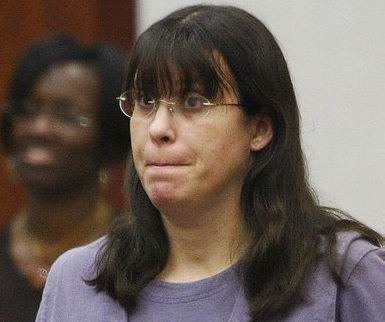
Forensic & Criminological Matrix
| Parameter | Forensic Detail |
|---|---|
| Forensic Heading / Aliases | Melissa Lucio / First Latina sentenced to death in Texas |
| Legal Identity | Melissa Elizabeth Lucio |
| Confirmed Victims | 1 (Mariah Alvarez, 2.5 years old) |
| Active Timeline | February 17, 2007 (date of death) |
| Jurisdiction / Area of Operations | Harlingen and Brownsville, Cameron County, Texas, USA |
| Criminological Classification | Familial homicide / Subject of prominent wrongful conviction claims |
| Forensic Modus Operandi | Repeated physical abuse on a minor; multi-stage bruising and severe trauma |
| Weapon / Mechanism of Death | Blunt force trauma (beatings, violent shaking, stomping) |
| Motive / Behavioral Dynamics | Extreme domestic abuse / Contested dispute between accidental fall vs. intentional homicide |
| Judicial Outcome | Capital murder conviction and death sentence in July 2008; currently under post-conviction review and indefinite execution stay |
1. Background and Profile
Melissa Elizabeth Lucio was born in the United States in 1969. Her personal background was characterized by economic hardship, domestic instability, and a history of familial dysfunction. As the mother of 14 children, her domestic environment in Harlingen, Texas, frequently intersected with Child Protective Services (CPS). Her youngest daughter, two-and-a-half-year-old Mariah Alvarez, had spent significant time in foster care before returning to the household months prior to her tragic death.
2. Criminal Career and Modus Operandi
On February 17, 2007, emergency responders arrived at an apartment on Lee Street in Harlingen, finding toddler Mariah Alvarez unresponsive. She was rushed to Valley Baptist Medical Center, where medical personnel pronounced her dead. Forensic examinations revealed catastrophic injuries: scattered bruising in various stages of healing, severe cranial trauma, contusions to the kidneys, lungs, and spinal cord, and a recently fractured arm. Prosecutors asserted that Mariah's injuries were the direct result of prolonged, severe physical abuse and battering inflicted by her mother.
3. Investigation and Arrest
The investigation was conducted by the Harlingen Police Department and the Texas Rangers. Following the toddler's death, Melissa Lucio and her partner, Roberto Antonio Alvarez, were detained. Lucio was subjected to a coercive, hours-long nocturnal interrogation running from approximately 10:00 p.m. to early morning hours without formal legal counsel. Using a baby doll during questioning to reconstruct events, investigators maintained that Lucio confessed to hitting and violently shaking the child. Detectives also pointed to intercepted jail or phone communications as incriminating evidence, though defense teams and relatives fiercely disputed these interpretations.
4. Legal Proceedings and Outcome
Lucio was arrested on February 18, 2007, and formally indicted for capital murder. Her trial commenced in July 2008 before the 138th Judicial District Court in Cameron County. Defense attorneys argued that Mariah's fatal injuries stemmed not from intentional abuse, but from an accidental fall down a steep flight of stairs at the family's former residence on Madison Avenue roughly 24 hours prior. The defense also challenged the voluntariness and integrity of Lucio's confession, highlighting aggressive interrogation tactics and a lack of corroborative forensic testing. On July 8, 2008, the jury returned a guilty verdict, and on July 22, Lucio was sentenced to death by lethal injection, making her the first Hispanic woman condemned to death row in Texas history.
5. Psychiatric Evaluation and Aftermath
Melissa Lucio's case generated massive national and international legal controversy, evolving into a landmark symbol regarding wrongful convictions, police coercion during interrogations, and flawed forensic interpretations of child abuse. Her plight gained widespread prominence following the 2020 documentary The State of Texas vs. Melissa. Human rights advocates, Texas state lawmakers, and forensic experts rallied behind her appeals, arguing that vital evidence supporting the accidental fall theory had been suppressed and that her confession was false. In April 2002, the Texas Court of Criminal Appeals granted a crucial stay of execution hours before her scheduled lethal injection, remanding the case for lower court examination of new innocence claims.