




Forensic & Criminological Matrix
| Parameter | Forensic Detail |
|---|---|
| Forensic Heading / Aliases | Jennifer Hyatte (Alias "Bonnie") |
| Legal Identity | Jennifer Forsyth Hyatte |
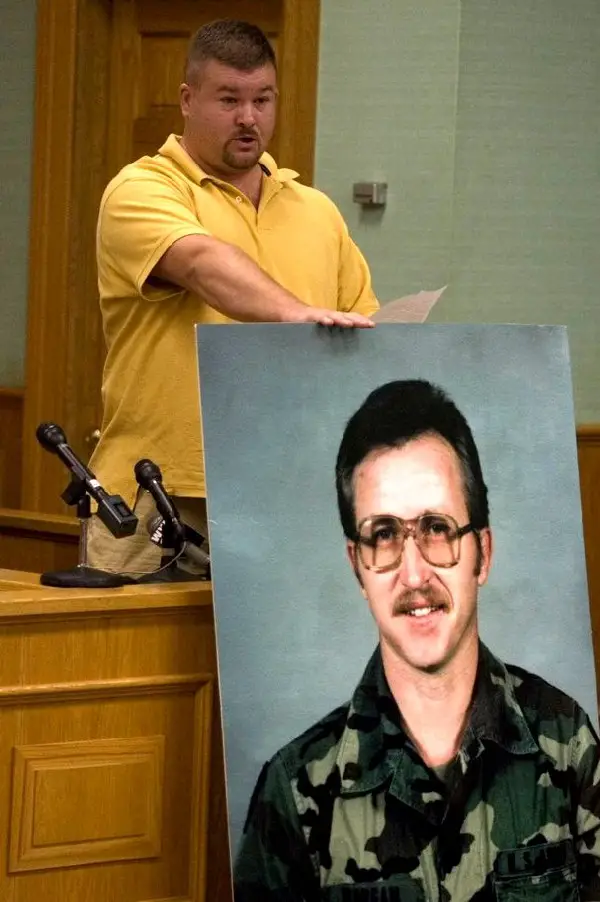
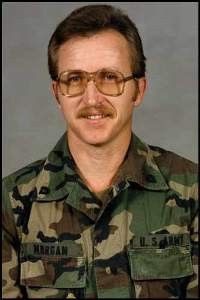
| Confirmed Victims | 1 corrections officer (Wayne "Cotton" Morgan) |
| Active Timeline | August 9, 2005 |
| Jurisdiction / Area of Operations | Roane County, Tennessee, USA |
| Criminological Classification | Accomplice / Ideological-Passion Murderer with Firearms |
| Forensic Modus Operandi | Planning and executing an armed ambush outside a courthouse to violently liberate an incarcerated inmate |
| Weapon / Mechanism of Death | Semiautomatic firearm / Ballistic trauma |
| Motive / Behavioral Dynamics | Hyper-dependent obsession with her inmate husband (George Hyatte); romanticized self-perception as 1930s-style fugitive outlaws |
| Judicial Outcome | Sentenced to life imprisonment without parole (September 2007) for first-degree murder and attempted first-degree murder |
1. Background and Profile
Jennifer Forsyth Hyatte was born in 1974 in the United States. Trained as a healthcare professional, she worked as a nurse within Tennessee correctional facilities. Her career took a critical criminological turn when she encountered George Hyatte, an inmate with a lengthy violent criminal record dating back to 1990. Jennifer began smuggling contraband and food items into the facility for him, which ultimately led to her termination in 2004. Despite losing her professional standing and initial physical separation, their relationship deepened, culminating in a prison wedding ceremony in May 2005. Forensic evaluations and confiscated personal letters later revealed an extreme emotional dependency dynamic, characterized by Hyatte as a spiritual merging of souls and romanticized under the classic "Bonnie and Clyde" outlaw archetype.
2. Crime Spree
On August 9, 2005, George Hyatte was transported for a court hearing at the Roane County Courthouse in Kingston, Tennessee. As the proceedings concluded and guards escorted the shackled inmate toward a Tennessee Department of Correction transport van, Jennifer Hyatte initiated a pre-planned intervention. Parked nearby in a blue Ford Explorer, she stepped out brandishing a firearm. Amid shouted warnings and immediate defensive reactions from the guards, Jennifer opened fire at close range. Corrections officer Wayne "Cotton" Morgan sustained fatal gunshot wounds, while another guard was seriously wounded. Following the shooting, the couple fled the scene in the vehicle, initiating an interstate flight toward Ohio.
3. Investigation and Manhunt
The escape triggered a massive multi-agency manhunt coordinated by the U.S. Marshals Service along with state law enforcement in Tennessee and Ohio. During her brief 36 hours of freedom, Jennifer kept personal journals and wrote letters expressing elation over her actions, signing correspondence as "Bonnie" and referring to her husband as "Clyde." A tip from a cab driver who transported them from the Cincinnati area allowed federal agents to locate the fugitives in a Columbus, Ohio motel. On August 11, 2005, a tactical team raided the room and apprehended both suspects without bloodshed, seizing handwritten notes and diaries that served as critical trial evidence.
4. Legal Proceedings and Outcome
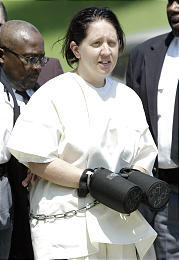
Following extradition to Tennessee, Jennifer Hyatte entered a plea negotiation strategy to avoid the death penalty. On September 17, 2007, before the Roane County Criminal Court, she formally pleaded guilty to first-degree murder in the death of Officer Wayne "Cotton" Morgan, alongside attempted first-degree murder and facilitating an escape. During the sentencing hearing, after hearing emotional victim impact statements from the Morgan family, Hyatte read an apology statement acknowledging the unforgivable nature of her crimes. Judge Eugene Eblen sentenced her to life imprisonment without the possibility of parole, a sentence she began serving at the Tennessee Prison for Women in Nashville.
5. Psychiatric Assessment and Aftermath
From a criminological standpoint, Jennifer Hyatte's case exemplifies the severe risks of boundary erosion and hyper-attachment between institutional staff and predatory inmates. Although defense claims initially touched upon manipulation or psychological dominance, forensic examinations and her own recovered writings confirmed full cognitive awareness and an active, willing role in executing the armed rescue. Her life sentence firmly concluded an episode that profoundly shocked the Tennessee correctional system and underscored the dangers of emotional subversion within penal environments.