




Forensic & Criminological Matrix
| Parameter | Forensic Detail |
|---|---|
| Forensic Heading / Aliases | Melissa Huckaby |
| Legal Identity | Melissa Huckaby |
| Confirmed Victims | 1 (Sandra Renee Cantu) |
| Active Timeline | March 2009 |
| Jurisdiction / Area of Operations | Tracy, California, United States |
| Criminological Classification | Child Murderer / Individual Offender |
| Forensic Modus Operandi | Social proximity enticement, abduction, physical assault, homicide, and concealment of evidence in an aquatic environment |
| Weapon / Mechanism of Death | Asphyxiation / Blunt force and submersion |
| Motive / Behavioral Dynamics | Severe behavioral deviance and predatory aggression |
| Judicial Outcome | Life imprisonment without the possibility of parole (2010) |
1. Background and Psychopathy
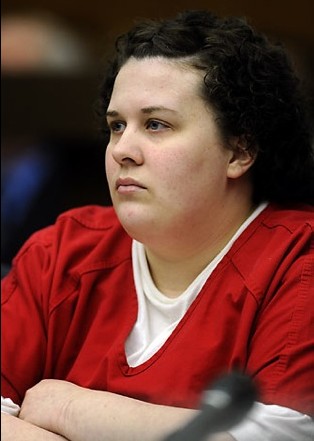
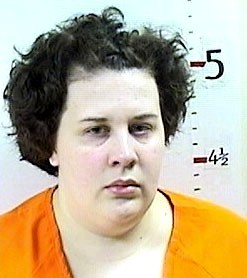
Melissa Huckaby was born in 1981 in the United States. Prior to committing the crime that shocked the American public, she resided in Tracy, California, where she worked as a Sunday school teacher. Her facade of community respectability concealed latent psychological disturbances that ultimately manifested in a violent predatory assault against a young neighbor.
2. Crime Spree and Modus Operandi
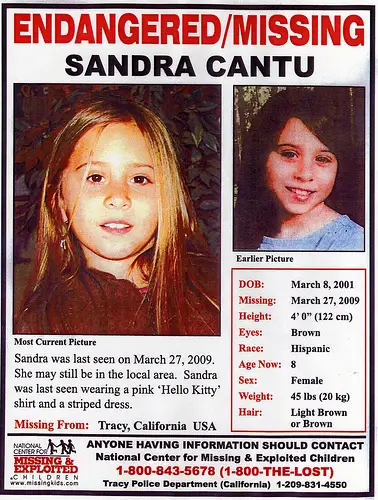
On March 27, 2009, 8-year-old Sandra Renee Cantu disappeared in Tracy, California. Subsequent investigations revealed that Huckaby had lured the victim into her sphere, kidnapped her, and subjected her to severe abuse before murdering her. The modus operandi relied heavily on exploiting neighborhood trust to facilitate contact, followed by the rapid concealment of the victim's body inside a suitcase dumped into a local irrigation pond.
3. Police Investigation and Forensic Hunt
The disappearance triggered a massive local and national search operation. Ten days later, on April 6, 2009, workers draining a local irrigation pond discovered the suitcase containing Sandra Cantu's remains. Forensic evidence recovered at the scene and surrounding areas quickly pointed law enforcement toward Huckaby, whose behavior during police interviews had raised significant suspicion.
4. Arrest and Judicial Proceedings
On April 10, 2009, police formally arrested 28-year-old Melissa Huckaby, charging her with kidnapping, rape, and capital murder. Confronted with overwhelming forensic evidence during the legal proceedings, Huckaby pleaded guilty to kidnapping and murder to avoid the death penalty. In 2010, she was formally sentenced to life imprisonment without the possibility of parole.
5. Psychiatric Evaluation and Outcome
The case highlighted the dangers posed by offenders operating under a dual life of apparent moral rectitude. Huckaby was remanded to a California correctional facility, where she remains incarcerated under maximum security conditions, having stated in later evaluations that she struggles to comprehend the underlying impulses of her actions.