



Forensic & Criminological Matrix
| Parameter | Forensic Detail |
|---|---|
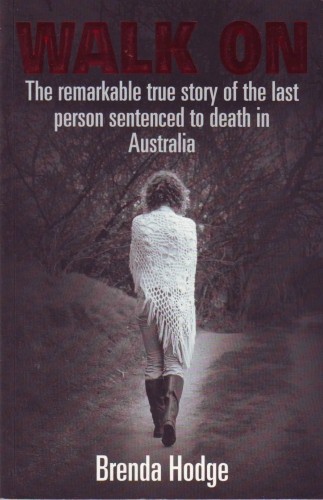
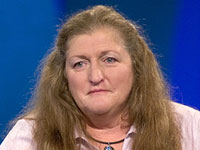
| Forensic Heading / Aliases | Brenda Hodge / The Last Woman Sentenced to Death in Australia |
| Legal Identity | Brenda Hodge |
| Confirmed Victims | 1 (Peter Rafferty) |
| Active Timeline | March 1984 |
| Jurisdiction / Area of Operations | Kalgoorlie, Western Australia, Australia |
| Criminological Classification | Domestic homicide / Intimate partner violence |
| Forensic Modus Operandi | Single-barrel shotgun attack, pursuit of fleeing victim, consecutive reloading and multiple ballistics discharges |
| Weapon / Mechanism of Death | 12-gauge single-barrel shotgun |
| Motive / Behavioral Dynamics | Domestic dispute, untreated depression, and alcohol abuse within an extremely volatile relationship |
| Judicial Outcome | Sentenced to death by hanging in 1984 (commuted to life imprisonment); paroled in 1995 |
1. Background and Profile
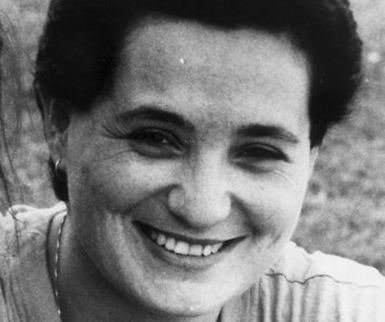
Brenda Hodge was born in Victoria, Australia, in 1951. Leaving formal education at the age of thirteen, she worked across farms and remote regions of the Northern Territory. In December 1983, while visiting the mining town of Leonora for the Christmas holidays, she encountered Peter Rafferty, a 39-year-old police sergeant and father of four teenagers. In January 1984, Hodge accepted Rafferty's invitation to relocate with him to Kalgoorlie. Their cohabitation was rapidly marred by intense domestic friction and mutual alcohol consumption.
2. Crime Spree and Modus Operandi
After three months of volatile cohabitation, the relationship reached a fatal breaking point in mid-March 1984. While Hodge was packing her belongings to leave the residence, a heated verbal argument ensued. Hodge retrieved a single-barrel shotgun and shot Rafferty. When the wounded victim attempted to flee and sought refuge in an exterior shed, Hodge pursued him, repeatedly reloading the firearm and discharging multiple fatal blasts into him. Following the homicide, Hodge stopped at a local deli for a soft drink, visited a hotel to confess to a friend—who disbelieved her—and contemplated suicide at a scenic lookout before turning herself in at the Kalgoorlie police station.
3. Investigation and Arrest
Law enforcement did not require an extensive manhunt, as Hodge voluntarily walked into the Kalgoorlie police station to confess. Crime scene reconstruction and ballistic analysis verified the sequence of events: multiple close-range gunshots administered after a pursuit across the property, refuting claims of a purely defensive single discharge. Forensic evaluations noted the heavy intoxication of both parties and confirmed that the victim had engaged in verbal abuse but had not inflicted physical violence upon the offender.
4. Legal Proceedings and Outcome
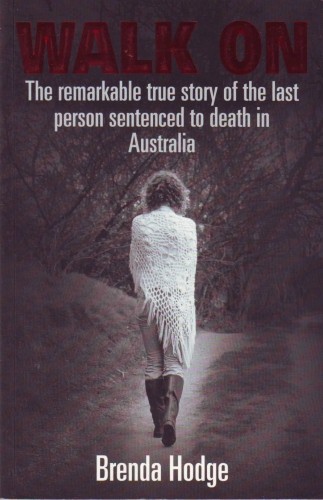
Prosecuted for the murder of Peter Rafferty, Hodge was convicted at trial in 1984. The court sentenced her to death by hanging, marking her historically as the final person and the last woman to receive a death sentence in Western Australia and Australia as a whole. Her capital sentence was promptly commuted to life imprisonment that same year as Western Australia abolished capital punishment. She served slightly under twelve years behind bars before being granted parole in 1995.
5. Psychiatric Assessment and Aftermath
During her incarceration, Hodge engaged deeply in rehabilitation and academic pursuits. She completed her high school matriculation by correspondence with top honors, earned a university degree and a graduate diploma in creative writing, and later published a collection of prison-life poetry titled One of Many. After her release on parole in 1995, her transition into literary circles provoked significant criminological debate regarding the public perception of female offenders, domestic violence narratives, and accountability for capital crimes.