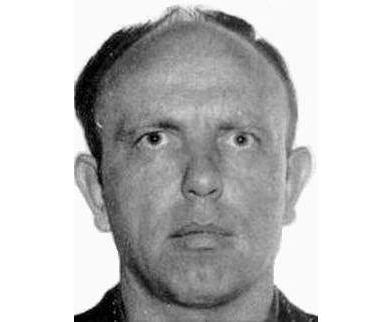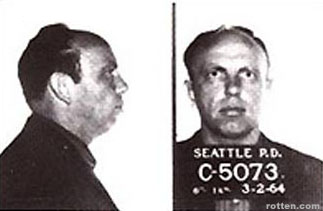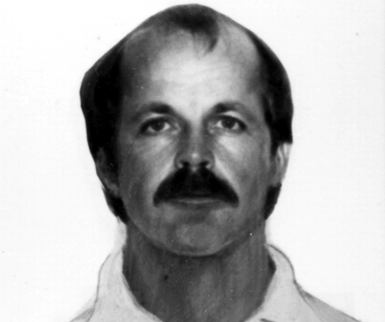





Forensic & Criminological Matrix
| Parameter | Forensic Detail |
|---|---|
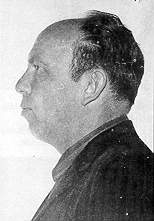
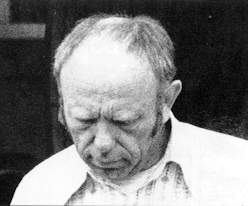
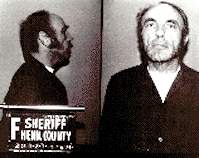
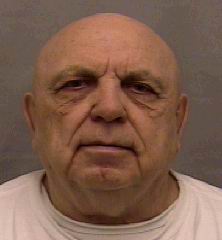
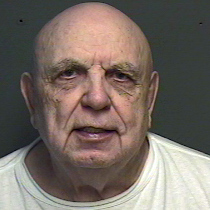
| Full Legal Name | Harvey Miguel Carignan (penally documented as Harvy Carignan) |
| Criminal Monikers | The Want Ad Killer, The Hammer Slayer |
| Born | May 18, 1927, Fargo, North Dakota, United States |
| Died | March 6, 2023 (aged 95), Minnesota Department of Corrections Facility, Faribault, USA |
| Manner of Death | Natural mortality in gerontological penal confinement |
| Criminological Classification | Organized itinerant serial killer, predatory sadist, and career hammer bludgeoner |
| Active Spree Range | 1949 (Alaska territory) / 1972–1974 (Washington and Minnesota) |
| Geographical Scope | Anchorage (Alaska), Seattle and Everett (Washington), Minneapolis and Twin Cities (Minnesota) |
| Confirmed Murder Convictions | At least 5 proven fatalities (Laura Showatler in 1949; Leslie Laura Brock in 1972; Kathy Sue Miller in 1973; Eileen Hunley and Katherine Shultz in 1974); multiple surviving victims of attempted bludgeoning and aggravated assault (Gwen Burton, Jerri Billings, Dorcas Callen) |
| Suspected Victims | More than 15 unproven killings linked to 181 hand-drawn red circles across his confiscated interstate road atlases |
| Modus Operandi | Posting deceptive want ads for service station and office personnel in regional gazettes or stalking teenage hitchhikers; abducting victims to secluded rural locations, administering prolonged sexual torture, and pulverizing cranial structures with steel claw hammers |
| Signature Weapon | Standard carpenter's claw hammer, heavy iron wrenches, and binding ropes |
| Legal Landmark | Sentenced to hang in Alaska in 1950, his execution was vacated by the U.S. Supreme Court on a procedural confession violation (McNabb-Mallory rule), facilitating his release and subsequent multi-state killing sprees |
| Current Status | Deceased while serving consecutive multi-decade life sentences in March 2023 |
EXECUTIVE SUMMARY & CRIMINOLOGICAL NOTORIETY
Harvey Miguel Carignan stands as one of the most glaring demonstrations of institutional failure in twentieth-century American penal jurisprudence. Documented extensively by true crime author and criminologist Ann Rule in her definitive book The Want Ad Killer, Carignan demonstrated an unreformable predatory profile across a violent career spanning five decades.
Sentenced to death by hanging in 1950 for the rape-murder of a woman in Anchorage, Alaska, Carignan escaped the gallows when the United States Supreme Court overturned his capital conviction due to a police procedural delay in formal arraignment. After serving time in Alcatraz and receiving parole, Carignan exploited newspaper classified advertisements and vulnerable highway hitchhikers to orchestrate a reign of terror characterized by claw-hammer skull fractures.
EARLY TROUBLES AND THE ALASKA HANGING SENTENCE (1949)
Born in Fargo, North Dakota, in 1927, Carignan experienced childhood neglect, enuresis, and recurrent juvenile reformatory sentences in Mandan for theft and violent outbursts. While incarcerated, he was diagnosed with Sydenham's chorea and exhibited deep-seated misogynistic resentment.
Enlisting in the U.S. Army at eighteen, he was assigned to Fort Richardson in Anchorage, Alaska. On July 31, 1949, Carignan assaulted 57-year-old Laura Showatler, raping her and bludgeoning her to death with heavy stones and wooden implements. Weeks later, he attacked Dorcas Callen, who escaped and positively picked Carignan out of an army lineup.
Convicted in federal territorial court in 1950, Carignan was sentenced to hang. However, in 1951, the U.S. Supreme Court ruled his oral confession inadmissible under the McNabb rule because officers had interrogated him prior to immediate magistrate arraignment. Escaping capital execution, he was transferred to Alcatraz Federal Penitentiary, serving eight years before gaining controversial parole in April 1960.
INTERSTATE PAROLES AND THE WASHINGTON WANT ADS
Between 1960 and 1972, Carignan shuttled between prison terms for burglary, assault, and attempted rape in Minnesota and Washington State Penitentiary at Walla Walla.
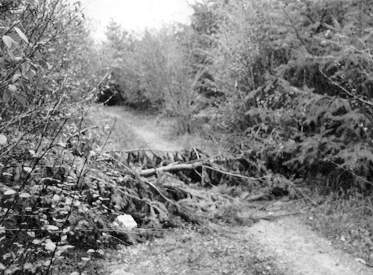
By 1973, leasing a gas station in Everett, Washington, Carignan devised a deceptive entrapment strategy: placing newspaper classified ads (want ads) seeking young female attendants. Fifteen-year-old Kathy Sue Miller answered the advertisement on May 1, 1973, and disappeared. Months later, hikers discovered her naked remains on an Indian reservation north of Everett, wrapped in plastic sheeting with nickel-sized puncture fractures driven through her cranium by a carpenter's hammer.
During this period, several hitchhikers and women at bus shelters were assaulted, choked, and beaten with hammers, escaping only by leaping from Carignan’s moving pickup truck.
THE MINNESOTA BLUDGEONING WAVE (1974)
In 1974, Carignan returned to Minneapolis, trolling interstate highways and commercial parking facilities:
- Eileen Hunley (August 1974): After breaking off her brief relationship with Carignan, she vanished on August 10. Her decomposed body was located five weeks later in Sherburne County, her skull imploded by catastrophic hammer blows.
- June Lynch and Lisa King (September 8, 1974): Hitchhikers picked up in Minneapolis; Carignan drove to a secluded roadside and struck Lynch in the skull with a hammer. King escaped to summon police, leaving Lynch permanently injured but alive.
- Gwen Burton (September 14, 1974): Abducted from a Sears department store parking lot, throttled into unconsciousness, sexually assaulted with a hammer, and discarded in a rural field; she survived by crawling to an access road.
- Katherine Shultz (September 20, 1974): University student abducted on her way to class; discovered the following day by bird hunters in a cornfield forty miles from the Twin Cities, having suffered fatal cranial destruction.
THE 181 RED CIRCLES ATLAS AND CONVICTION
Forensic cross-referencing between Seattle homicide detectives and Minneapolis investigators quickly linked the distinctive circular cranial punctures to Carignan. Surviving victims picked him out of physical lineups without hesitation.
During searches of Carignan's vehicle, detectives uncovered national road atlases featuring 181 precise red ink circles marking remote rural clearings and highway intersections. Subsequent investigations established that several circles corresponded directly to discovery sites of unsolved female homicide victims—including Laura Brock in Coupeville, Washington, and an unidentified victim in North Dakota—reinforcing suspicions that his true victim tally exceeded dozens.
Tried in Minnesota in 1975 for attempted murder, aggravated sodomy, and first-degree homicide, Carignan's insanity defense was rejected by the jury. He was sentenced to multiple consecutive terms totaling over 150 years. He spent the remainder of his life in maximum security custody, dying in prison of natural causes in March 2023 at the age of 95.