




Forensic & Criminological Matrix
| Parameter | Forensic Detail |
|---|---|
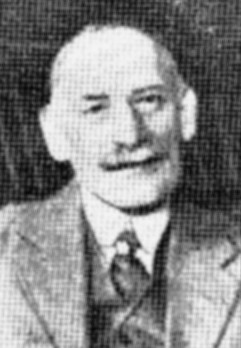
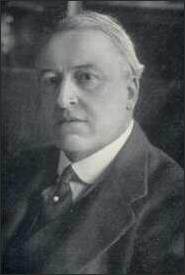
| Full Legal Name | Harold Greenwood (later assumed the alias Harold Pilkington) |
| Criminal Monikers | The Kidwelly Poisoning Case, The Rumsey House Mystery |
| Born | 1874, Huddersfield, Yorkshire, England, United Kingdom |
| Died | 1929 (aged 55), Sellack, Herefordshire, England, United Kingdom |
| Manner of Death | Natural death following quiet agrarian retirement |
| Criminological Classification | Historical domestic arsenic suspect acquitted at trial (not guilty) |
| Critical Event Date | June 16, 1919 (fatality of Mabel Greenwood) |
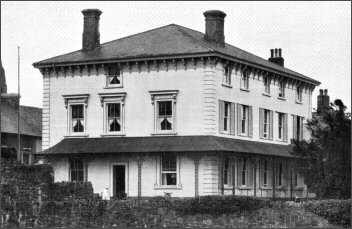
| Geographical Jurisdiction | Rumsey House, Kidwelly, Carmarthenshire, Wales, United Kingdom |
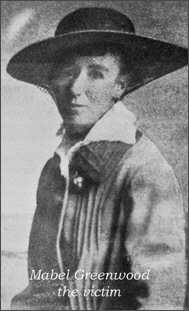
| Alleged Murder Victim | Mabel Greenwood (the defendant's 47-year-old wife; exhumation uncovered 16 to 32 mg of arsenic in bodily viscera) |
| Judicial Determination | Unanimously acquitted of murder by jury at Carmarthen Assizes |
| Contested Toxic Agent | Arsenic trioxide found in weedkiller versus fatal medical overdose of morphia administered by the attending family physician |
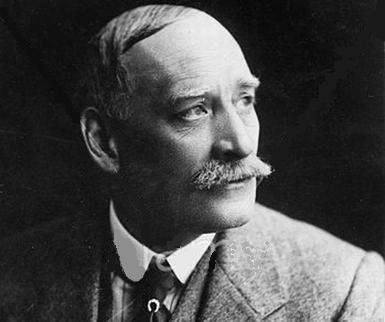
| Lead Defense Counsel | Sir Edward Marshall Hall, KC, England's preeminent trial advocate of the early twentieth century |
| Legal Verdict | Acquitted on November 9, 1920; fully exonerated under British common law |
EXECUTIVE SUMMARY & HISTORICAL TRIAL SIGNIFICANCE
The November 1920 trial of Yorkshire solicitor Harold Greenwood at Carmarthen Assizes represents a masterclass in forensic advocacy and toxicological cross-examination. Accused of murdering his invalid wife Mabel by introducing weedkiller arsenic into a lunchtime bottle of wine, Greenwood faced the gallows amid intense provincial gossip, a swift remarriage to a much younger bride, and hostile local rumors.
Represented by the famed English barrister Sir Edward Marshall Hall, the defense systematically dismantled the prosecution's forensic hypothesis. Marshall Hall demonstrated that the attending physician had administered potentially lethal overdoses of morphine while the victim's own daughter delivered decisive testimony proving that family members drank freely from the allegedly poisoned wine bottle without ill effect.
DOMESTIC BACKGROUND AT RUMSEY HOUSE
Harold Greenwood moved his legal practice to South Wales in 1898 following his marriage to Mabel Bowater, daughter of a prominent London family. The couple settled at Rumsey House, an expansive manor in Kidwelly, Carmarthenshire, where they lived with domestic staff and raised four children.
While maintaining social prominence, Greenwood's solicitor practice in nearby Llanelly struggled financially. Mabel suffered from chronic digestive distress and nervous anxiety, relying heavily on palliative medicines.
FATALITY OF MABEL GREENWOOD (JUNE 1919)
On June 16, 1919, after eating gooseberry pie at family lunch, Mabel Greenwood was stricken with severe abdominal pain, nausea, and vomiting. Greenwood administered brandy and summoned the family physician, Dr. Thomas Griffiths.
Dr. Griffiths attended the bedside, dispensing medications containing bismuth, morphia, and sedative opium preparations. Early the following morning, June 17, Mabel Greenwood died. Dr. Griffiths certified the cause of death as natural valvular heart failure, and she was interred in the local churchyard without an autopsy.
VILLAGE GOSSIP, REMARRIAGE, AND EXHUMATION
In October 1919—four months after his wife's burial—Greenwood married Gladys Jones, a 31-year-old local woman whose father was the rector. The abrupt union scandalized Kidwelly society, inciting malicious whispers and anonymous letters alleging foul play.
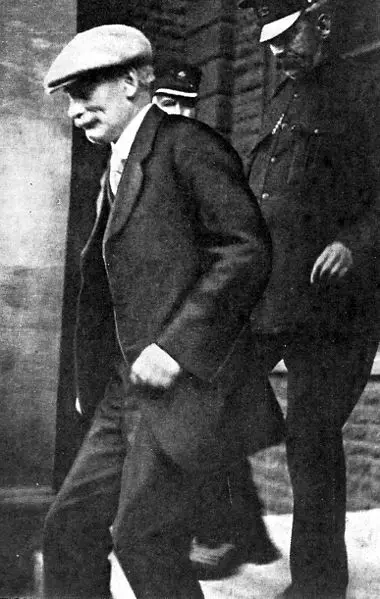
Yielding to public pressure, the Home Office authorized exhumation in April 1920. Home Office toxicologist John Webster analyzed the viscera and detected between 0.25 and 0.5 grains (16 to 32 mg) of arsenic trioxide, noting an absence of acute heart pathology. Because Greenwood had previously purchased arsenical weedkiller to clear gravel paths, an inquest returned a verdict of willful murder against him, leading to his arrest on June 17, 1920.
THE CARMARTHEN TRIAL AND SIR EDWARD MARSHALL HALL
Greenwood's murder trial convened in November 1920 before Mr. Justice Shearman. Prosecuting counsel Sir Edward Marlay Samson contended that Greenwood had covertly poisoned a bottle of burgundy wine served to his wife.
Sir Edward Marshall Hall spearheaded the defense with extraordinary forensic vigor:
- Medical Malpractice Exposure: Marshall Hall cross-examined Dr. Griffiths, exposing discrepancies in his clinical notes and proving that the doctor had administered dangerous mixtures of morphia and opium capable of triggering respiratory collapse in an already weakened patient.
- Testimony of Irene Greenwood: The defendant's 22-year-old daughter took the stand and testified under oath that she personally drank wine from the exact same bottle as her mother during lunch, experiencing no symptoms whatsoever.
In his final address to the jury, Justice Shearman emphasized: "If she also drank from the bottle, there is an end of the case."
ACQUITTAL AND RETIREMENT
On November 9, 1920, following two hours of deliberation, the jury returned a verdict of NOT GUILTY.
In an unread rider to the verdict, the jurors noted that while a dangerous dose of arsenic had somehow entered Mabel's system, there was no credible proof it caused her death, nor any evidence linking Harold Greenwood to its administration.
Seeking escape from persistent notoriety, Harold Greenwood and his wife relocated to the quiet parish of Sellack in Herefordshire. Assuming the name Harold Pilkington, he lived in peaceful obscurity until his death from natural causes in 1929 at age 55.