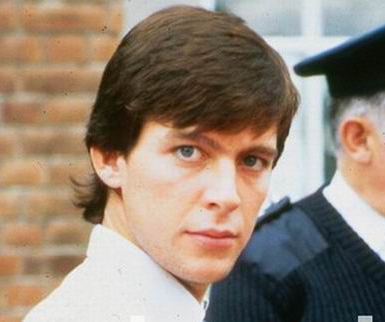




Forensic Case Matrix
| Parameter | Forensic Detail |
|---|---|
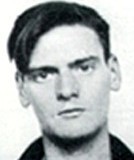
| Full Legal Name | Peter Griffiths |
| Investigative Identity | Peter Griffiths |
| Judicial / Historic Designation | The June Anne Devaney Case / The World's First Mass Fingerprinting Inquiry |
| Date of Birth | March 22, 1926 |
| Place of Birth | Blackburn, Lancashire, England, United Kingdom |
| Date of Execution | November 19, 1948 (aged 22) |
| Place of Execution | HM Prison Walton, Liverpool, England |
| Legal Cause of Death | Judicial execution by hanging (Executioner: Albert Pierrepoint) |
| Crime Scene | Ward CH3 and perimeter grounds, Queen's Park Hospital, Blackburn |
| Date of Offense | May 15, 1948 |
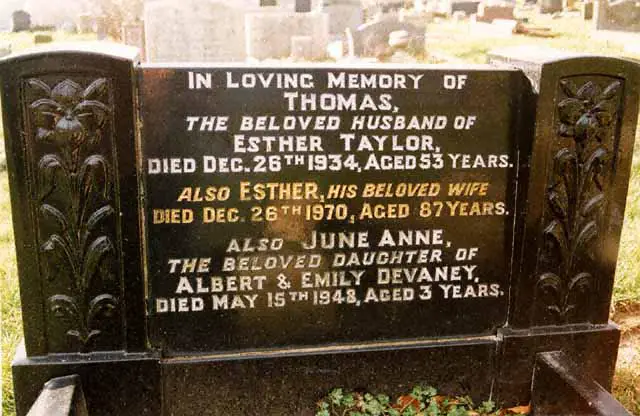
| Confirmed Fatal Victim | June Anne Devaney (3 years, 11 months old) |
| Procedural Status | Convicted of capital murder; executed following rejection of appeal |
| Forensic Landmark | First criminal investigation in forensic history resolved through comprehensive civilian mass fingerprint screening (46,253 adult males) |
| Trial Jurisdiction | Lancaster Castle Assizes |
The Queen's Park Hospital Abduction: May 15, 1948
In the early morning hours of Saturday, May 15, 1948, night duty nurses at Ward CH3 of Queen's Park Hospital in Blackburn discovered the cot of three-year-old patient June Anne Devaney, admitted for mild bronchitis, was empty. Inspection of the linoleum floor revealed damp stockinged footprints and a heavy glass Winchester medicine bottle displaced underneath the crib.
Following a search across the hospital complex, the child's body was discovered lying in the grass adjacent to the perimeter boundary wall, approximately ninety yards from the ward. A medical autopsy established severe sexual assault and catastrophic skull fractures inflicted by swinging the infant against the stone masonry wall.
Scotland Yard's Landmark Fingerprint Operation
Detective Chief Inspector John Capstick and fingerprint expert Colin Campbell of Scotland Yard were dispatched to direct the investigation. Forensic dusting of the Winchester bottle recovered a complete set of latent fingerprint impressions belonging to the intruder. The prints found no match in the national criminal registry at New Scotland Yard.
Confronted with an unprecedented crime, investigators devised an operation never before attempted in criminal history: collecting fingerprints from the entire male civilian population aged sixteen and over residing in Blackburn, cross-referenced with postwar civilian food rationing books.
Over three months, police teams fingerprinted 46,253 men across Blackburn, comparing each card manually against the latent impressions lifted from the Winchester bottle.
Match #46,251, Confession, and Execution
On August 12, 1948, fingerprint technician William Barton examined card number 46,251, belonging to Peter Griffiths, a twenty-two-year-old former Scots Guardsman employed at a local flour mill. The comparison yielded an indisputable sixteen-point biometric match with the palm and finger impressions on the hospital bottle.
Detectives arrested Griffiths at his home on Birley Street that evening. When shown the fingerprint charts, Griffiths made a full confession: "I hope I get what I deserve. I had been drinking... I don't know why I did it." He detailed climbing through the hospital window in socks and carrying the child to the stone wall.
At his October 1948 trial at Lancaster Castle Assizes before Mr. Justice Oliver, the defense argued insanity and temporary alcoholic psychosis. The jury required only twenty-three minutes to return a verdict of guilty of capital murder. Griffiths was hanged at Walton Prison in Liverpool on November 19, 1948, by Albert Pierrepoint. Following the execution, all 46,000 civilian fingerprint records were ceremonially pulped and destroyed in accordance with police commitments.