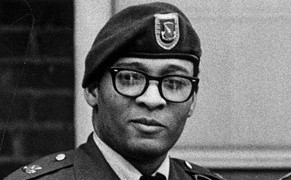





Forensic & Criminological Matrix
| Parameter | Forensic Detail |
|---|---|
| Forensic Heading / Aliases | N/A |
| Legal Identity | Ronald Adrin Gray |
| Confirmed Victims | 4 |
| Attributed / Indicted Victims | 4 |
| Active Timeline | 1986-1987 |
| Jurisdiction / Area of Operations | Fayetteville, North Carolina (Fort Bragg) |
| Criminological Classification | Serial Killer / Rapist |
| Forensic Modus Operandi | Abduction, sexual assault, and homicide |
| Weapon / Mechanism of Death | Strangulation, firearms, blunt force |
| Motive / Behavioral Dynamics | Sexual predation and sadism |
| Judicial Outcome | Sentenced to death by court-martial (pending) |
1. Background and Profile
Ronald Adrin Gray was born in 1965 in Cochran, Georgia. His upbringing was characterized by significant trauma, including physical abuse by his stepfather. Forensic psychiatric testimony provided by Colonel David Armitage during his court-martial highlighted these early life experiences as foundational to his later criminal behavior. Gray enlisted in the U.S. Army in 1984, eventually serving as a cook with the 504th Parachute Infantry Regiment, 82nd Airborne Division, at Fort Bragg.
2. Criminal Career and Modus Operandi
Gray's criminal spree occurred while he was stationed at Fort Bragg. He was convicted of four counts of murder, one count of attempted murder, and eight counts of rape. His modus operandi involved targeting individuals in the vicinity of the base, utilizing his position of authority and access to commit violent sexual assaults, followed by the murder of his victims to conceal his crimes.
3. Investigation and Arrest
Due to the nature of the crimes and the involvement of military personnel, the investigation was handled by military authorities. The collection of forensic evidence, including biological samples and witness statements, was instrumental in securing his conviction within the military justice system.
4. Legal Proceedings and Outcome
Gray was tried and convicted by a military court-martial, receiving a death sentence. His case is notable for the rarity of military capital punishment in the modern era. His scheduled execution in 2008 was stayed by a federal judge, and he remains on the military death row as legal appeals continue to challenge the sentence.