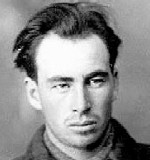






Forensic & Criminological Matrix
| Parameter | Forensic Detail |
|---|---|
| Forensic Heading / Aliases | null |
| Legal Identity | John Sterling Gardner Jr. |
| Confirmed Victims | 3 |
| Attributed / Indicted Victims | 3 |
| Active Timeline | December 1982 |
| Jurisdiction / Area of Operations | Winston-Salem and Rowan County, North Carolina |
| Criminological Classification | Multiple murderer / Violent offender |
| Forensic Modus Operandi | Summary execution with shotgun following robbery |
| Weapon / Mechanism of Death | 20-gauge shotgun |
| Motive / Behavioral Dynamics | Financial gain and substance-induced disinhibition |
| Judicial Outcome | Death penalty via lethal injection (executed 1992) |
1. Background and Profile
John Sterling Gardner Jr. (1958-1992) was an American criminal whose violent spree in North Carolina led to his execution. His background was marked by severe childhood trauma, including physical abuse by his father and a mother struggling with alcoholism. These factors contributed to a pattern of instability and substance abuse, specifically crystal methamphetamine, which played a significant role in his criminal behavior.
2. Criminal Career and Modus Operandi
Gardner's crime spree peaked in December 1982. On December 17, he murdered 72-year-old Ray T. Shaver during a home invasion. On December 23, he targeted a Steak & Ale restaurant in Winston-Salem, where he murdered employees Richard Adams and Kim Miller. His modus operandi involved the use of a 20-gauge shotgun to execute victims at point-blank range, even after they had complied with his demands for money.
3. Investigation and Arrest
Following his arrest in March 1983, Gardner initially attempted to blame others for the crimes. However, after failing a polygraph test and being confronted by investigators, he provided a detailed confession. Eyewitness testimony from a neighbor, Linda Cain, who saw him fleeing the scene, further solidified the case against him.
4. Legal Proceedings and Outcome
Gardner was convicted in 1983. His appeals, which focused on ineffective assistance of counsel and the failure to present mitigating evidence regarding his childhood, were exhausted by 1992. The courts consistently upheld the death sentences, finding that the aggravating circumstances of the brutal murders outweighed any potential mitigating factors.
5. Psychiatric Evaluation and Conclusion
Gardner was executed by lethal injection in 1992. While he maintained his innocence in his final statement, he expressed regret for the victims' families. Forensic evaluations concluded that while he was competent to stand trial, his history of substance abuse and childhood trauma significantly impaired his judgment and impulse control.