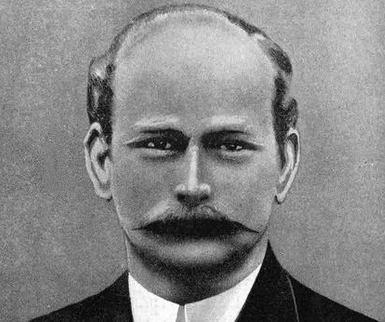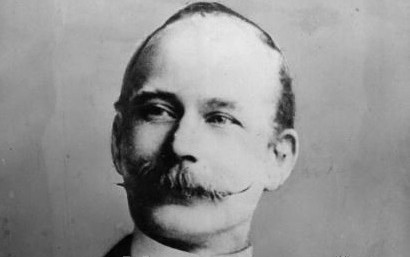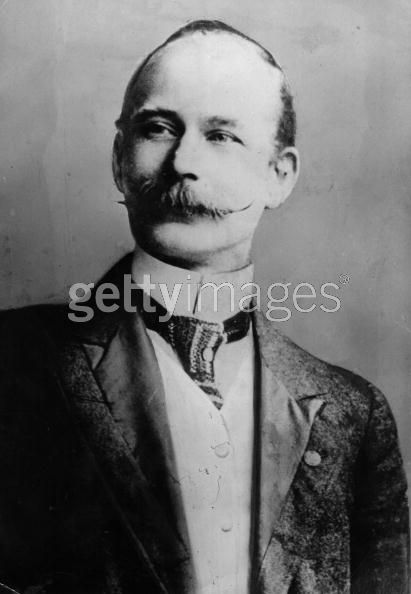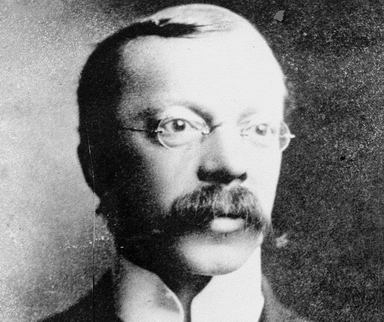




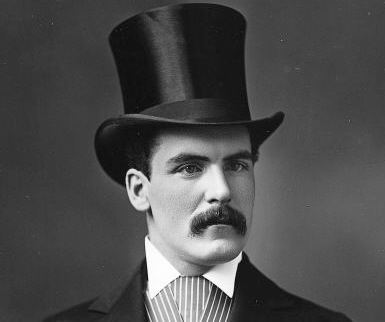
Forensic Profile Datasheet: Frederick Henry Seddon ("The Arsenic Superintendent")
| Forensic Parameter | Evaluation Details |
|---|---|
| Full Legal Name | Frederick Henry Seddon |
| Criminological Landmark | The Tollington Park Arsenic Case (Edwardian Financial Poisoning Trial, 1912) |
| Date & Place of Birth | January 21, 1872 — Liverpool, Lancashire, England |
| Date & Place of Execution | April 18, 1912 (aged 40) — HM Prison Pentonville, London |
| Method of Execution | Judicial hanging by Chief Executioner John Ellis |
| Criminological Classification | Premeditated financial poisoner / Predatory domestic fraudster |
| Fatal Victim | Eliza Mary Barrow (aged 49; eccentric wealthy spinster and lodger) |
| Date of Crime | Summer 1911; death ensued September 14, 1911 |
| Scene of the Crime | 14-room residence at 63 Tollington Park, Islington, North London |
| Toxic Agent Deployed | Arsenic trioxide (extracted by soaking commercial Mather's flypapers) |
| Financial Plunder | Transfer of India stock, pub freeholds, and over £1,600 in gold sovereigns |
| Forensic Landmark | Quantitative arsenic assays developed by Sir William Willcox and post-mortem by Sir Bernard Spilsbury |
| Masonic Incident | Made the secret Masonic sign of distress from the dock to presiding Judge Mr. Justice Bucknill |
Professional Standing and Pathological Avarice
Frederick Henry Seddon was born in Liverpool in 1872. Possessing sharp computational acumen and an austere demeanor, he rose through the financial sector to become London district superintendent of agency managers for the London and Manchester Industrial Assurance Company.
Seddon resided in a spacious 14-room residence at 63 Tollington Park, Islington, with his wife Margaret, five children, and elderly father. Within his local North London community, Seddon cultivated an image of unassailable rectitude: he served as a lay Wesleyan Methodist preacher, held high office within his local Masonic lodge, and managed his finances with obsessive precision. Beneath this bourgeois veneer lay avarice bordering on pathological sociopathy, recording even fractions of pennies in domestic account ledgers.
Eliza Barrow's Lodging and Financial Dispossession
In the summer of 1910, Eliza Mary Barrow, an eccentric, solitary 49-year-old spinster of substantial means, leased the top floor of Seddon's Tollington Park townhouse along with her orphaned eight-year-old nephew, Ernie Grant.
Seddon soon discovered that Barrow harbored deep distrust toward banks, keeping substantial fortunes in gold sovereigns, leasehold titles, and public securities (India Stock) in a locked chest in her bedroom. Exploiting his financial expertise, Seddon ingratiated himself with Barrow, persuading her to legally surrender her property holdings and £1,600 in stock to him in exchange for a private lifetime annuity that he would personally disburse.
Once the legal deeds were executed, Seddon calculated that Barrow's survival represented a direct drain on his newly acquired assets; her premature death would secure the entire estate permanently.
The Fatal Agony at Tollington Park (September 1911)
In early August 1911, Seddon dispatched his daughter Maggie to a local chemist to purchase several packets of arsenic-impregnated flypapers. Seddon steeped the sheets in water, distilling a concentrated, colorless solution of arsenic trioxide.
By late August, Eliza Barrow suffered acute gastrointestinal attacks, severe vomiting, burning stomach agony, and diarrhoea. Seddon assumed sole custody of her care, administering her broths, tea, and patent medicines while barring outside relatives from visiting. Neighborhood physician Dr. Sworn misdiagnosed the illness as epidemic cholera/gastroenteritis.
In the early morning hours of September 14, 1911, Eliza Barrow died in agony.
Seddon acted with predatory speed: while the corpse lay uncooled, he looted Barrow's bedroom safe, pocketing bank notes and gold sovereigns. Hours later, he arranged the cheapest possible pauper's funeral in an unmarked communal grave for £4, pocketing a 12-penny commission from the undertaker for referring the business.
Exhumation and the Spilsbury-Willcox Breakthrough
When Barrow's surviving relatives arrived at Tollington Park inquiring about her estate, Seddon treated them with haughty disdain, asserting she had died penniless and ordering them off his property.
Suspicious relatives petitioned Scotland Yard. On November 15, 1911, police exhumed Barrow's coffin from Finchley Cemetery. In the damp subterranean soil, the corpse was remarkably incorrupt and mummified—a classic forensic indicator of heavy arsenic saturation, which inhibits bacterial putrefaction.
Home Office toxicologist Sir William Willcox and rising pathologist Sir Bernard Spilsbury conducted the post-mortem. Willcox devised an innovative Marsh test quantitative assay, extracting over two full grains of arsenic distributed across Barrow's liver, kidneys, and skeletal tissues, proving lethal homicidal doses had been ingested during her final hours.
Seddon was arrested on December 4, 1911; his wife Margaret was subsequently indicted as an accessory.
Old Bailey Trial and the Masonic Plea
The trial opened in March 1912 at the Central Criminal Court (The Old Bailey) before Mr. Justice Bucknill, prosecuted by Attorney-General Sir Rufus Isaacs and defended by legendary advocate Sir Edward Marshall Hall.
Seddon insisted on testifying, disastrously alienating the jury with his smug condescension, pedantic accounting lectures, and total lack of empathy for the victim. The jury acquitted Margaret Seddon but convicted Frederick Seddon of willful murder.
Asked before sentencing whether he had anything to state, Seddon raised his hand, gave the secret Masonic sign of distress, and appealed directly to Judge Bucknill, a fellow Mason:
"I appeal to you, my Lord, under the Great Architect of the Universe, to remember the vows we share... I declare before God I am innocent."
Bucknill, visibly shaken, donned the black cap and responded with emotion:
"The Brotherhood of which you speak does not countenance crime, but urges righteous living. You have committed a cruel, calculating murder."
On April 18, 1912, Frederick Henry Seddon was hanged at HM Prison Pentonville by executioner John Ellis, concluding one of the landmark forensic toxicology cases in Edwardian legal history.