



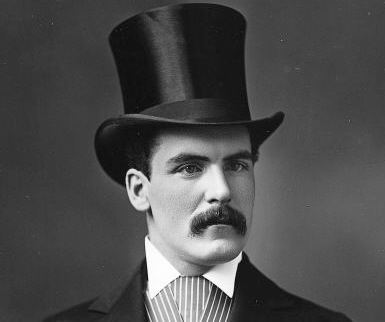
Forensic & Criminological Matrix
| Parameter | Forensic Detail |
|---|---|
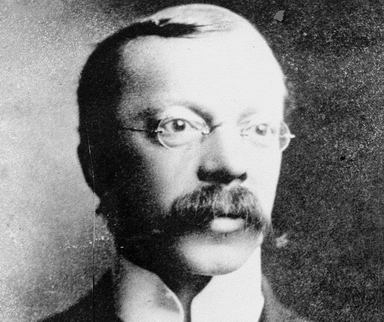
| Full Legal Name | Hawley Harvey Crippen (Dr. Crippen) |
| Media Monikers | The Mild-Mannered Murderer, The Camden Town Poisoner |
| Nationality | American (resident in Great Britain) |
| Date of Birth | September 11, 1862, Coldwater, Michigan, United States |
| Date of Death | November 23, 1910 (aged 48, executed by hanging at Pentonville Prison, London) |
| Historical Penal Status | Convicted of capital murder at the Old Bailey on October 22, 1910; sentenced to death |
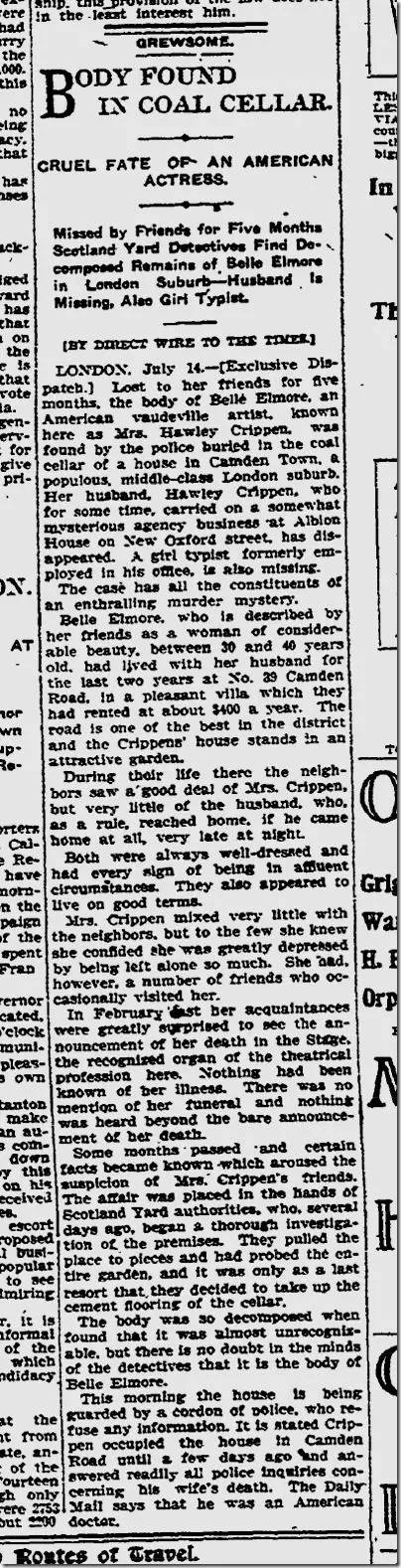
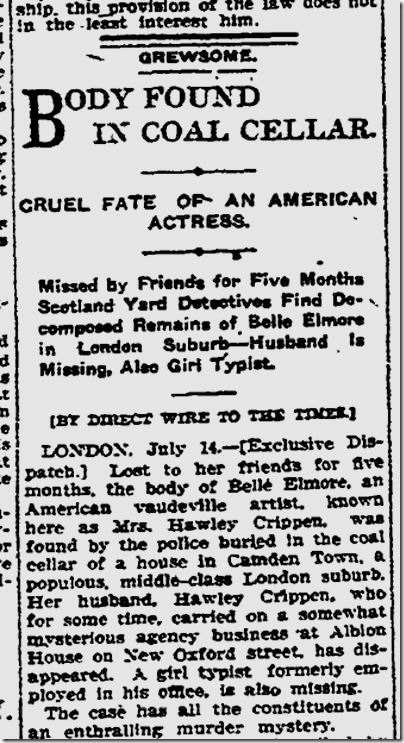
| Confirmed Murder Victims | 1 fatality: his wife, Cora Henrietta Crippen (born Kunigunde Mackamotzki, stage name Belle Elmore, 37) |
| Estimated Crime Date | Night of January 31 – February 1, 1910 |
| Geographic Crime Scene | 39 Hilldrop Crescent, Camden Town, London, England |
| Lethal Weaponry & Disposal | Acute oral poisoning with hyoscine hydrobromide (scopolamine); surgical decapitation, complete evisceration, skeletonization/incineration of bones, and subterranean torso concealment in quicklime beneath cellar bricks |
| Global Forensic Milestone | First maritime capture in world criminal history executed using Marconi wireless telegraphy at sea; benchmark trial featuring legendary pathologist Sir Bernard Spilsbury |
| Diagnostic Motive | Marital elimination motivated by chronic domestic humiliation, romantic liaison with secretary Ethel Le Neve, and appropriation of spousal jewelry |
1. Professional Background and Discordant Marriage
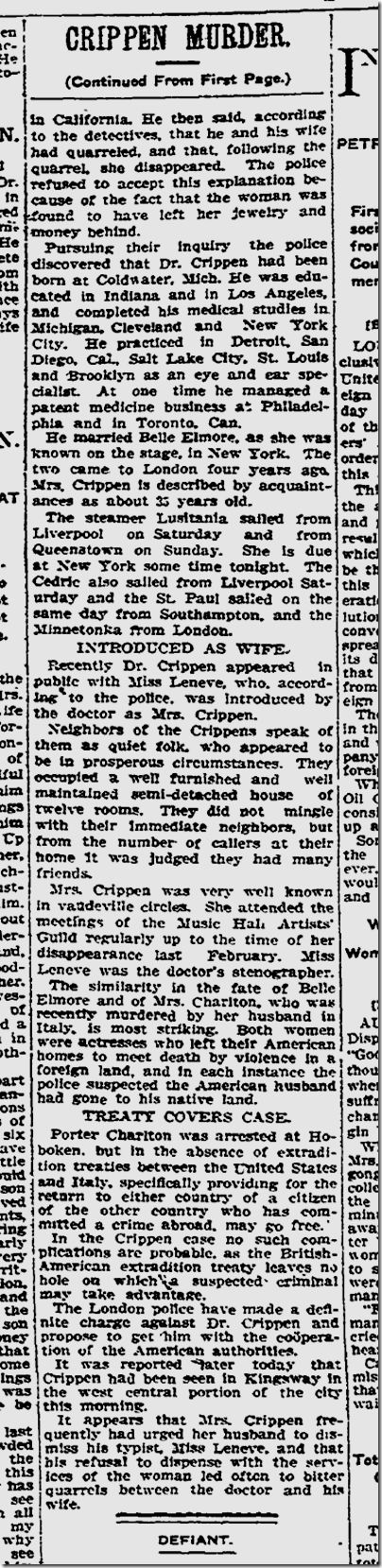
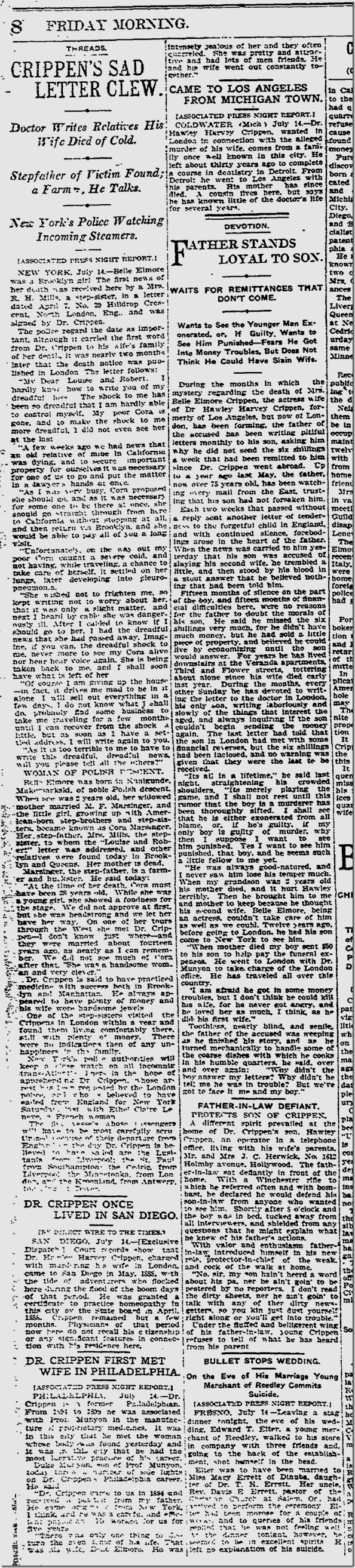
Hawley Harvey Crippen graduated from the Cleveland Homeopathic Hospital College in 1884. Following his first wife's death, Crippen remarried in 1892 to Cora Turner (born Kunigunde Mackamotzki), an aspiring music-hall performer using the stage pseudonym Belle Elmore.
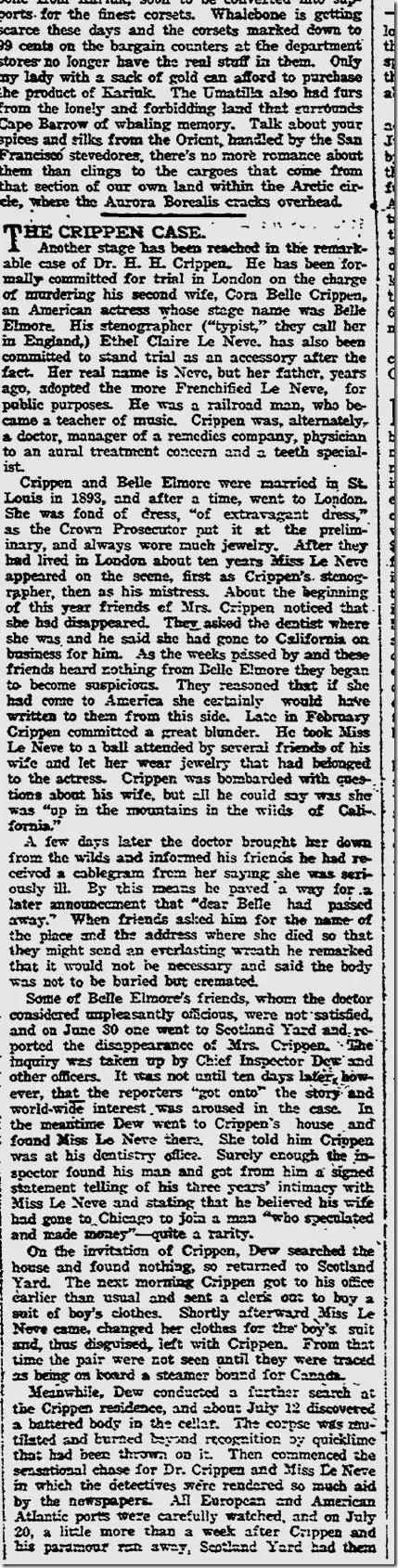
In 1900, the couple relocated to London, where Crippen managed the Munyon Homeopathic Home Remedy company. Residing at 39 Hilldrop Crescent in Camden Town, domestic life was marked by Cora's domineering personality and open infidelities. Crippen found consolation in an intimate companionship with his 27-year-old secretary, Ethel Le Neve.
2. The Hilldrop Crescent Murder (January 1910)
By late 1909, Crippen resolved to terminate his marriage and escape to America with Le Neve:
- Procuring the Toxin: On January 17, 1910, Crippen visited a London pharmaceutical wholesaler and purchased five grains of hyoscine hydrobromide (scopolamine), signing the mandatory poisons ledger.
- The Fatal Dose: Following a dinner party hosted for Cora's vaudeville friends on January 31, Crippen laced Cora's bedtime drink with a fatal overdose of hyoscine.
- Anatomical Partitioning: Utilizing his surgical dissection knowledge, Crippen severed the head and limbs, carefully filleting all skeletal bone from muscle tissue. He incinerated the skull, bones, and clothing in domestic stoves. The flayed, headless torso was interred beneath flagstones in the coal cellar, smothered in quicklime.
- The Fabricated Alibi: Crippen explained Cora's disappearance by asserting she had returned urgently to America, later sending telegrams announcing her sudden death from pleuro-pneumonia in California. Meanwhile, he installed Ethel Le Neve in Hilldrop Crescent, presenting her with Cora's jewelry.
3. Flight and the Marconi Wireless Pursuit
Suspicious of Cora's abrupt demise, her music-hall associates alerted Scotland Yard. Chief Inspector Walter Dew interviewed Crippen on July 8. Although Crippen gave a calm explanation, panic set in, and he fled London that evening with Le Neve.
Returning to Hilldrop Crescent on July 13, Inspector Dew conducted a subterranean search of the cellar. Prying loose flagstones, detectives unearthed decomposed human flesh wrapped in flannel pajama cloth.
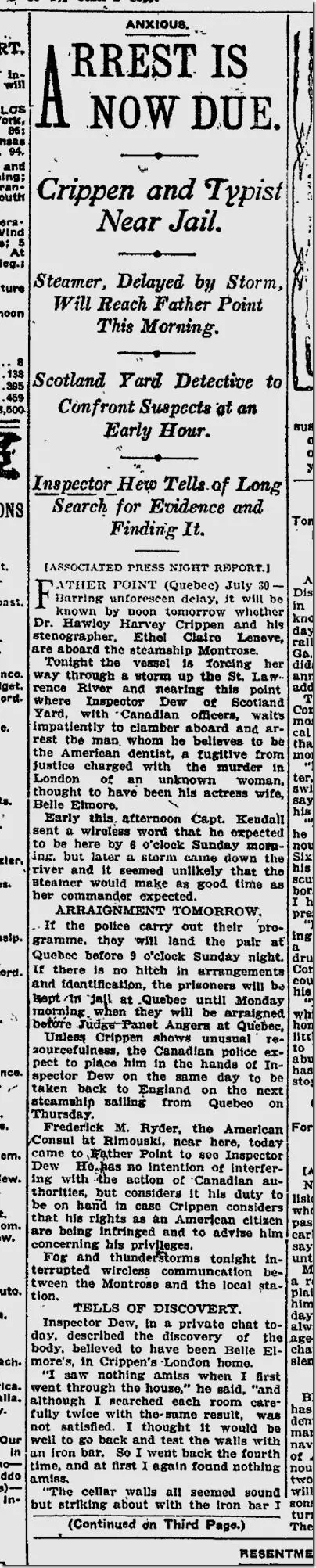
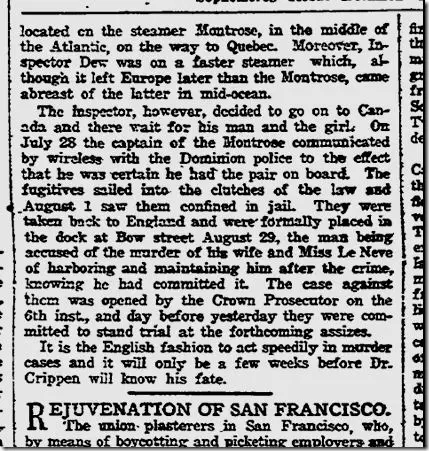
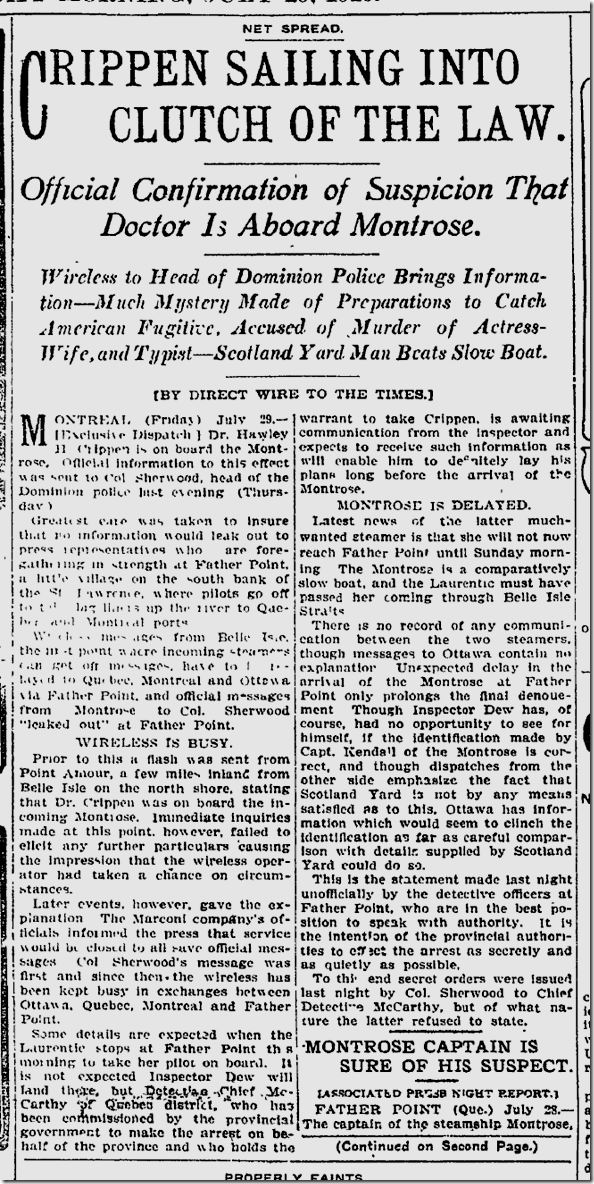
Crippen and Le Neve had boarded the Canadian Pacific liner SS Montrose in Antwerp, with Le Neve disguised as a boy under the pseudonym "Master Robinson":
- Captain Henry George Kendall recognized the fugitives, observing that the "boy's" mannerisms were distinctly female and that the father stroked her hand affectionately.
- Kendall dispatched a historic Marconi wireless radio message to London: "Have strong suspicions that Crippen London cellar murderer and accomplice are among saloon passengers."
- Inspector Dew boarded the faster SS Laurentic, outran the Montrose across the North Atlantic, and intercepted the vessel off Father Point in Quebec on July 31, 1910, arresting both fugitives.
4. Old Bailey Trial and Hanging
The trial opened at the Central Criminal Court (Old Bailey) on October 18, 1910:
- Forensic pathologist Sir Bernard Spilsbury matched a section of abdominal skin recovered from the cellar to a pre-existing transverse operative scar from an ovariectomy Cora had undergone in life.
- Toxicologist Dr. William Willcox definitively isolated lethal quantities of hyoscine from the preserved tissue.
- On October 22, the jury convicted Crippen of willful murder after 27 minutes of deliberation. Ethel Le Neve was subsequently tried as an accessory after the fact and acquitted.
On the morning of November 23, 1910, Hawley Harvey Crippen was hanged at Pentonville Prison. In accordance with his final request, a photograph of Ethel Le Neve was interred in the grave over his heart.