

Forensic & Criminological Matrix
| Parameter | Forensic Detail |
|---|---|
| Forensic Heading / Aliases | Mary Farmer / The Watertown Trunk Murderess |
| Legal Identity | Mary O'Brien Farmer |
| Confirmed Victims | 1 (Sarah Brennan) |
| Active Timeline | April 23, 1908 |
| Jurisdiction / Area of Operations | Jefferson County, New York, USA |
| Criminological Classification | Greed-motivated murderer / Property-acquisition homicide |
| Forensic Modus Operandi | Blunt force trauma to the occipital region using an axe, concealment of the corpse inside a trunk, document forgery for property usurpation, and subsequent cohabitation with the victim's remains |
| Weapon / Mechanism of Death | Axe (craniocerebral trauma) |
| Motive / Behavioral Dynamics | Material enrichment and illicit acquisition of the victim's real estate assets |
| Judicial Outcome | Sentenced to death by electrocution; executed on March 29, 1909, at Auburn State Prison |
1. Background and Psychopathy
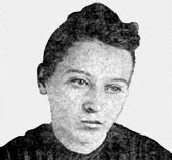
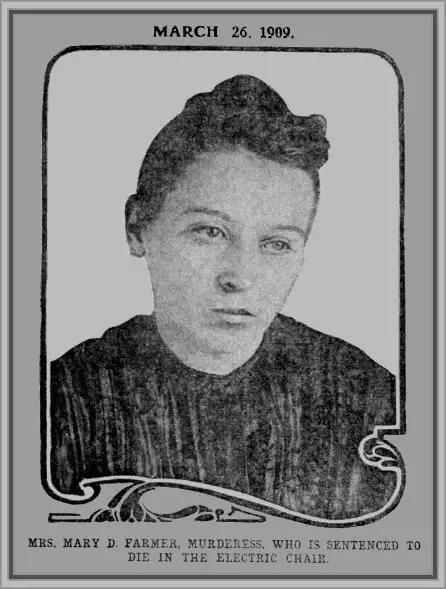
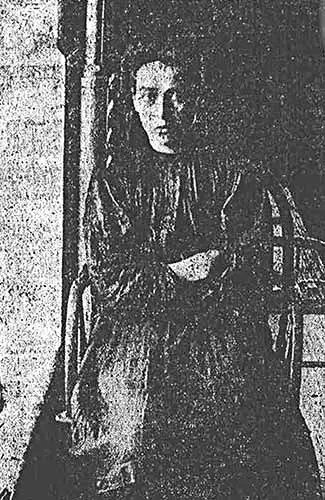
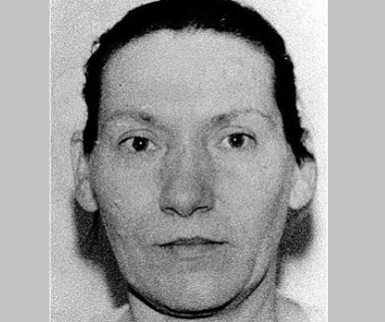
Mary O'Brien Farmer was born around 1880 in Ireland and later emigrated to the United States. By 1908, she resided with her husband James Farmer, a mill worker prone to heavy drinking, and their infant son in a rundown dwelling known as Barton Tavern on Paddy Hill near Brownville, Jefferson County, New York. Described as a slight woman with mild facial paralysis, Farmer exhibited remarkable emotional detachment and stoicism throughout her trial. She holds the grim distinction of being the only woman from Jefferson County ever executed and only the second female in the history of New York State to die in the electric chair.
2. Crime Spree
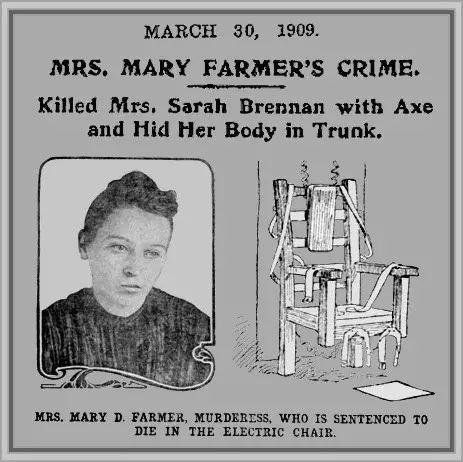
Farmer's sole confirmed victim was her neighbor, friend, and landlady, Sarah Brennan. Months prior to the homicide, in October 1907, Mary devised an intricate scheme to acquire Brennan's home. Impersonating Sarah before a Watertown attorney through document forgery, she had the property deed transferred to her own name. On April 23, 1908, Mary attacked Sarah Brennan with an axe, crushing the back of her head. She then stuffed the battered corpse into her own trunk. With chilling calculation, Mary evicted the victim's husband, Patrick "Patsy" Brennan, and moved into Sarah's house, bringing along the trunk containing the decomposing remains.
3. Investigation and Forensic Pursuit
Sarah Brennan's sudden disappearance and Mary's contradictory explanations aroused deep suspicion from Patrick Brennan and local authorities. On April 27, 1908, Sheriff Ezra D. Bellinger, accompanied by District Attorney Floyd L. Carlisle and the distraught husband, conducted a thorough search of the premises. Upon inspecting a back shed, law enforcement officers located a large, locked trunk belonging to Mary Farmer. Forcing the lock open with a hammer, they were immediately hit by the overpowering stench of decaying flesh. Inside, they discovered the body of Sarah Brennan placed face-down, with severe blunt-force trauma to the skull.
4. Arrest and Judicial Proceedings
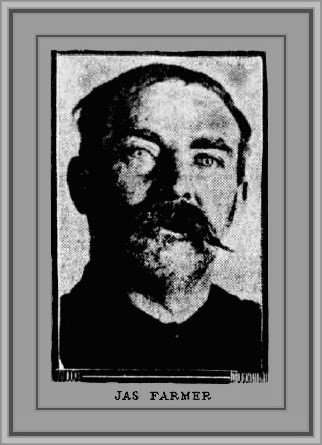
Mary and her husband James were arrested immediately at the scene. Initially, Mary attempted to deflect blame by accusing James of the murder; however, she subsequently confessed to acting alone, detailing how she struck Sarah with an axe. Her trial commenced on June 16, 1908, before Justice Watson M. Rogers at the Jefferson County Courthouse. The defense unsuccessfully attempted to argue insanity or self-defense resulting from an altercation between the two women. After deliberating for only three hours, the all-male jury returned a verdict of guilty of first-degree murder, to which Mary displayed complete stoical indifference.
5. Psychiatric Evaluation and Outcome
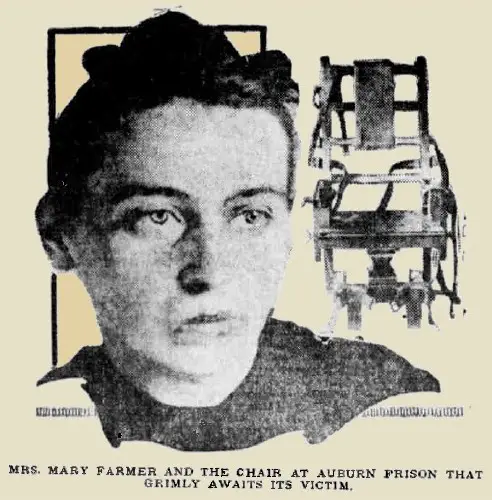
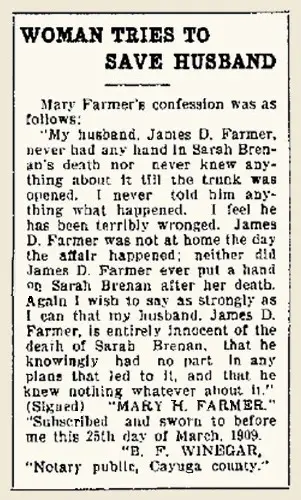
All legal appeals were exhausted without success. During her final months on death row at Auburn State Prison, Farmer sought spiritual solace through the Catholic Church and signed a statement on the eve of her execution exonerating her husband from any involvement in the crime. On March 29, 1909, at approximately 29 years of age, Mary Farmer was escorted to the electric chair and subjected to 1,840 volts of electricity. Following pronouncement of death, forensic pathologists performed an autopsy at the prison. Her husband James, who had also been convicted in a separate trial, successfully appealed his sentence after spending 53 weeks on death row and was ultimately acquitted of forgery charges in 1910.