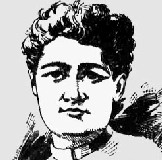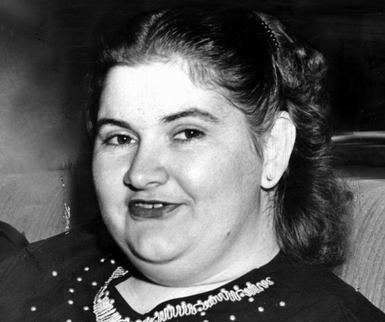
Forensic & Criminological Matrix
| Parameter | Forensic Detail |
|---|---|
| Forensic Heading / Aliases | Susan Eberhart |
| Legal Identity | Susan Eberhart |
| Confirmed Victims | 1 (Mrs. Spann) |
| Active Timeline | 1872 |
| Jurisdiction / Area of Operations | Webster County and Stewart County, Georgia, USA |
| Criminological Classification | Accomplice to murder / Coercive gender-based violence victim-perpetrator |
| Forensic Modus Operandi | Forced compliance and psychological submission under duress during the strangulation of the victim |
| Weapon / Mechanism of Death | Manual strangulation / Handkerchief |
| Motive / Behavioral Dynamics | Extramarital affair, severe coercion, and manipulation by primary offender (Ferdinand Spann) |
| Judicial Outcome | Sentenced to death by hanging; executed on May 2, 1873, in Preston, Georgia |
1. Background and Psychopathy
Susan Eberhart was born around 1854 in Georgia. She was a young woman of humble origins with limited social support, described in contemporary accounts as being between 17 and 21 years of age. She worked as a domestic housekeeper in the household of Ferdinand Spann and his wife. In the rural post-Bellum environment of Georgia, Eberhart's socio-economic vulnerability exposed her directly to the asymmetrical power dynamics and predatory manipulation of her employer.
2. Crime Spree
On May 4, 1872, Mrs. Spann was murdered in her home. According to investigative records, Ferdinand Spann had maintained an illicit relationship with Eberhart and plotted to kill his wife. After previous attempts had been thwarted by Eberhart—who had historically tried to prevent Spann from harming his spouse—Spann dragged Eberhart from her bed on the night of the murder and, through severe physical intimidation and threats, forced her to witness and minimally participate in the crime. The method of death was strangulation, with Eberhart handing Spann a handkerchief under direct duress.
3. Police Investigation and Forensic Pursuit
Law enforcement acted swiftly following the discovery of the homicide. Within six days of the crime, both Ferdinand Spann and Susan Eberhart were apprehended by authorities in Webster County. The preliminary investigation quickly established the sequence of events based on witness statements and Eberhart's own disclosures regarding her secondary, fear-induced role in the offense.
4. Arrest and Judicial Proceedings
Judicial proceedings moved at an expedited pace, resulting in a joint murder conviction and a sentence of death by hanging less than a month after the incident. Notably, even the members of the jury petitioned the Governor of Georgia for clemency, arguing that justice should be tempered with mercy given Eberhart's youth and the overwhelming dominance and intimidation exerted over her by Spann. Despite widespread public appeals and petitions from citizens, the state governor steadfastly refused to commute her sentence or grant a pardon.
5. Psychiatric Assessment and Outcome
From a contemporary criminological standpoint, Susan Eberhart's case represents a severe miscarriage of justice rooted in nineteenth-century judicial rigidity and a failure to recognize extreme coercion and gender-based subordination. On May 2, 1873, aged roughly 17 to 19, Eberhart was hanged on the same scaffold as Ferdinand Spann in Preston, Georgia. Her execution before an audience of hundreds remains a stark historical example of an unprotected, vulnerable individual suffering the ultimate penalty under conditions of severe psychological dominance.