

Forensic & Criminological Matrix
| Parameter | Forensic Detail |
|---|---|
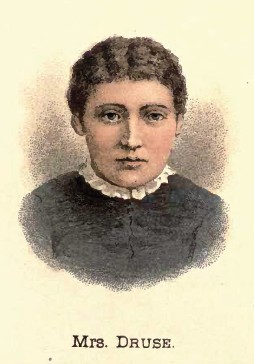
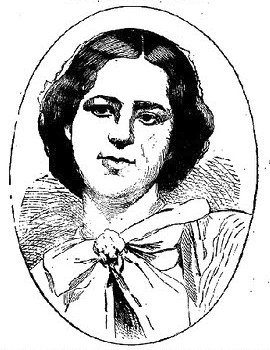
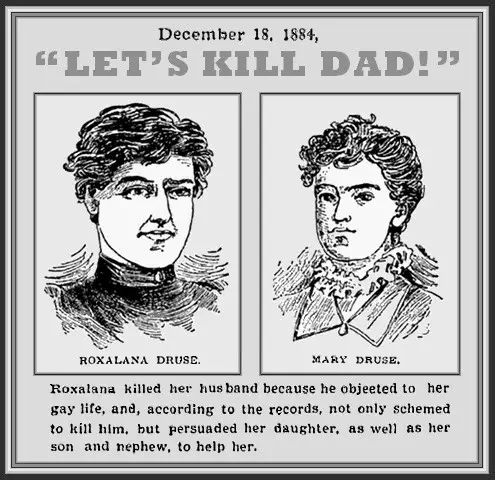
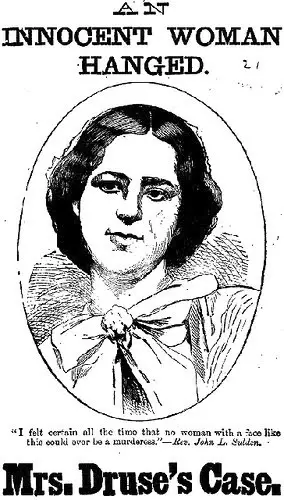
| Forensic Heading / Aliases | Roxalana Druse, Mrs. Druce |
| Legal Identity | Roxalana Tefft Druse |
| Confirmed Victims | 1 (William Druse, 60-year-old spouse) |
| Active Timeline | December 18, 1884 |
| Jurisdiction / Area of Operations | Warren, Herkimer County, New York, United States |
| Criminological Classification | Parricide / Domestic Contracted & Direct Execution Murder |
| Forensic Modus Operandi | Initial armed assault using a .22 caliber firearm, followed by a blunt force and sharp force coup de grâce with an axe, post-mortem decapitation, body dismemberment, and partial destruction of physical evidence via incineration in a wood stove. |
| Weapon / Mechanism of Death | .22 caliber revolver, woodcutter's axe, and kitchen knife |
| Motive / Behavioral Dynamics | Chronic domestic disputes, alleged spousal abuse, and severe intrafamilial power struggles |
| Judicial Outcome | Sentenced to death by hanging; executed on February 28, 1887, at the Herkimer County Jail |
1. Background and Psychopathy
Roxalana Tefft was born around 1847. In 1863, she married William Druse, a local farmer. The couple settled in a rural area of Warren, Herkimer County, New York. Over the decades, their domestic environment deteriorated into chronic hostility, marked by violent arguments, financial strain, and mutual allegations of mistreatment and dominance. They raised several children together, including a daughter named Mary, while also hosting extended family members and young relatives in the household.
2. Crime Spree
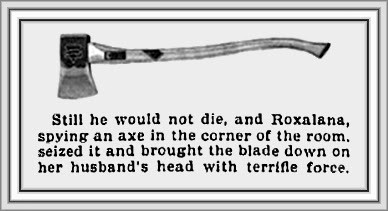
On December 18, 1884, following a severe altercation with her husband William, Roxalana orchestrated his murder. She coerced her fourteen-year-old nephew, Frank Gates, into shooting William with a .22 caliber revolver. The initial shots caused only flesh wounds, and William collapsed to the floor. Recognizing that he was still alive, Roxalana retrieved an axe from the stove area, struck him on the head, and proceeded to completely sever his neck with extreme force.
With the active complicity of her daughter Mary and other household occupants, Roxalana initiated a sophisticated concealment protocol. They dismembered the decapitated corpse using the axe and a kitchen knife, throwing body parts into the lit wood stove to incinerate the evidence. The head was wrapped and hidden inside a sack of wheat, while the murder weapons were disposed of in a nearby pond in an attempt to simulate a missing person scenario.
3. Investigation and Forensic Chase
The crime unraveled when young Frank Gates, overwhelmed by psychological distress regarding the events of that night, confessed to acquaintances. Local authorities in Herkimer County were promptly notified. Investigators searched the premises and recovered irrefutable biological and physical evidence, including charred human bones and ash within the kitchen stove, as well as William Druse's head concealed on the property. Testimonies from the minor accomplices provided a solid framework for the prosecution.
4. Arrest and Judicial Proceedings
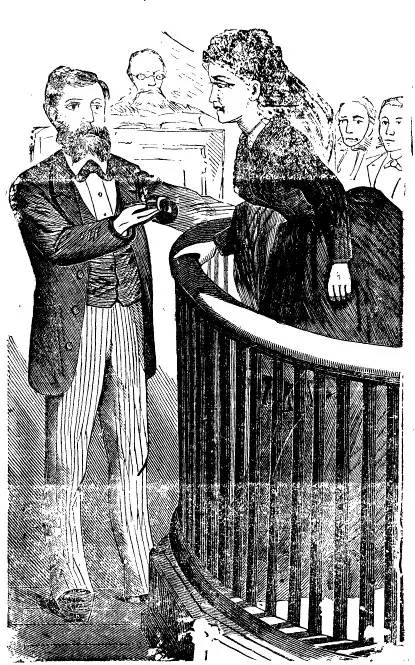
Roxalana Druse and her co-conspirators were arrested in January 1885. Throughout police interrogations and trial proceedings, Roxalana maintained strict silence. The trial took place at the Herkimer County Court under Judge Williams. Despite defense motions for a retrial citing the history of domestic discord, the overwhelming forensic evidence and eyewitness testimonies compelled the jury to return a guilty verdict for murder in October 1885, resulting in a capital death sentence.
5. Psychiatric Assessment and Outcome
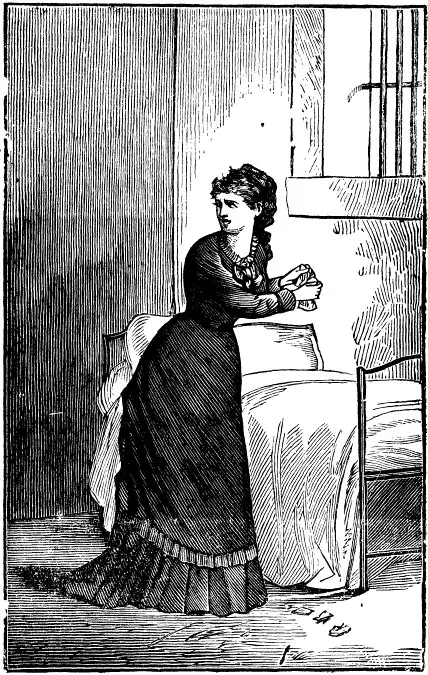
During her incarceration on death row, Roxalana exhibited severe emotional volatility, alternating between periods of silence and aggressive outbursts directed at prison staff and spiritual advisors.
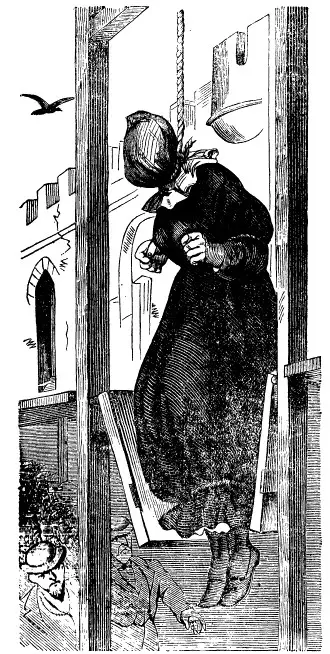
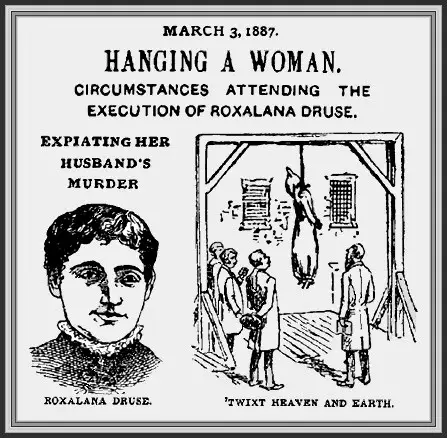
On February 28, 1887, her sentence was carried out in the courtyard of the old Herkimer County Jail using the state's traditional suspension hanging method, which jerked the inmate upward via a weighted rope rather than dropping them through a trapdoor. Because Roxalana was a petite woman, the kinetic force failed to fracture her cervical vertebrae, causing a prolonged and agonizing death by mechanical strangulation lasting over ten minutes before witnesses and reporters. The sheer brutality and systemic failure of this execution so distressed state officials that it directly catalyzed the legal adoption of the electric chair in New York in 1890, marking Roxalana Druse as the last woman executed by hanging in the state.