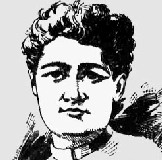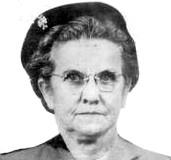



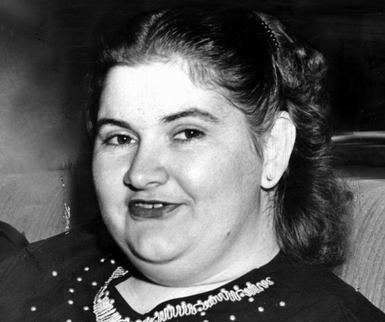
Forensic & Criminological Matrix
| Parameter | Forensic Detail |
|---|---|
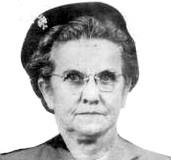
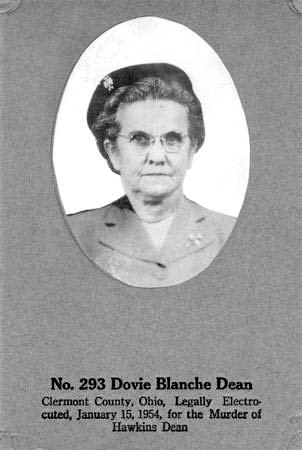
| Forensic Heading / Aliases | Dovie Dean, Blanche "Dovie" Dean, "The Woman Who Couldn't Cry" |
| Legal Identity | Dovie Blanche Dean |
| Confirmed Victims | 1 (Hawkins Dean, 69) |
| Active Timeline | April 1952 – August 1952 |
| Jurisdiction / Area of Operations | Clermont County, Ohio, United States |
| Criminological Classification | Parricide / Poisoner (Financial and Marital Motive) |
| Forensic Modus Operandi | Covert administration of arsenic-based rat poison mixed into the victim's food and milk over several weeks; initial redirection of blame toward her son. |
| Weapon / Mechanism of Death | Arsenic poisoning (inorganic arsenic ingestion) |
| Motive / Behavioral Dynamics | Financial gain (sole beneficiary of a $27,000 estate), marital frustration, and apparent emotional blunting / alexithymia |
| Judicial Outcome | Sentenced to death without mercy; executed by electrocution on January 15, 1954, at the Ohio State Penitentiary |
1. Background and Psychopathy
Dovie Blanche Dean was born on February 25, 1898. A mother of six and a grandmother, her life in rural Ohio remained unremarkable until middle age. Her marital history included multiple prior unions. In April 1952, she married Hawkins Dean, a 69-year-old farmer, just one day after divorcing her previous husband, who was incarcerated at the time. The marriage was pragmatic in nature; as she later stated, he wanted a housekeeper and she wanted a home.
2. Crime Spree
Tensions quickly surfaced within the household due to personal and marital incompatibilities, exacerbated by the elderly man's inability to fulfill her conjugal expectations. Shortly after the wedding, Hawkins altered his will to designate Dovie as the sole beneficiary of his $27,000 estate. Throughout August 1952, Dovie systematically introduced arsenic rat poison into her husband's milk on at least four separate occasions.
Despite causing severe gastric distress, Dovie occasionally feigned concern, even calling the ambulance that transported Hawkins to the hospital in an effort to deflect suspicion. On August 22, 1952, Hawkins Dean succumbed to acute arsenic intoxication.
3. Investigation and Forensic Hunt
An autopsy performed on the victim's body revealed classic forensic indicators of heavy metal poisoning, notably the bright red coloration of internal organs. Suspicion rapidly converged on Dovie Dean, leading to her arrest on September 12, 1952, by Clermont County Sheriff Clyde B. Dericks.
During interrogations, Dovie displayed evasive behavior, initially attempting to frame her own son from a previous marriage for the murder. Confronted by investigators who noted the unnatural cruelty of such an accusation, Dovie abruptly confessed to the crime in a matter-of-fact manner, stating to authorities: "I got him before he got me."
4. Trial and Judicial Proceedings
Dovie Dean's trial took place in the autumn of 1952 in Clermont County. Throughout the proceedings, she maintained an icy, motionless demeanor, telling acquaintances that she was physically incapable of weeping—a trait that led the media to dub her "The Woman Who Couldn't Cry." Her defense attempted to claim her confession was merely an effort to shield her son, but the toxicological evidence presented by experts proved incontrovertible.
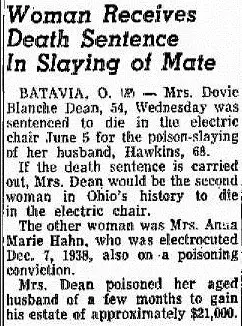
The jury deliberated for a mere 40 minutes before returning a verdict of guilty of first-degree murder without a recommendation for mercy. Under Ohio law at the time, the death penalty was mandatory. She became the second woman sentenced to Ohio's electric chair, following the precedent of poisoner Anna Marie Hahn.
5. Psychiatric Evaluation and Execution
While held at the Marysville Reformatory and subsequently on death row at the Ohio State Penitentiary in Columbus, Dovie was evaluated by University of Cincinnati psychiatrist Dr. Robert Buckley. The examination concluded that she was legally sane, though she exhibited a flattened affect, melancholia, and an inability to shed tears despite verbal expressions of distress.
On January 15, 1954, Dovie Dean faced her execution with stoic composure. Refusing food but accepting coffee, she spent her final hours with her spiritual advisor, Reverend C.W. Wilsher. At 8:00 p.m., she was escorted to the death chamber. Following the administration of over 1,900 volts, she was pronounced dead at 8:07 p.m., closing a chilling chapter of mid-century American forensic history.