



Christos Kendiras: The Siege of Bus 33, the Epidaurus Shootings, and the Fall at Athens Police Headquarters
Executive Summary
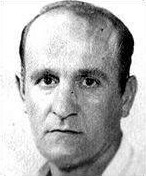
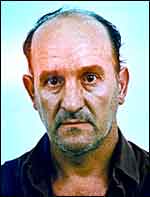
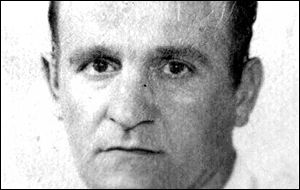
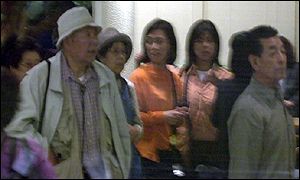
Christos Kendiras (1952 – November 6, 2000), a 48-year-old Greek truck driver and farmer, was the perpetrator of a deadly domestic shooting spree and one of the most high-stakes televised hostage crises in modern European history. In November 2000, consumed by chronic paranoid jealousy and delusions of family betrayal, Kendiras shot and killed his elderly father-in-law in rural Epidaurus before murdering an innocent motorist during his armed escape. Armed with a repeating 12-gauge hunting shotgun and volatile incendiary cans, he ambushed a touring coach on the Peloponnese peninsula carrying thirty-three elderly Japanese tourists and two Greek crew members, initiating a harrowing 36-hour cross-country hostage standoff.
Kendiras forced the coach driver at gunpoint to navigate along the Corinth Isthmus and through the congested arteries of metropolitan Athens. Rather than demanding monetary ransom or political safe passage, Kendiras demanded a national media platform: he insisted on a live, unedited broadcast on prime-time Greek television to «clear his family honor», publicly accuse his estranged wife of adultery, and denounce an alleged psychiatric conspiracy aimed at seizing his agricultural land.
The crisis concluded without hostage casualties late on November 5, 2000, after Kendiras—mentally exhausted following hours of live phone negotiations with television journalist Makis Triantafyllopoulos—drove to the General Police Directorate of Attica (GADA) on Alexandras Avenue in central Athens, released all 33 Japanese passengers unharmed, and surrendered his weapon. However, during the early morning hours of November 6, while being detained on the fourth floor of Athens police headquarters awaiting formal arraignment, Kendiras broke away from his guards, sprinted toward a window, and hurled himself into the interior courtyard, dying instantly from catastrophic blunt force trauma.
Technical Forensic Matrix
| Parameter | Forensic Specification |
|---|---|
| Legal Identity | Christos Kendiras (Χρήστος Κεντήρας) |
| Public Recognized Name | Christos Kendiras |
| Criminological Aliases | «The Athens Bus Hijacker» / «The Epidaurus Gunman» |
| Date of Birth | 1952 (Peloponnese, Greece) |
| Date of Death | November 6, 2000 (Athens, Greece; aged 48) |
| Medical Cause of Death | Massive craniocerebral trauma and multiple fractures resulting from fall from height (suicide in custody) |
| Criminological Classification | Spree killer / Domestic paranoiac / High-profile hostage barricade offender |
| Confirmed Murder Victims | 2 deceased individuals (Angelos Siambis, 77; and Stamatis Mylonas, civilian driver) |
| Captured Hostages | 35 individuals (33 elderly Japanese tourists, tour guide, and professional coach driver) |
| Weapons Employed | 12-gauge repeating hunting shotgun, gasoline canisters, and improvised pyrotechnic devices |
| Geographic Range | Epidaurus, Corinth Canal highway, and Athens metropolitan district (Alexandras Avenue, Greece) |
| Primary Motive | Pathological marital jealousy (Othello syndrome), family grievance, and obsessive media demand |
| Judicial Status | Extinguished due to suicide prior to trial (Abated by Death); case closed |
Domestic Breakdown and the Initial Double Murder (Epidaurus, November 2000)
By late 2000, Christos Kendiras exhibited severe psychological deterioration marked by chronic alcohol abuse and persecutory delusions centered around his wife, Eleni Siambis:
- Convinced that his spouse was engaged in extramarital affairs and that his in-laws were plotting to commit him to an asylum to expropriate his farmland, Kendiras engaged in escalating domestic violence investigated by local authorities.
- On the afternoon of November 3, 2000, following an explosive confrontation, Kendiras armed himself with a shotgun and drove to the home of his 77-year-old father-in-law, Angelos Siambis, executing him on his doorstep with point-blank chest blasts.
- Fleeing north in his truck, he collided with a passenger vehicle driven by local farmer Stamatis Mylonas; when Mylonas attempted to seek emergency assistance, Kendiras shot him fatally in the head, hijacked his car, and drove toward the Corinth Isthmus.
The Ambush of Coach 33 and the Japanese Hostage Crisis
On Saturday, November 4, 2000, finding his escape blocked by Greek Hellenic Police (Elliniki Astynomia) cordons, Kendiras launched a desperate, escalatory maneuver:
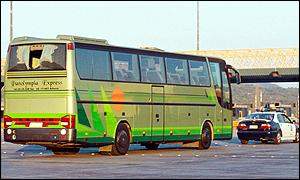
- Along a sharp curve near Mycenae, he forced his stolen vehicle across the road, stopping a luxury tour bus operated by the Tour Elite travel agency.
- The bus contained thirty-three elderly Japanese tourists returning from sightseeing classical archaeological sites, accompanied by a bilingual Greek guide and a veteran driver.
- Kendiras stormed the vehicle with his shotgun and fuel cans, threatening to incinerate the bus unless authorities permitted unrestricted transit to Athens.
The 36-Hour Standoff: Corinth Isthmus to Downtown Athens
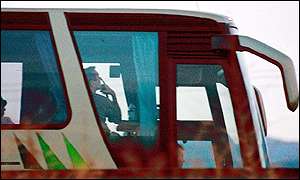
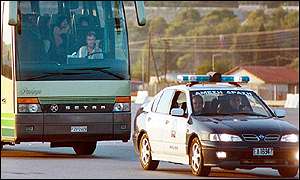
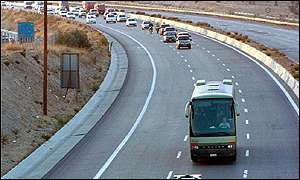
The armed hostage bus moved along Greek highways trailed by dozens of police cruisers, ambulances, and tactical counter-terrorist operatives (EKAM):
- Fearing catastrophic diplomatic and humanitarian fallout should tactical intervention trigger the bus's detonation, Greek authorities maintained an encirclement strategy focused on non-violent containment.
- Communicating via cellular phone with news agencies, Kendiras refused monetary demands, insisting on a live television broadcast on national network Alpha TV to denounce his in-laws.
- During strategic refueling stops near Corinth, Kendiras allowed police to supply water, bread, and essential cardiovascular medications to the Japanese passengers, who remained remarkably composed throughout the ordeal.
Resolution at Alexandras Avenue and Suicide at GADA Headquarters
On the evening of November 5, the bus arrived in central Athens outside the GADA police complex:
- Prominent television anchor Makis Triantafyllopoulos engaged Kendiras in direct face-to-face mediation aboard the bus, confirming that Kendiras's voice had been broadcast across Greece and persuading him that his grievances were public record.
- At 11:45 PM, all thirty-three Japanese tourists and the two crew members disembarked safely into protective custody. Kendiras tossed his shotgun onto the tarmac, surrendered to tactical officers, and was handcuffed without a shot fired.
- Less than six hours later, at 5:30 AM on Monday, November 6, 2000, while held in a fourth-floor interrogation chamber at police headquarters awaiting formal arraignment, Kendiras suddenly broke free from his escorting officers, vaulted toward an unsecured window, and plunged into the central concrete courtyard, dying instantly upon impact.
Forensic Psychiatric Post-Mortem
Subsequent forensic evaluations by the Athens Medical Examiner concluded:
- Kendiras suffered from an acute exacerbation of chronic delusional disorder (pathological jealousy / Othello syndrome) compounded by financial ruin and severe narcissistic mortification.
- The high-profile suicide prompted widespread operational reviews across Greek detention facilities, mandating the retrofitting of reinforced iron bars and non-operable security glazing in all custodial examination rooms handling high-risk detainees.