



Forensic & Criminological Matrix
| Parameter | Forensic Detail |
|---|---|
| Forensic Heading / Aliases | The Beautiful Parricide |
| Legal Identity | Beatrice Cenci (daughter of Francesco Cenci and Ersilia Santa Croce) |
| Confirmed Victims | 1 (Francesco Cenci) |
| Active Timeline | 1598 (Conspiracy and execution of parricide) |
| Jurisdiction / Area of Operations | Rome and Rocca di Petrella Salto, Italy |
| Criminological Classification | Conspiracy parricide motivated by chronic domestic abuse and self-preservation |
| Forensic Modus Operandi | Drugging the patriarch with sedatives followed by a coordinated blunt-force hammer attack and staged balcony fall |
| Weapon / Mechanism of Death | Hammer / severe craniocerebral trauma and staged defenestration |
| Motive / Behavioral Dynamics | Severe domestic tyranny, prolonged physical and psychological abuse, and systemic incestuous victimisation |
| Judicial Outcome | Death sentence by sword decapitation issued by papal tribunals under Pope Clement VIII |
1. Background and Psychopathy
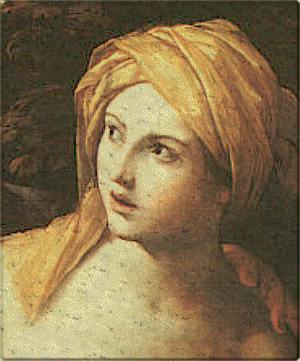
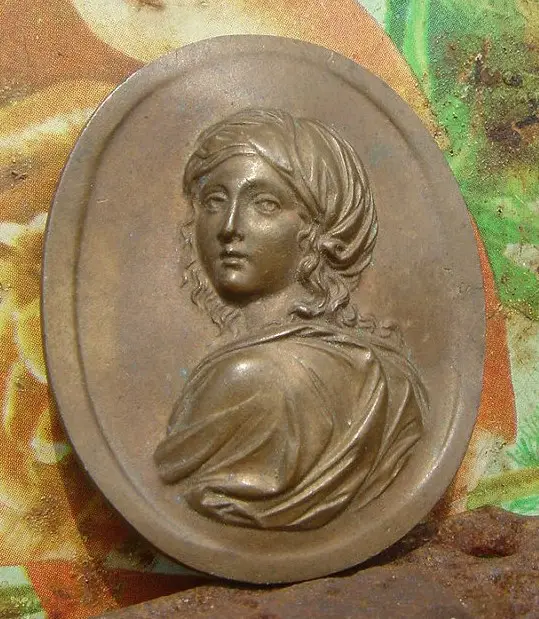
Beatrice Cenci was born in Rome on February 6, 1577, into an aristocratic family defined by extreme wealth and profound moral decay. Her father, Count Francesco Cenci, was a Roman nobleman notorious for his violent temper, sadistic tendencies, and frequent brushes with papal justice, which he routinely evaded through bribery and aristocratic immunity. The family residence, Palazzo Cenci, situated in the Regola district atop medieval ruins near the Jewish Ghetto, served as a theater of domestic terror. Within this claustrophobic environment lived Beatrice, her brothers Giacomo and Bernardo, and her stepmother Lucrezia Petroni.
2. Crime Spree
Life under Count Cenci's tyranny became unbearable due to systematic abuse, imprisonment of household members, and repeated incestuous rapes inflicted upon Beatrice by her own father. Having exhausted all appeals to ecclesiastical and judicial authorities—who ignored the well-known abuses due to the family's social standing—Beatrice, her siblings, and her stepmother conspired with two household vassals, notably Olimpio Calvetti, the castle manager and Beatrice's secret lover, to eliminate the patriarch.
The assassination took place in September 1598 at the family's fortified stronghold, the Rocca di Petrella Salto in the Apennines. Initially, the conspirators attempted to poison the Count using sedatives mixed into his food. When this pharmacological method failed due to his robust constitution, Beatrice, her siblings, and her stepmother directly assaulted him, bludgeoning Francesco to death with a hammer. To conceal the parricide, they threw his body over a wooden balcony into a refuse dump below (il renaiolo), attempting to simulate an accidental fatal fall.
3. Investigation and Forensic Hunt
The staged accident instantly collapsed under basic forensic scrutiny by local villagers and investigators. The Count's body exhibited severe cranial fractures inconsistent with a fall, alongside post-mortem lividity indicating death hours prior to discovery. The papal police, directed by the Governor's Tribunal, initiated a rigorous probe. Olimpio Calvetti was arrested and subjected to judicial torture, dying without confession, while a secondary accomplice was murdered by a family friend to prevent leaks.
4. Arrest and Judicial Proceedings
Inconsistencies in the Cenci family testimonies, paired with irrefutable forensic pathology findings from the autopsy, led to the arrest and incarceration of Beatrice, her stepmother Lucrezia, her eldest brother Giacomo, and young Bernardo in Roman prisons. During the judicial proceedings, the defendants were subjected to severe interrogation under torture (including the cord for Giacomo and Beatrice), ultimately yielding confessions. The tribunal found them guilty of parricide—a crime against divine and earthly majesty—and sentenced them to execution.
5. Psychiatric Evaluation and Aftermath
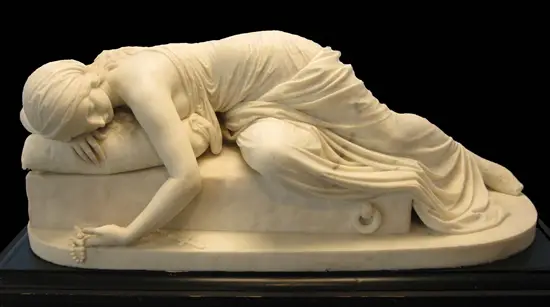
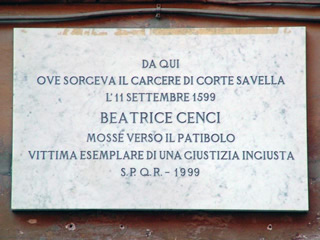
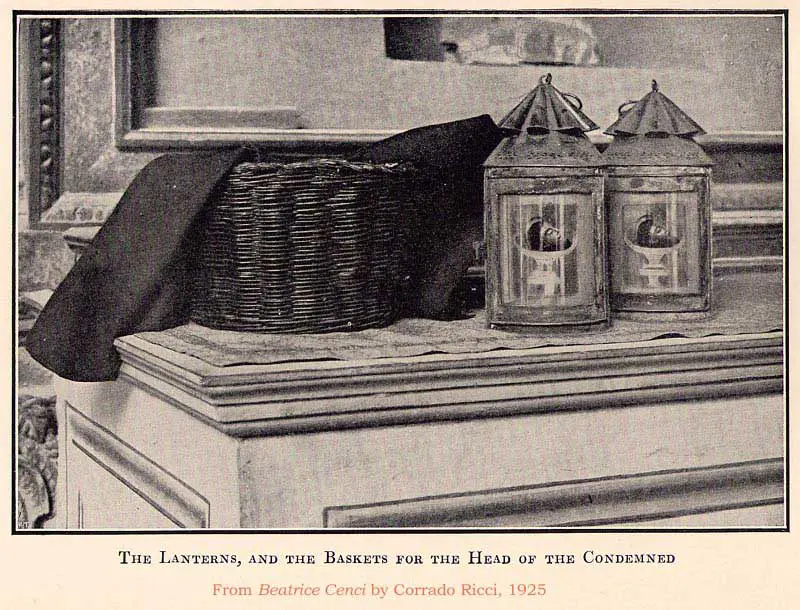
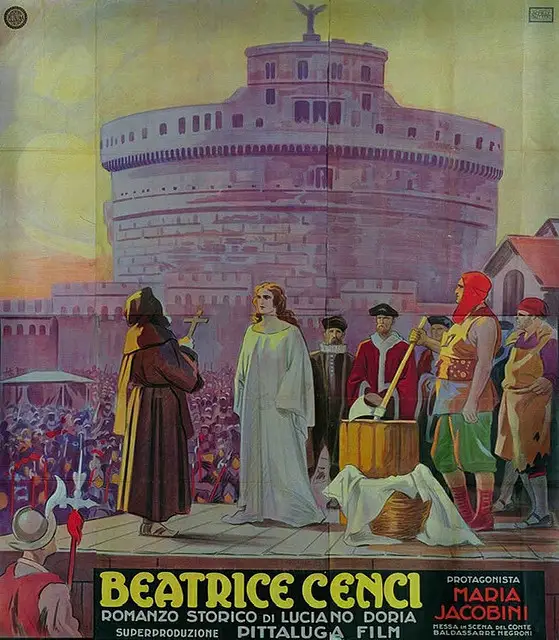
The Cenci trial shook Renaissance Rome, polarizing public opinion between profound revulsion for the blood crime and deep sympathy for the victims of the patriarch's atrocities. Pope Clement VIII, fearing an epidemic of aristocratic parricides driven by inheritance motives, rejected all petitions for clemency. At dawn on September 11, 1599, the convicts were led to Sant'Angelo Bridge. Giacomo was tortured continuously en route before having his head smashed with a mallet and his body quartered. Lucrezia and Beatrice were publicly beheaded with a sword. The youngest brother, Bernardo, was spared execution due to his age (12) but forced to witness the slaughter of his kin before life imprisonment in the galleys and total confiscation of his estate. Beatrice was buried in the church of San Pietro in Montorio, evolving over centuries into a legendary archetype of resistance against tyrannical oppression.