


Forensic & Criminological Matrix
| Parameter | Forensic Detail |
|---|---|
| Forensic Heading / Aliases | None |
| Legal Identity | Cayetano Galeote Cotilla |
| Confirmed Victims | 1 |
| Attributed / Indicted Victims | 1 |
| Active Timeline | April 18, 1886 |
| Jurisdiction / Area of Operations | Madrid, Spain |
| Criminological Classification | Mentally ill offender (persecutory monomania) |
| Forensic Modus Operandi | Public assassination via firearm |
| Weapon / Mechanism of Death | Six-shot revolver |
| Motive / Behavioral Dynamics | Persecutory delusions, professional resentment, honor-based obsession |
| Judicial Outcome | Death sentence (1886), commuted to life confinement in an asylum |
1. Background and Profile
Born in Vélez-Málaga in 1839, Cayetano Galeote Cotilla was a Catholic priest whose life was defined by professional instability and a severe hearing impairment. After serving in various locations including Puerto Rico and Fernando Poo, he returned to Madrid in 1880. His volatile temperament and his cohabitation with a woman identified as his 'niece', Tránsito Durdal, led to frequent clashes with church authorities.
2. Crime Spree
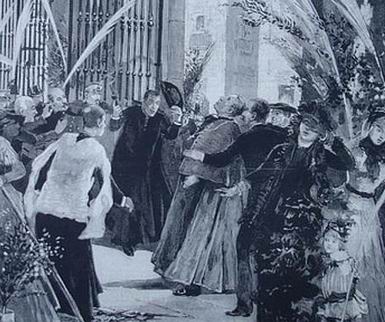
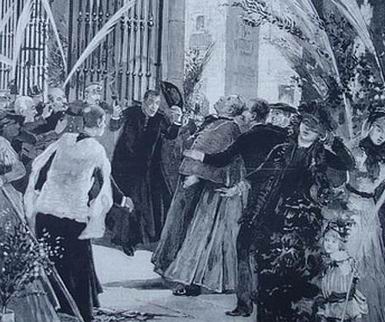
On April 18, 1886, Palm Sunday, Galeote assassinated Bishop Narciso Martínez Izquierdo at the steps of the San Isidro Cathedral in Madrid. The Bishop, who had been enforcing strict discipline within the clergy, had previously removed Galeote from his post. Galeote fired three shots at point-blank range, mortally wounding the prelate, who died the following day.
3. Investigation and Arrest
Police apprehended Galeote immediately at the scene, preventing a mob from lynching him. He confessed readily, claiming his honor had been restored. The investigation highlighted his long-standing obsession with perceived slights and his possession of a firearm dating back to his time in the Caribbean.
4. Legal Proceedings and Outcome
The trial became a landmark case for the introduction of forensic psychiatry in Spanish courts. Although initially sentenced to death, his defense team successfully argued that he suffered from 'persecutory monomania'. This defense, supported by prominent alienists of the time, shifted the focus from criminal intent to mental pathology.
5. Psychiatric Evaluation and Conclusion
Following the commutation of his death sentence, Galeote was committed to the Leganés asylum. He remained institutionalized for over 30 years, serving as a case study for the emerging field of psychiatry in Spain. He died on April 3, 1922, never wavering in his belief that his actions were justified.