



Forensic & Criminological Matrix
| Parameter | Forensic Detail |
|---|---|
| Forensic Heading / Aliases | Catherine Hayes |
| Legal Identity | Catherine Hall (married Hayes) |
| Confirmed Victims | 1 (John Hayes, her husband) |
| Active Timeline | March 1, 1726 (single planned event) |
| Jurisdiction / Area of Operations | Tyburn Road and Westminster, London, United Kingdom |
| Criminological Classification | Spousal Murderer / Dismemberment Conspiracy / Petty Treason (Petit Treason) |
| Forensic Modus Operandi | Severe alcohol intoxication of victim, cranial fracture via hand cleaver, decapitation with arterial drainage into a pail, and anatomical dismemberment for river and pond concealment |
| Weapon / Mechanism of Death | Small hand hatchet/cleaver, straight razor, and fortified mountain wine |
| Motive / Behavioral Dynamics | Pecuniary gain (estate appropriation), marital discord, and romantic conspiracy |
| Judicial Outcome | Convicted of Petty Treason at the Old Bailey; sentenced to death by burning at the stake at Tyburn on May 9, 1726 |
1. Background and Psychopathy
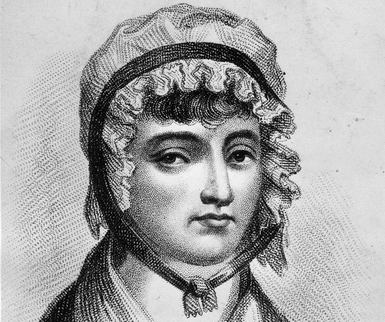
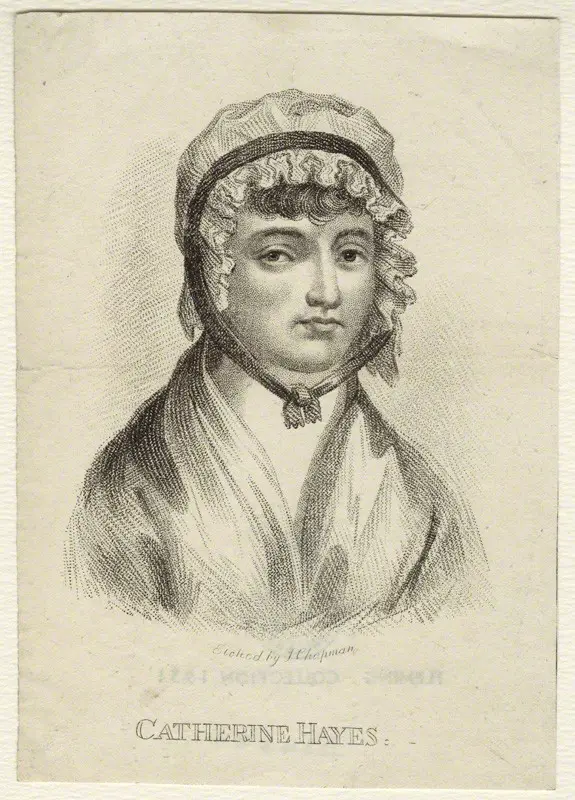
Catherine Hall was born around 1690 near Birmingham, Warwickshire or Worcestershire. Fleeing her impoverished home at age sixteen, she sought shelter in Worcestershire with the household of John Hayes, a prosperous carpenter and rural moneylender. Despite intense familial opposition, John and Catherine eloped in marriage in 1708 and subsequently relocated to London, renting lodgings on Tyburn Road (near contemporary Oxford Street).
Over time, John Hayes accumulated considerable wealth through usury and commerce, developing an austere, parsimonioso, and sullen temperament. Domestic relations deteriorated into severe acrimony; Catherine openly reviled her husband and spread malicious falsehoods concerning his character. Around 1725, a twenty-year-old tailor's apprentice named Thomas Billings joined their household as a lodger, suspected to be either Catherine's illicit lover or an unacknowledged illegitimate son. Shortly thereafter, Thomas Wood, a countryman hiding from naval press gangs, joined the domestic circle.
2. Crime Spree and Modus Operandi
Coveting John's estate—valued in excess of £1,500—Catherine systematically manipulated Wood and Billings into assisting with his murder. On the night of March 1, 1726, following a drinking wager at a nearby tavern, John Hayes consumed vast quantities of fortified mountain wine until he collapsed into complete unconsciousness.
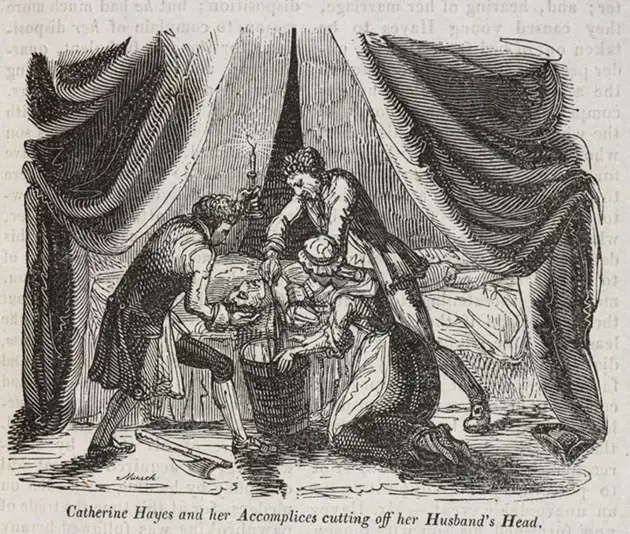
The conspirators carried his inert body back to the Tyburn Road lodging. Once Hayes sank into a deep alcohol-induced stupor, Catherine urged the accomplices forward. Thomas Billings struck the initial blow to the forehead with a small hand cleaver, fracturing his skull. Prompted by the victim's violent muscular spasms, Thomas Wood delivered two additional crushing blows that caused instant death.
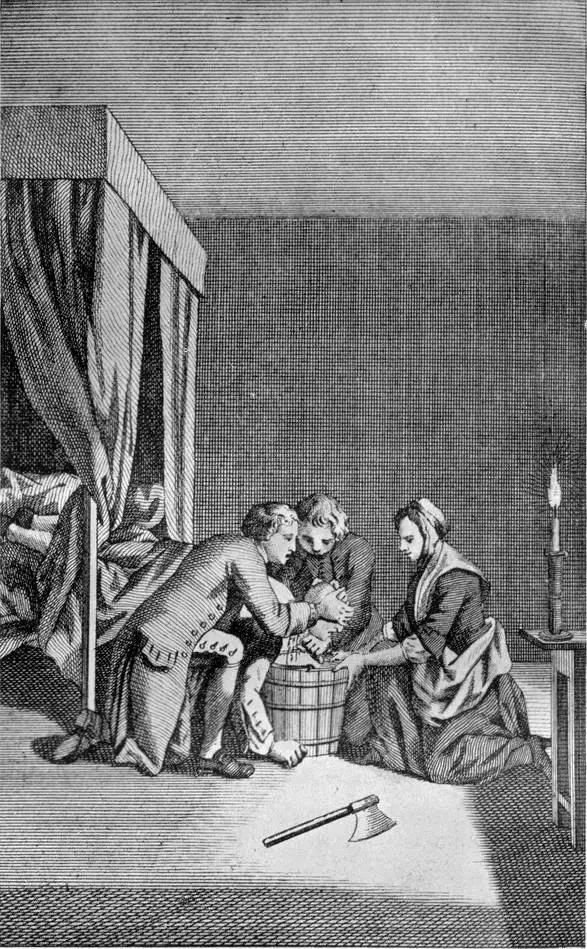
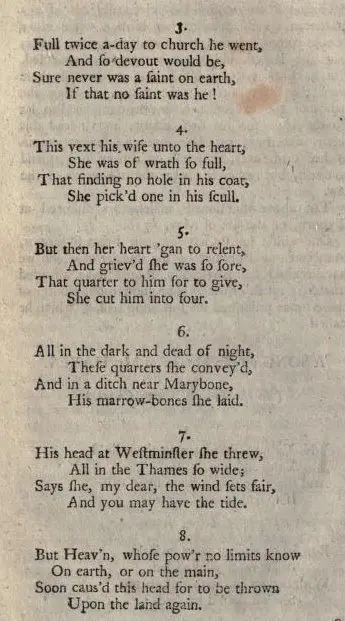
To defeat forensic identification, the perpetrators executed a meticulous anatomical dismemberment. Holding the body over the edge of the bed, Wood severed the throat muscles with a straight razor while Catherine held a zinc pail to capture the arterial torrent, preventing floorboard staining. The severed head was transported to Horseferry wharf and cast into the River Thames, while the torso and limbs were wrapped in blankets and submerged in a muddy clay pond in Marylebone Fields.
3. Investigation and Forensic Recovery
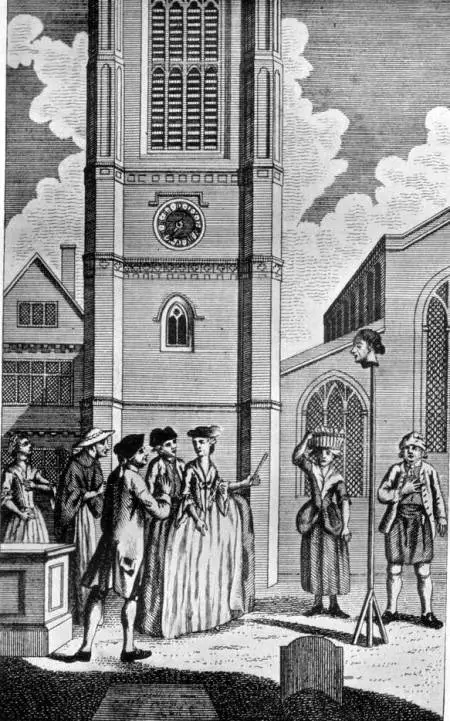
On March 2, 1726, receding tide exposed the severed head caught in the Westminster river silt. Lacking an institutionalized police force, magistrates resorted to public hue and cry. Constables washed, combed, and impaled the head on a wooden pike in St. Margaret's churchyard, Westminster, for public viewing, later preserving it in a glass jar filled with spirits of wine under parish surgeon Mr. Westbrooke.
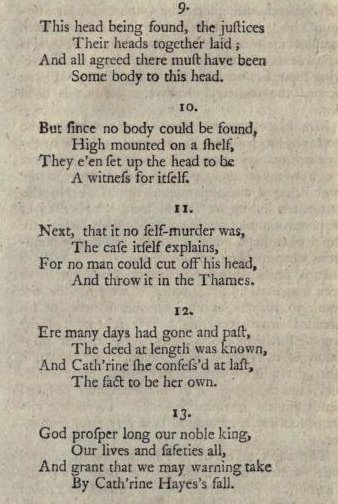
John Hayes's prolonged absence aroused suspicion among his business associates. Catherine offered conflicting alibis. Following inquiries by associates at the surgeon's laboratory, the preserved head was positively identified as John Hayes, a finding corroborated shortly thereafter by the recovery of the dismembered torso in Marylebone Fields.
4. Legal Proceedings and Outcome
Magistrate Oliver Lambert issued immediate warrants. Catherine Hayes and Thomas Billings were apprehended on March 23, 1726. Confronted with the glass jar containing her husband's preserved head, Catherine performed an elaborate theatrical display, kissing the glass and feigning collapse. Days later, Thomas Wood was arrested and confessed under interrogation, detailing Catherine's masterminding of the plot.
The trial convened at the Old Bailey in April 1726. Wood and Billings pleaded guilty to murder; Catherine initially stood mute before entering a plea of not guilty.
5. Psychiatric Evaluation and Execution
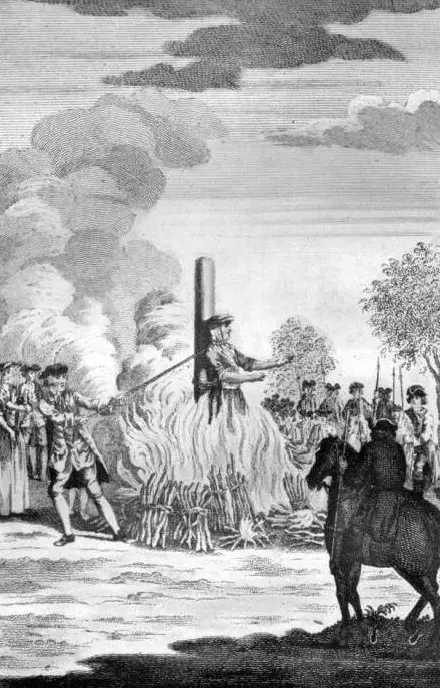
Under English common law and the 1351 Treason Act, a wife murdering her lawful husband was legally classified as Petty Treason (Petit Treason), equating domestic insubordination with treasonous rebellion against monarchical authority. While male murderers were hanged, women convicted of petty treason were condemned to death by burning at the stake.
Thomas Wood contracted typhus and died in Newgate Prison prior to execution, while Thomas Billings was hanged at Tyburn and gibbeted in chains. On May 9, 1726, Catherine Hayes was drawn to Tyburn gallows. During the execution, winds whipped the flames, severely scorching the hangman's hands and causing him to release the strangulation cord prematurely before consciousness was lost. Consequently, Catherine was burned alive, enduring agonizing torment before thousands of spectators until her body was entirely consumed.