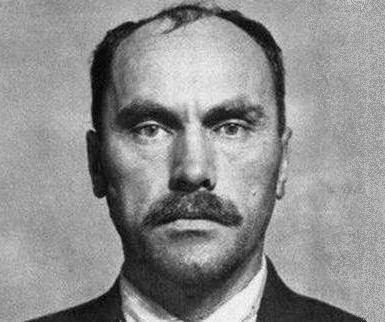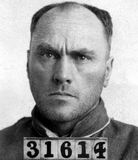




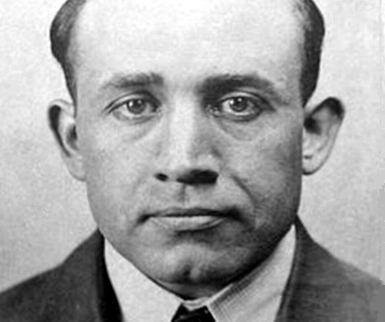
Carl Panzram: Hatred of Humanity, the Leavenworth Manuscript, and the Defiant Gallows
Executive Summary
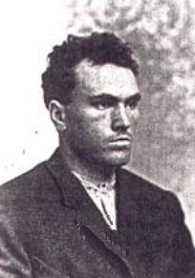
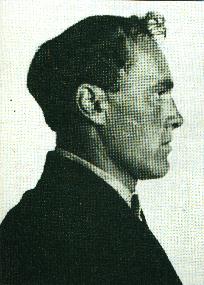
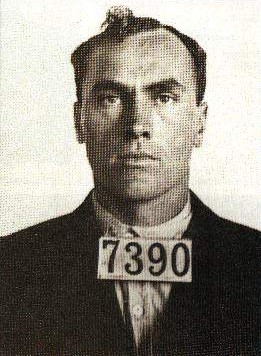
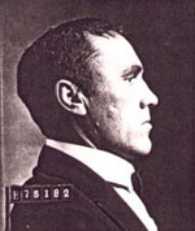
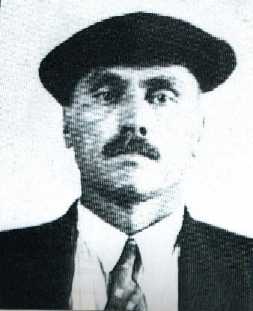
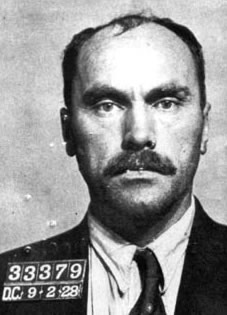
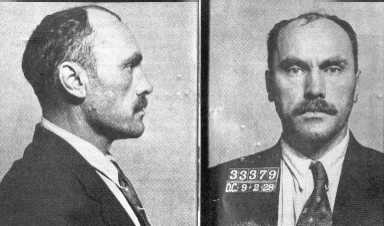
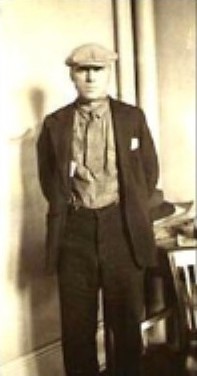
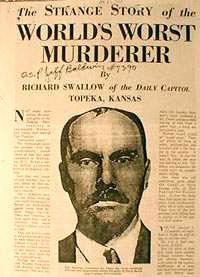
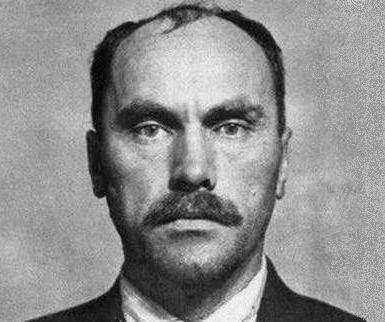
Carl Panzram (registered at birth as Charles Panzram; June 28, 1891 – September 5, 1930) was an American itinerant vagrant, burglar, river pirate, sadistic rapist, and serial killer whose ferocity, absolute nihilism, and explicit refusal of moral redemption made him one of the most chilling and unique figures in twentieth-century penal and criminological history. In his handwritten autobiographical memoirs—written clandestinely inside the Washington, D.C. District Jail through the assistance of correctional officer Henry Lesser—Panzram confessed with cold detachment to murdering twenty-two human beings, committing thousands of burglaries and arsons, and perpetrating violent sodomy on more than one thousand men and boys across North America, Africa, and Europe.
His criminal trajectory began in early childhood in rural Minnesota, heavily conditioned by institutional brutality in juvenile reformatories and federal penitentiaries (such as the notorious Clinton Prison in Dannemora and the United States Penitentiary in Leavenworth). Hardened into a formidable physical force through years of penal rock-breaking under fifty-pound leg irons, Panzram channeled his resentment into systematic vengeance against society: he burgled the private residence of former U.S. President William Howard Taft in New Haven (stealing a Colt .45 pistol he subsequently used to kill), acquired a schooner to drug, rob, and murder merchant seamen on the high seas, and during an expedition in Angola slaughtered six indigenous river oarsmen and fed their remains to crocodiles.
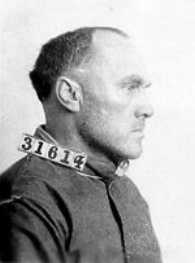
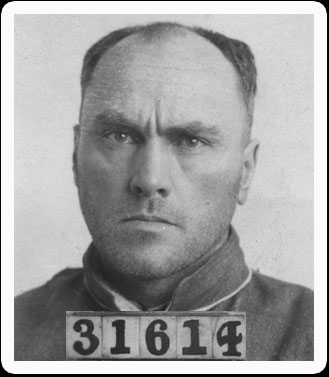
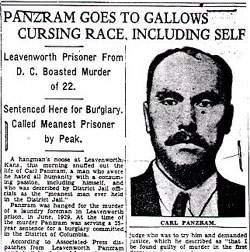
Following an uninterrupted lifetime of prison escapes, recaptures, and riots, he was incarcerated at Leavenworth Federal Penitentiary in 1929, warning guards that he would kill the first man who attempted to discipline him. On June 20, 1929, he crushed the skull of prison laundry foreman Robert Warnke with an iron pipe. Angrily rejecting all appeals and clemency petitions launched by anti-death penalty organizations, Panzram demanded immediate execution. He mounted the scaffold on September 5, 1930, spitting in the hangman's face and uttering his legendary final words: «Hurry it up, you Hoosier bastard! I could hang ten men while you're fooling around!»
Forensic & Criminological Matrix
| Parameter | Forensic Detail |
|---|---|
| Legal Identity | Carl Panzram (also registered as Charles Panzram) |
| Public Identity | Carl Panzram |
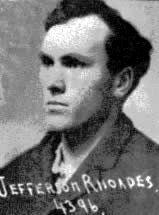
| Criminological Aliases | Jefferson Rhoades / Jeff Baldwin / Jack Allen / Jefferson Davis / "The Leavenworth Butcher" |
| Date of Birth | June 28, 1891 (Warren, Minnesota, U.S.) |
| Date of Execution | September 5, 1930 (USP Leavenworth, Kansas; aged 39) |
| Criminological Classification | Itinerant Serial Killer / Sadistic Sexual Predator / Incorrigible Nihilistic Homicide |
| Confirmed Homicides | 22 homicides detailed in autobiographical memoirs and court records |
| Sexual Assaults and Arsons | Over 1,000 documented violent sodomies; thousands of burglaries and arsons |
| Criminal Motive | Radical misanthropy, retaliatory nihilism, destructive hatred, and dominance sadism |
| Modus Operandi | Blunt trauma with iron bars/rocks; manual and belt strangulation; firearm execution (.45 ACP) |
| Historical Forensic Document | Panzram: A Journal of Murder (Manuscript of >20,000 words preserved by Henry Lesser) |
| Geographic Scenarios | Minnesota, Montana, Kansas, Connecticut, Massachusetts, New York, Washington D.C., and Angola |
| Trial Court | U.S. District Court for the District of Kansas (Judge Richard J. Hopkins) |
| Judicial Sentence | Capital punishment by hanging |
| Final Status | Executed on the Leavenworth scaffold |
Childhood, Institutional Abuse, and the Genesis of Hatred (1891–1907)
Carl Panzram was born on a farm in Warren, Minnesota, to Prussian immigrant homesteaders John and Matilda Panzram. Abandoned by his father at age seven, he grew up in destitution, subjected to violent beatings by his older brothers. He committed his first thefts at eight and was arrested for burglary at eleven.
In 1903, aged twelve, he was committed to the Minnesota State Training School in Red Wing. The reformatory experience proved catalytic:
- Upon arrival, he was stripped naked, subjected to humiliating rectal examinations, and aggressively questioned by clerical overseers regarding his masturbatory habits.
- Enduring a brutal regime of religious fanaticism and corporal punishments with leather straps and wooden paddles, Panzram permanently associated law, religion, and mercy with hypocrisy and sadistic power.
- At fourteen, he enacted his first major retaliation: constructing an incendiary candle device, he burned the facility's main administration building to the ground, inflicting over $100,000 in damage.
Paroled in late 1905 after feigning moral contrition, Panzram brought a firearm to public school and attempted to shoot a teacher who disciplined him. Expelled immediately, he hopped a freight train and became an itinerant hobo. Shortly thereafter, four adult hobos lured him to a campsite with promises of food and violently gang-raped him for hours. In his memoirs, Panzram noted that this assault permanently obliterated every remaining vestige of empathy, humanity, or remorse within him.
Leavenworth, Deer Lodge, and Dannemora (1907–1920)
In 1907, falsifying his age in Helena, Montana, he enlisted in the U.S. Army. Chronically insubordinate and drunken, he was caught in April 1908 stealing military firearms from Fort William Henry Harrison. A general court-martial sentenced him to three years of hard labor at USP Leavenworth, signed by Secretary of War William Howard Taft.
The Iron Ball and Chain Regimen
At Leavenworth, Panzram endured the silent system and heavy iron restraints:
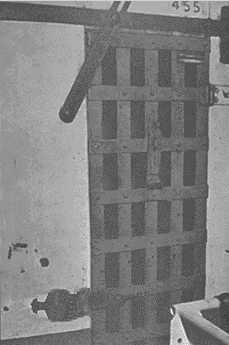
- He was shackled to a fifty-pound iron ball and chain, breaking rock in limestone quarries ten hours a day. Far from breaking him, the labor transformed him into a towering, muscular physical powerhouse weighing over two hundred pounds.
- Paroled in 1910, he traveled across the western United States, leaving a trail of armed robberies, arsons, and systematic rapes of railroad guards and ranch hands.
- Incarcerated at Deer Lodge, Montana, in 1913 and Oregon State Penitentiary in 1915, he endured solitary confinement on bread and water and ice-water hose punishments under Warden Harry Minto. He escaped repeatedly amid gunfire, reaching the East Coast by 1918.
The New Haven Burglary, River Piracy, and Angola (1920–1923)
In 1920, living under the alias Jefferson Rhoades in New Haven, Connecticut, he burgled a stately waterfront mansion. To his delight, the estate belonged to former U.S. President William Howard Taft—the man who had ratified his Leavenworth military sentence twelve years prior. Panzram stole cash, bonds, and Taft's personal Colt .45 semiautomatic pistol.
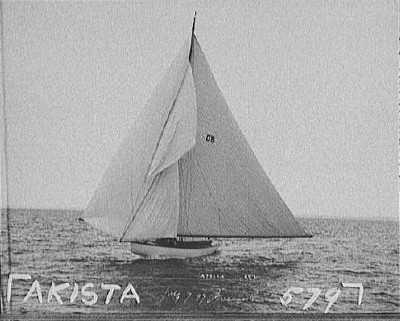
Using the proceeds, he purchased a 38-foot yacht named the Akista:
- He docked in New York and Connecticut harbors, recruiting merchant sailors with promises of well-paying maritime voyages.
- Once at sea, he intoxicated them with poisoned liquor, bound and sodomized them, shot them through the head with Taft's Colt .45, and attached heavy rocks to their bodies before dumping them into the Atlantic.
The Angolan Expedition (1921)
Following the wreck of the Akista in a Connecticut gale, Panzram signed aboard a freighter to the Portuguese colony of Angola:
- In Lobito Bay, he lured an eleven-year-old native boy into the brush, sodomized him, and crushed his skull with a large boulder.
- Weeks later, he hired six indigenous oarsmen for a crocodile hunting expedition. Deep in the jungle, he drew his rifle, shot all six men in the back, and threw their mutilated remains into the river to be consumed by crocodiles.
Return to America and Final Incarceration (1922–1928)
Returning to the United States in 1922, Panzram carried out two notorious child murders:
- George Henry McMahon (August 21, 1922): In Salem, Massachusetts, he lured an 11-year-old boy into a secluded area, tortured and sodomized him, and crushed his skull with a heavy rock.
- Alexander Luszck (August 9, 1923): In New Haven, Connecticut, he abducted a 12-year-old boy, raped him in nearby woods, and strangled him with a leather belt.
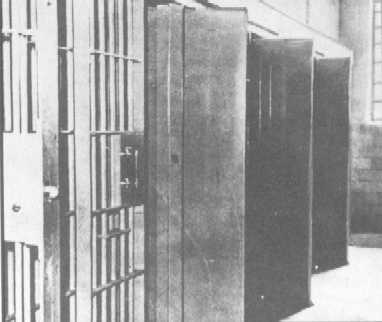
Arrested in Larchmont, New York, in August 1923, he was sent to Clinton Prison in Dannemora, known as "The Siberia of America." Attempting an escape over a thirty-foot wall, he broke both legs and suffered severe spinal damage. Denied proper medical care and losing a testicle, his ferocity remained unchanged.
Released in 1928, he resumed burglary in Washington, D.C., until his final arrest on August 16, 1928.
Henry Lesser and the «Journal of Murder»
While confined in the Washington, D.C. Jail, Panzram encountered correctional officer Henry Lesser. Moved by the brutal beatings guards inflicted on Panzram after catching him attempting to saw through cell bars, Lesser gave him a dollar to buy tobacco and provided him with composition notebooks and pencils.
Across months of correspondence, Panzram penned an autobiography of over twenty thousand words:
"In my lifetime I have murdered 21 human beings. I have committed thousands of burglaries, robberies, and arsons, and I have sodomized more than 1,000 men. For none of these things am I in the least bit sorry. I have no conscience, so that doesn't worry me. I don't believe in man, God, nor Devil. I hate the whole damned human race, including myself... I wish the whole human race had one neck and I had my hands around it."
The Murder of Robert Warnke and the Leavenworth Execution (1929–1930)
Sentenced to twenty-five years on federal burglary charges, Panzram was returned to Leavenworth in February 1929. Upon arrival, he warned officials: "The first man that bothers me, I'll kill him."
On June 20, 1929, inside the prison laundry, foreman Robert Warnke repeatedly harassed and pushed him. Panzram seized a heavy iron boiler bar and smashed Warnke's skull, killing him in front of dozens of prisoners.
The Trial and Demand for Death
Indicted for first-degree murder before federal Judge Richard J. Hopkins, Panzram refused an insanity plea. When civil rights groups and prominent psychiatrist Dr. Karl Menninger attempted to intervene on his behalf to seek commutation, Panzram sent them explicit death threats, asserting his constitutional right to be executed: "I only have one desire: to be hung as soon as possible. If you keep me alive, I will kill another man."
On September 5, 1930, at 06:00, Carl Panzram ascended the thirteen steps of the Leavenworth gallows. When the executioner placed the noose around his neck and paused to adjust the black hood, Panzram spat in his face and bellowed his famous last words:
«Hurry it up, you Hoosier bastard! I could hang ten men while you're fooling around!»
The trap fell at 06:03, and he was pronounced dead fifteen minutes later. He was buried in the prison cemetery under an unadorned numbered marker. In 1970, Henry Lesser published the manuscript as Panzram: A Journal of Murder, establishing a primary forensic document of institutional horror and psychopathic rage.
Selected Nominal Confessed Victims Register
| Victim Identity | Age / Description | Location | Approximate Date | Forensic Cause of Death |
|---|---|---|---|---|
| Robert Warnke | Leavenworth laundry foreman | USP Leavenworth (Kansas) | June 20, 1929 | Massive craniocerebral trauma with heavy iron boiler bar |
| George Henry McMahon | 11 | Salem, Massachusetts | August 21, 1922 | Child sexual assault, paper gagging, and cranial crushing with a rock |
| Alexander Luszck | 12 | New Haven, Connecticut | August 9, 1923 | Child sexual assault and manual ligature strangulation with belt |
| Lobito Bay Youth | c. 11 | Lobito Bay, Angola (Africa) | 1921 | Child sexual assault and cranial crushing with a boulder |
| 6 Indigenous Oarsmen | Adult Angolan river boatmen | Angolan jungle river | 1921 | Rifle gunshot wounds to back; bodies discarded to crocodiles |
| Merchant Seamen (Multiple) | Recruited maritime sailors | Atlantic Ocean (Yacht Akista) | 1920–1921 | Intoxication, sexual assault, gunshot wounds with Taft's Colt .45, weighted and dumped |