



Forensic & Criminological Matrix
| Parameter | Forensic Detail |
|---|---|
| Forensic Heading / Aliases | "Jack the Ripper" (attributed via press and self-incrimination) |
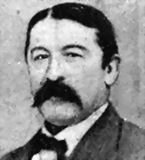
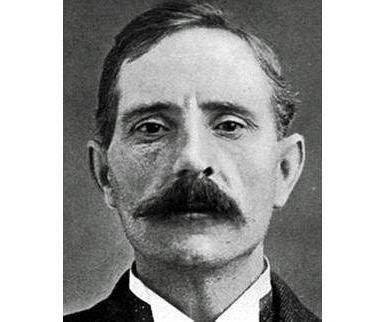
| Legal Identity | William Henry Bury |
| Confirmed Victims | 1 (Ellen Bury) |
| Attributed / Indicted Victims | 1 (with historical fringe speculation regarding Whitechapel murders) |
| Active Timeline | February 1889 |
| Jurisdiction / Area of Operations | Dundee, Scotland, United Kingdom |
| Criminological Classification | Intimate partner homicide perpetrator / Historical Ripper suspect |
| Forensic Modus Operandi | Ligature strangulation using rope, post-mortem abdominal mutilation with a blade, corpse concealment inside a wooden crate, and staged deceptive graffiti |
| Weapon / Mechanism of Death | Rope (strangulation) and kitchen knife (mutilation) |
| Motive / Behavioral Dynamics | Extreme domestic violence exacerbated by chronic alcoholism and acute interpersonal conflict |
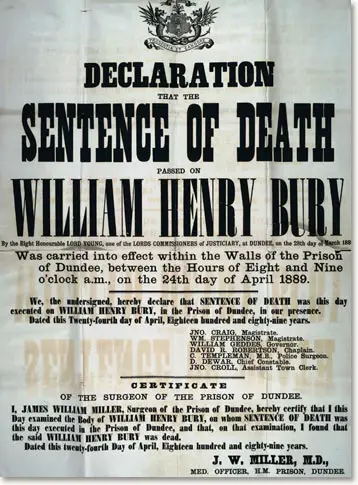
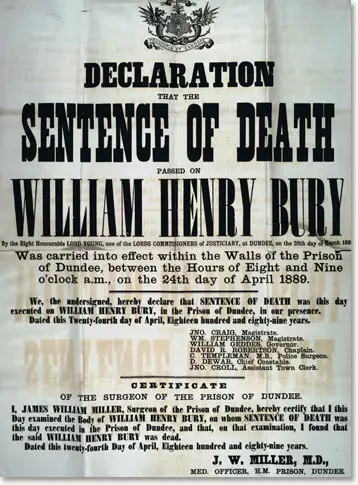
| Judicial Outcome | Tried and convicted of murder in Scotland; sentenced to death and hanged on April 24, 1889 |
1. Background and Profile
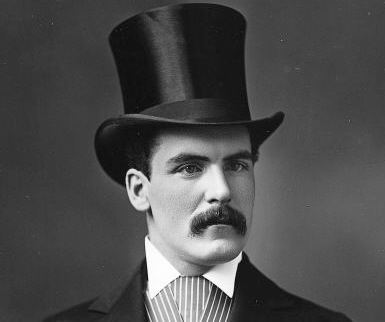
William Henry Bury was born in Stourbridge, Worcestershire, in May 1859. His early life was characterized by severe institutional instability: his father died in a cart accident three months after his birth, and his mother was committed to a lunatic asylum suffering from melancholia, passing away in 1864. Left an orphan, Bury was raised by a family friend and received an education at the Blue Coat Orphanage in Stourbridge.
During his youth, he worked as a clerk and street hawker in Wolverhampton and Birmingham. In October 1887, he relocated to Bow in London's East End, working as a sawdust hawker where he met Ellen Elliot, a barmaid and sex worker. They married in April 1888. Acquaintances repeatedly described Bury as a violent, abusive alcoholic; on one occasion shortly after their wedding, he was caught attempting to slit his bride's throat with a knife, leading to frequent evictions for extreme volatility.
2. Crime Spree and Modus Operandi
In late December 1888, facing financial ruin and community backlash, the couple relocated from London to Dundee, Scotland, after commissioning large wooden crates ostensibly for international emigration. They settled into a basement flat at 113 Princes Street.
On February 8, 1889, following a heavy drinking binge, Bury strangled Ellen Elliot with a rope. Realizing she was dead and fearing apprehension, he bypassed medical authorities and instead stabbed her abdomen multiple times in a frenzy of post-mortem mutilation. He subsequently concealed her disfigured remains inside the wooden crate he had previously commissioned in London, inscribing chalk graffiti on the doors alluding to Jack the Ripper to deflect police attention.
3. Investigation and Arrest
On February 10, 1889, Bury voluntarily walked into the Dundee Central Police Station to report his wife's alleged suicide. Speaking to Lieutenant James Parr, he claimed he awoke to find his wife dead with a rope around her neck, whereupon he flew into a rage and stabbed her abdomen. He also made ambiguous statements hinting that he might be Jack the Ripper.
Detectives from London traveled north to investigate his possible ties to the Whitechapel murders. Although he was placed in proximity to the East End during the active timeline of the Ripper murders, Scotland Yard detectives dismissed him as the primary serial killer. However, the physical evidence at the Dundee flat, including the mutilated body in the crate and the incriminating graffiti, cemented his culpability for his wife's murder.
4. Legal Proceedings and Outcome
William Henry Bury was tried for the murder of Ellen Bury before the High Court of Justiciary in Scotland during a concise, thirteen-hour trial. The defense attempted to argue extreme intoxication and psychological disturbance, but the forensic evidence and witness testimonies presented by the prosecution proved conclusive.
The jury returned a unanimous guilty verdict, and Bury was sentenced to death by hanging. The execution was carried out on April 24, 1889, at Dundee Prison, marking him as the last individual executed in that Scottish city.
5. Psychiatric Assessment and Aftermath
From a criminological standpoint, William Henry Bury exemplifies the profile of a severe domestic abuser with antisocial personality traits compounded by substance abuse. His opportunistic appropriation of the Jack the Ripper persona serves as a psychological deflection strategy born of panic and sensationalist cultural absorption. The case remains a textbook example within British forensic history of intimate partner homicide intertwined with Victorian mass hysteria.