

Forensic & Criminological Matrix
| Parameter | Forensic Detail |
|---|---|
| Full Legal Name | Mary Ann Williams (married as Mary Ann Burdock) |
| Forensic Medicine Milestone | Landmark case in British forensic toxicology featuring William Herapath's chemical testimony |
| Criminological Classification | Utilitarian arsenic poisoner, predatory lodging-house keeper |
| Date & Location of Crime | October 23, 1833, Trinity Street, Bristol, England, UK |
| Confirmed Murder Victims | 1 (Clara Ann Smith, aged 60, affluent elderly lodger) |
| Lethal Toxic Agent | Arsenic sulphide (yellow orpiment / trioxide) infused into warm sago gruel |
| Criminogenic Motive | Predatory theft of approximately £1,000 in sovereigns, banknotes, and jewelry |
| Final Legal Disposition | Publicly hanged on April 15, 1835 at Bristol Gaol before an estimated 50,000 onlookers |
Background and Boarding House Predation
Mary Ann Burdock was at the center of one of the most consequential nineteenth-century forensic toxicology trials in Great Britain. Operating a lodging house in Trinity Street, Bristol, Mary Ann catered to itinerant sailors and long-term tenants.
In 1833, Clara Ann Smith, an affluent sixty-year-old widow possessing significant cash savings and private annuity bonds, took up residence in Burdock's establishment. Recognizing that Smith kept large sums of physical gold and negotiable securities in locked personal trunks, Burdock assumed intimate nursing duties as Smith experienced declining health.
The Arsenic Gruel and Estate Plunder
On October 23, 1833, Burdock prepared a bowl of warm sago pudding, covertly blending in a massive quantity of yellow arsenic sulphide (orpiment). Shortly after consuming the preparation, Smith was seized with violent abdominal spasms, persistent projectile emesis, and burning gastric pain, succumbing within twenty-four hours to toxic shock.
Arranging an expedited burial in an unadorned churchyard grave without an attending medical certificate, Burdock plundered Smith's trunks, seizing nearly £1,000 in currency, securities, and precious ornaments. She subsequently married an associate named John Burdock and used the proceeds to finance lavish domestic expansions.
Landmark Exhumation and Herapath's Toxicological Breakthrough
Fourteen months later, persistent rumors prompted the Bristol magistrates to order the exhumation of Smith's coffin in December 1834. The autopsy and subsequent chemical analyses were entrusted to renowned analytical chemist William Herapath.
Herapath observed that while the outer bodily tissues had putrefied, the stomach and intestines remained mummified and remarkably preserved—a recognized characteristic of heavy arsenic saturation. Microscopic and chemical precipitation assays revealed bright yellow crystalline deposits of arsenic trisulphide encrusting the mucosal lining, providing undeniable proof of acute homicidal poisoning.
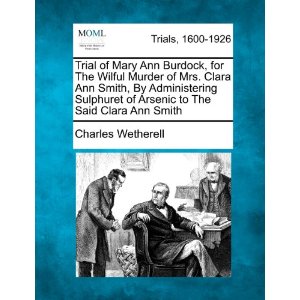
At her April 1835 trial at the Bristol Assizes, Herapath's scientific demonstration devastated the defense. Found guilty of murder, Mary Ann Burdock was executed on the gallows atop Bristol New Gaol on April 15, 1835, before an estimated crowd of 50,000 people, permanently recorded in medico-legal textbooks as a triumph of scientific forensic toxicology.