

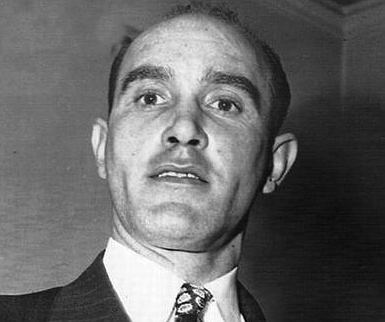
Forensic & Criminological Matrix
| Parameter | Forensic Detail |
|---|---|
| Forensic Heading / Aliases | Dr. Robert Buchanan |
| Legal Identity | Robert W. Buchanan |
| Confirmed Victims | 1 (Anna Buchanan) |
| Attributed / Indicted Victims | 1 |
| Active Timeline | May 1892 |
| Jurisdiction / Area of Operations | New York, United States |
| Criminological Classification | Domestic murderer / Financially motivated poisoner |
| Forensic Modus Operandi | Surreptitious administration of morphine coupled with the topical application of atropine to the victim's eyes to counteract pinpoint pupils |
| Weapon / Mechanism of Death | Morphine / Chemical poisoning |
| Motive / Behavioral Dynamics | Financial gain ($50,000 inheritance) to support a dissolute lifestyle |
| Judicial Outcome | Convicted of murder; sentenced to death and executed via electrocution on July 2, 1895 |
1. Background and Profile
Dr. Robert W. Buchanan was a Canadian physician practicing in New York City, notorious among local underground circles for heavy drinking and frequenting brothels. His extravagant lifestyle severely depleted his financial resources, setting the stage for domestic exploitation. He married Anna Buchanan, a former brothel keeper possessing a substantial fortune estimated at $50,000, which became the prime catalyst for her murder.
2. Crime Spree and Modus Operandi
In May 1892, Anna Buchanan died suddenly. The initial death certificate attributed her passing to a stroke. However, subsequent toxicological examination revealed that Buchanan had poisoned her with a fatal dose of morphine. Aware of recent forensic findings from similar trials—such as the Carlyle Harris case, where pinpoint pupils betrayed opiate overdoses—Buchanan attempted to mask the classic miosis by applying atropine drops to his dying wife's eyes to artificially dilate the pupils.
3. Investigation and Arrest
Suspicion was initially raised by Anna's friends and fueled by Buchanan's own hubris, as he frequently boasted in medical circles that he knew how to avoid detection when using poisons. Investigative journalist Ike White uncovered suspicious circumstances surrounding the sudden death and revealed that Buchanan had remarried his former wife in Nova Scotia merely three weeks after Anna's funeral, prompting police intervention and exhumation.
4. Legal Proceedings and Outcome
Presided over by Judge E. C. Smyth in March and April 1893, Buchanan's trial became a landmark in the history of forensic science. For the first time, a courtroom battle relied heavily on expert toxicological testimony. Prosecution expert Professor Rudolph Witthaus utilized the Pellagri test to isolate morphine from the victim's remains and corroborated the use of atropine to disguise pupillary constriction.
5. Psychological Evaluation and Execution
The jury returned a guilty verdict of first-degree murder, rejecting the defense's arguments. Buchanan was sentenced to death. After exhausting all appeals, he was executed in the electric chair on July 2, 1895, cementing the case as a foundational triumph for modern forensic toxicology and courtroom science.