


Forensic & Criminological Matrix
| Parameter | Forensic Detail |
|---|---|
| Forensic Heading / Aliases | The San Francisco Poisoner |
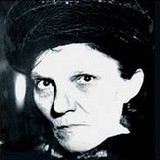
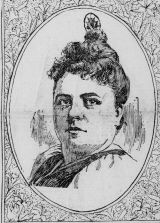
| Legal Identity | Cordelia Botkin |
| Confirmed Victims | 2 (Mary Elizabeth Dunning and Ida Harriet Deane) |
| Active Timeline | August - September 1898 |
| Jurisdiction / Area of Operations | San Francisco, California and Dover, Delaware, USA |
| Criminological Classification | Serial / Poisoner motivated by jealousy and retaliation |
| Forensic Modus Operandi | Postal dispatch of arsenic-laced confectionery accompanied by anonymous harassment notes |
| Weapon / Mechanism of Death | Arsenic trioxide poisoning via chocolates |
| Motive / Behavioral Dynamics | Pathological jealousy, abandonment rage, and revenge against the ex-lover's wife |
| Judicial Outcome | Sentenced to life imprisonment in December 1898; retrial confirmed verdict in 1904. Died in custody in 1910 |
1. Background and Psychopathy
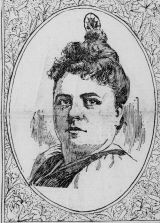
Cordelia Botkin was born in Missouri in 1854 and later moved to California with her family. She married Welcome A. Botkin, a wealthy grain broker from Stockton, with whom she had a son. Although legally separated from her husband, she continued to receive regular financial remittances from him. While residing in San Francisco hotels in the summer of 1895, she met John Presley Dunning, western bureau chief for the Associated Press and a war correspondent. Despite being nearly a decade older than him and both being married, they engaged in a turbulent affair fueled by heavy drinking, gambling, and financial instability.
2. Crime Spree
When John Dunning decided to terminate the relationship in 1898 to cover the Spanish-American War and reconcile with his wife, Mary Elizabeth—who had retreated with their daughter to Dover, Delaware, due to his infidelities and debts—Cordelia Botkin descended into severe obsessive jealousy and resentment. She began harassing Mary Elizabeth through anonymous letters signed "A Friend," warning her against reconciling with her husband. Realizing Dunning had no intention of returning to her, Botkin formulated a lethal plan: she purchased a box of assorted chocolates at a San Francisco confectionary, laced them with a fatal dose of arsenic, enclosed a lacy handkerchief, and mailed the package to Delaware, disguising it as a gift from local admirers.
3. Police Investigation and Forensic Hunt
On August 9, 1898, Mary Elizabeth Dunning opened the package, consumed several pieces of candy, and shared the rest with her older sister, Ida Harriet Deane, and other guests on her father's porch. After two days of excruciating agony, 35-year-old Mary Elizabeth and 44-year-old Ida Harriet died from acute arsenic poisoning; four other individuals who ingested smaller amounts survived. The victims' father, former Congressman John B. Penington, recognized the familiar handwriting on the accompanying note as matching the taunting letters he had safely stored. Law enforcement traced the candy purchase back to a San Francisco shop and conclusively linked the package to Cordelia Botkin.
4. Arrest and Judicial Proceedings
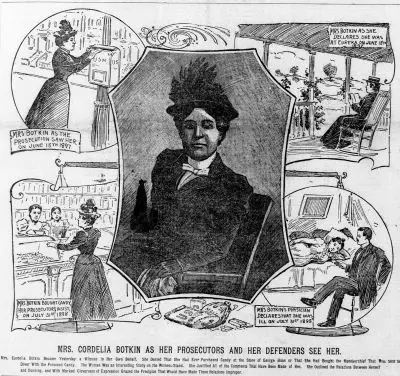
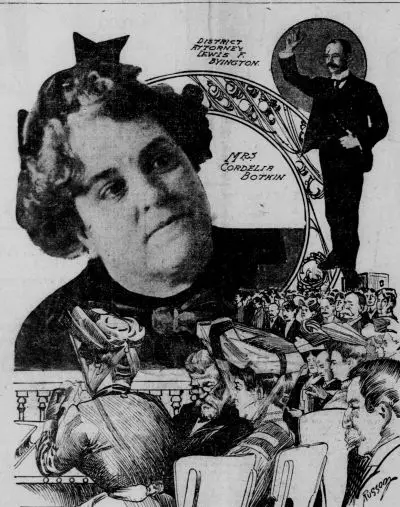
Cordelia Botkin's arrest marked a landmark precedent in American jurisprudence as the first major trial involving a crime committed across two distinct jurisdictions (California and Delaware). Presided over by Judge Carroll Cook in San Francisco in late December 1898, the trial drew intense national and international media scrutiny. Despite defense efforts to challenge handwriting and circumstantial evidence, the jury convicted Botkin of murder, sentencing her to life imprisonment. Following legal appeals, a retrial in 1904 reaffirmed the guilty verdict.
5. Psychiatric Evaluation and Outcome
From a criminological standpoint, Botkin's behavioral profile aligns with a killer driven by extreme possessive jealousy, emotional abandonment rage, and deep-seated narcissistic traits. Throughout her trial and incarceration, Botkin steadfastly denied her guilt and never confessed. She was confined to San Quentin State Prison, where she remained until her death from natural causes on March 7, 1910, concluding one of the most notorious forensic cases of the late Victorian era.