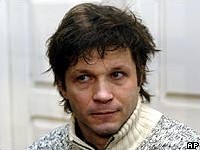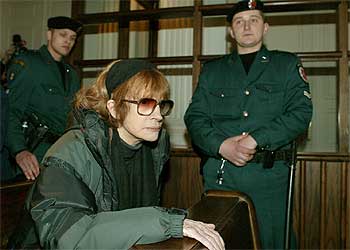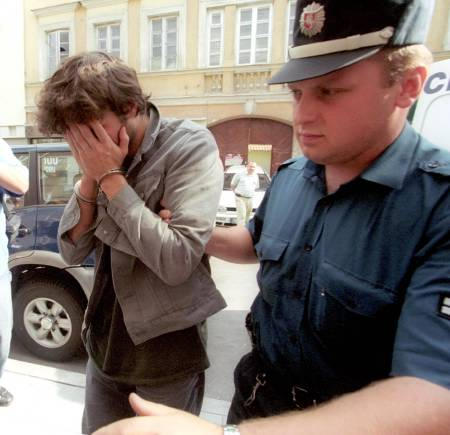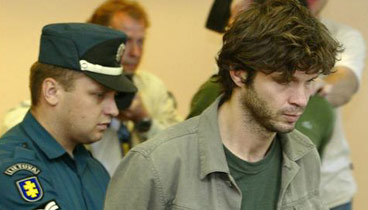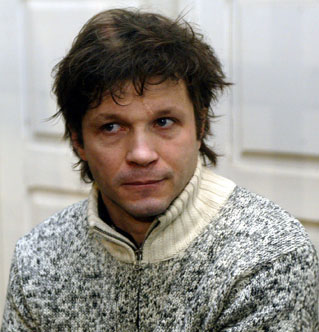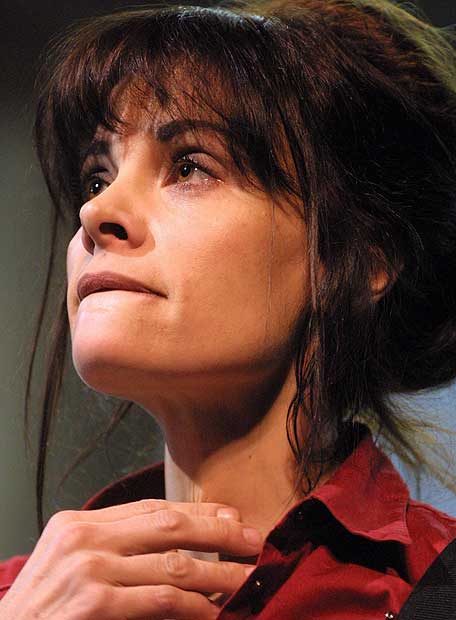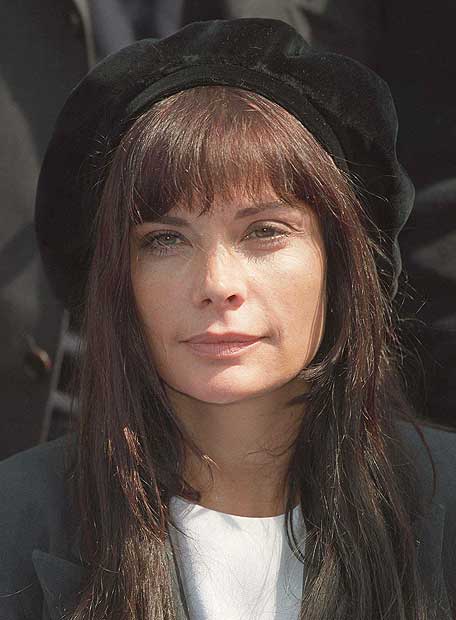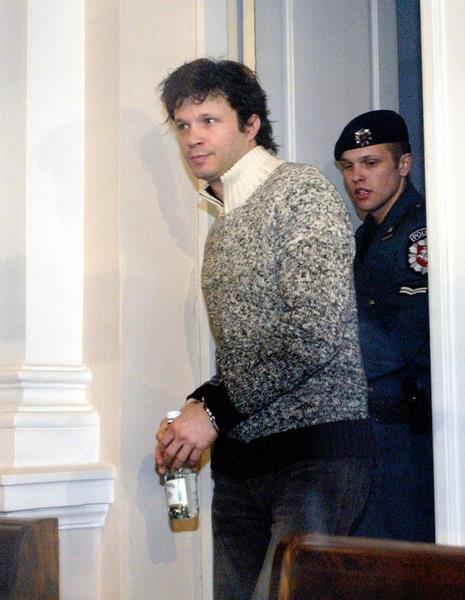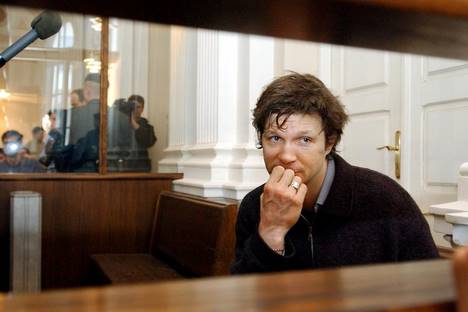




Bertrand Cantat: The Tragedy of Domina Plaza Hotel and the Homicide of Marie Trintignant
Executive Summary
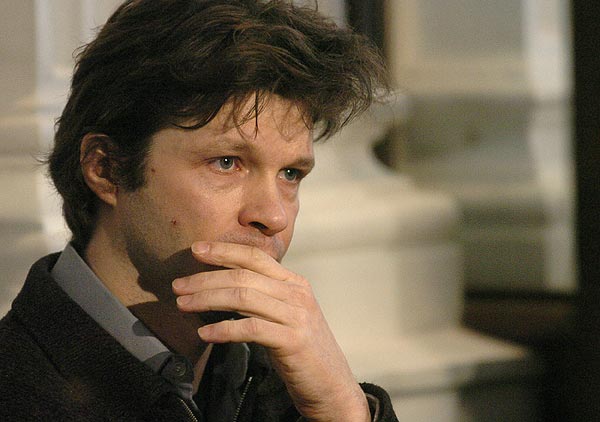
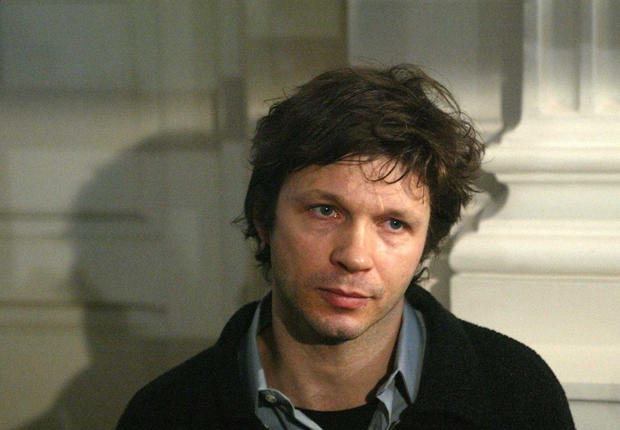
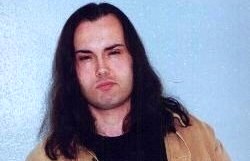
Bertrand Cantat (born March 5, 1964, in Sainte-Foy-la-Grande, Gironde, France), lead singer and lyricist of the seminal French rock band Noir Désir, was tried and convicted by a Lithuanian court in 2004 for the homicide of his partner, acclaimed French film and stage actress Marie Trintignant (aged 41, daughter of celebrated actor Jean-Louis Trintignant and film director Nadine Trintignant). The case reverberated internationally, becoming a watershed socio-legal event across Europe regarding intimate partner violence, pathological jealousy, and the judicial handling of homicide through dolus eventualis (indirect intent).
The fatal assault occurred in the early hours of July 27, 2003, inside Room 35 of the Domina Plaza Hotel in Vilnius, Lithuania, where Trintignant was completing the filming of the biographical television miniseries Colette. Following an escalating argument fueled by alcohol and jealousy over a friendly text message sent to Trintignant by her ex-husband, director Samuel Benchetrit, Cantat launched a ferocious physical assault. Forensic necropsy documented nineteen distinct blunt impacts to her head, face, and extremities, causing multiple nasal bone fractures, widespread cranial bruising, and massive, irreversible cerebral edema.
Rather than seeking immediate emergency medical treatment, Cantat placed Trintignant's unconscious body on the hotel bed and delayed summoning medical assistance for over seven hours, until after 07:00. Despite two emergency craniotomies in Vilnius and a medical airlift to Paris, Trintignant succumbed to brain death on August 1, 2003. On March 29, 2004, the Vilnius Regional Court sentenced Cantat to eight years of imprisonment for intentional homicide with indirect intent. Transferred to Muret Detention Center in France, Cantat was granted parole in October 2007 upon completing half of his sentence—a decision that ignited enduring public controversy, which intensified following the 2010 suicide of his former wife Kristina Rády and the eventual dissolution of Noir Désir.
Forensic & Criminological Matrix
| Parameter | Forensic Detail |
|---|---|
| Legal Identity | Bertrand Lucien Cantat |
| Public Identity | Bertrand Cantat |
| Date of Birth | March 5, 1964 (Sainte-Foy-la-Grande, Gironde, France) |
| Criminological Classification | Intimate Partner Homicide / Pathological Jealousy / Homicide with Indirect Intent (Dolus Eventualis) |
| Confirmed Fatalities | 1 (Marie Trintignant, aged 41) |
| Criminal Motive | Morbid jealousy and explosive violent rage triggered by marital insecurity |
| Mechanics of Injury | Severe traumatic brain injury and massive cerebral edema caused by 19 blunt-force blows and violent rotational shaking |
| Crime Scene | Room 35, Domina Plaza Hotel, Vilnius, Lithuania |
| Date of Attack / Death | July 26–27, 2003 (Assault) / August 1, 2003 (Certified death in Paris) |
| Trial Court | Vilnius Regional Court (Vilniaus apygardos teismas, Lithuania) |
| Presiding Judicial Panel | Vladimiras Sergėjevas (President), Virginija Švedienė, and Linas Žukauskas |
| Judicial Sentence | 8 years of imprisonment under Article 129 of the Lithuanian Penal Code |
| Penal Institutions | Lukiškės Prison (Vilnius) and Muret Detention Center (Haute-Garonne, France) |
| Legal Status | Sentence fully expired; released from all judicial supervision in 2011 |
Artistic Prominence and Profile of Bertrand Cantat (1980–2002)
The son of a French naval officer, Bertrand Cantat attended lycée in Bordeaux, where in 1980 he co-founded the alternative rock group Noir Désir alongside Serge Teyssot-Gay, Denis Barthe, and Frédéric Vidalenc. Across the 1990s, the band attained legendary status within francophone rock culture through albums such as Tostaky (1992), 666.667 Club (1996), and Des visages des figures (2001), propelled by iconic anthems like Le vent nous portera.
Alongside his poetic lyricism, Cantat cultivated the persona of an uncompromising leftist intellectual, championing anti-globalization initiatives, undocumented migrant rights, and vocal opposition to the National Front and the Iraq War. In 1997, he married Hungarian literary translator Kristina Rády, with whom he had two children, Milo and Alice.
In late 2002, during a concert tour, Cantat began a tempestuous romantic affair with Marie Trintignant. The daughter of French cinema icons Jean-Louis Trintignant and Nadine Trintignant, Marie was a widely admired actress and mother of four sons. Both artists abandoned their domestic partnerships to live together in an affair described by acquaintances as feverish, all-consuming, and marked by intense possessiveness.
The Filming of Colette and the Vilnius Tragedy (July 26–27, 2003)
In summer 2003, a French television production unit relocated to Vilnius to film Colette, a two-part biographical miniseries produced for France 2. The project was deeply familial: Nadine Trintignant directed, Marie played the titular author, her brother Vincent served as first assistant director, and her eldest son Roman Kolinka appeared in the cast. Cantat accompanied Trintignant to Lithuania for the final week of production, lodging in Room 35 of the Domina Plaza Hotel.
Dynamics of the Altercation
On the evening of July 26, 2003, after dining with crew members and consuming substantial volumes of alcohol, the couple returned to their hotel room. There, Cantat noticed a newly arrived text message on Marie's mobile telephone from her former husband Samuel Benchetrit, expressing warm gratitude regarding a family matter.
The message provoked immediate fury in Cantat:
- Cantat angrily accused Marie of maintaining unacceptable intimacy with her ex-partner, asserting that he had drastically severed contact with his own wife Kristina to accommodate Marie's demands for total emotional devotion.
- The verbal confrontation rapidly escalated into physical violence. In subsequent court depositions, Cantat claimed Marie insulted him repeatedly, causing him to "lose control."
- While Cantat initially insisted to investigators that he had merely struck her with "four slaps with the palm and back of the hand" and that she had hit her head falling against a radiator or wall, subsequent forensic reconstructions established a protracted, brutal beating.
The Fatal Delay in Medical Care
Following the assault, seeing Marie motionless on the floor with facial deformities and nasal bleeding, Cantat made no effort to call emergency medical services or contact hotel management. Instead, he lifted her unconscious body onto the bed, pulled the blankets over her, and phoned her brother Vincent, asking him to come to the room.
For several hours, Cantat reassured Vincent that Marie was merely sleeping off extreme intoxication and emotional exhaustion. It was not until after 07:00 on Sunday, July 27—more than seven hours after the assault—that an ambulance was finally summoned. Simultaneously, Cantat ingested large quantities of prescription sedatives and alcohol, requiring his own emergency hospitalization and gastric lavage under police custody.
Forensic Autopsy and Lesionology
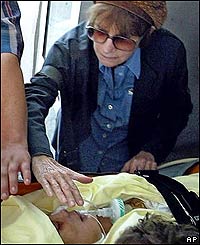
Transported to the University Emergency Hospital of Vilnius, Trintignant was diagnosed with grade 3 Glasgow Coma, total motor paralysis, and bilateral unreactive pupillary dilation. Neurosurgeons performed two emergency decompressive craniotomies—the second assisted by prominent Parisian neurosurgeon Dr. Stéphane Delajoux—failing to halt the catastrophic expansion of brain edema.
On July 31, 2003, Marie was medically evacuated aboard an air ambulance to Paris and admitted to the Hartmann Clinic in Neuilly-sur-Seine, where irreversible brain death was formally certified on August 1, 2003.
Forensic Findings (Paris Medico-Legal Institute)
The official autopsy report compiled by French state medical examiners established conclusive findings:
- Blow Count: Examiners documented at least nineteen distinct contusions and abrasions across the face, skull, ears, lips, neck, and upper limbs.
- Facial Fractures: Massive displacement and crushing of nasal bones, accompanied by bilateral periorbital hematomas ("raccoon eyes") caused by closed-fist blows and the heavy rings Cantat wore on his fingers.
- Mechanism of Brain Injury: Death was caused by acute traumatic cerebral edema generated by high-velocity facial impacts combined with violent manual rotational deceleration ("adult shaken impact syndrome"), which tore cortical bridging veins and induced uncal herniation.
- Exclusion of Accidental Fall: Forensic experts categorically dismissed the hypothesis of an accidental fall, emphasizing that the distribution, depth, and bilateral pattern of the trauma represented direct, repeated physical violence.
The Trial at Vilnius Regional Court (March 2004)
Despite diplomatic efforts by French authorities to extradite Cantat for trial in France, Lithuanian judicial authorities maintained territorial jurisdiction. Cantat remained in pre-trial detention at Vilnius's historic Lukiškės Prison.
The oral trial commenced on March 16, 2004, before a three-judge panel presided over by Judge Vladimiras Sergėjevas.
Prosecution Case
Prosecutor Ramutis Jancevičius and counsel for the Trintignant family (led by eminent French jurist Georges Kiejman) contended that Cantat carried out a lethal beating with full awareness of the potential consequences of his actions:
- They emphasized that the seven-hour delay in summoning emergency aid demonstrated callous indifference to Marie's survival while Cantat attempted to construct an exculpatory narrative.
- The prosecution sought a nine-year sentence under Article 129 of the Lithuanian Criminal Code for intentional homicide.
Defense Case
Cantat's defense team, comprising French attorney Olivier Metzner and Lithuanian advocate Virginijus Leonas Papirtis, argued for a conviction of involuntary manslaughter (manslaughter by negligence), which carried a statutory maximum of four years:
- Cantat expressed profound remorse before the court, stating: "I know the horror of what I did and accept moral responsibility, but I never intended to take her life. I loved Marie with all my heart; this was an uncontrollable tragedy that unfolded in a blind fury."
Judgment of March 29, 2004
The court delivered a calibrated verdict:
- Bertrand Cantat was found guilty of intentional homicide with indirect intent (dolus eventualis) and sentenced to eight years of imprisonment. The judges reasoned that while Cantat did not deliberately premeditate murder, any adult delivering multiple heavy blows to the head must anticipate the imminent risk of death and act with reckless indifference toward that outcome.
- Neither side appealed, rendering the conviction final.
Transfer to Muret, Parole, and Public Outcry (2004–2007)
After serving one year of his sentence at Lukiškės Prison—where Cantat performed an acoustic set in the prison courtyard for inmates and guards—his legal team secured his transfer to France under the Council of Europe Convention on the Transfer of Sentenced Persons.
On September 28, 2004, Cantat arrived in France and was incarcerated at the Muret Detention Center in Haute-Garonne:
- During his incarceration, Cantat maintained an exemplary disciplinary record and pursued university studies by correspondence.
- Concurrently, the surviving members of Noir Désir released the live album En public, with Cantat assigning all his royalties into a trust fund for Marie Trintignant's four sons.
Release on Parole in October 2007
On October 15, 2007, a Toulouse sentencing judge ordered Cantat's conditional release on parole upon serving exactly four years of his eight-year term (the statutory minimum).
The decision unleashed intense public debate across France:
- Nadine Trintignant, who had published her memoir Ma fille, Marie in late 2003, condemned the ruling, stating that the justice system trivialized fatal domestic violence against women.
- Under the strict terms of his parole, Cantat was forbidden from speaking publicly about the crime or making commercial references to the victim.
The Suicide of Kristina Rády and the Dissolution of Noir Désir (2010–Present)
Following his release, Cantat resided in Moustey (Les Landes). His former wife, Kristina Rády, who had testified in his defense during the trial, reconciled with him and they resumed living together.
However, on January 10, 2010, Kristina Rády committed suicide by hanging in their Bordeaux residence while Cantat slept in another room. In 2013, the publication of an agonizing voicemail recording left by Rády to her parents shortly before her death—describing Cantat as an intensely abusive partner who subjected her to persistent psychological terror and physical threats—re-ignited public scrutiny.
On November 30, 2010, lead guitarist Serge Teyssot-Gay resigned from Noir Désir citing irreconcilable musical and interpersonal differences, prompting drummer Denis Barthe to officially announce the permanent dissolution of the band.
Cantat's subsequent attempts to revive his musical career (through the project Détroit and his 2017 solo album Amor Fati) met with massive public boycotts, feminist demonstrations, and cancellations by festival organizers, cementing his position as a focal point in French society regarding accountability for violence against women.
Nominal Victims Register
| Victim Identity | Age | Profession / Relationship | Date of Attack | Date of Death | Medico-Legal Cause of Death |
|---|---|---|---|---|---|
| Marie Trintignant | 41 | French actress / Romantic partner | July 27, 2003 | August 1, 2003 | Acute traumatic brain injury and massive cerebral edema resulting from 19 blunt-force blows to face and skull combined with violent manual rotational shaking; displaced nasal fractures |