



Forensic & Criminological Matrix
| Parameter | Forensic Detail |
|---|---|
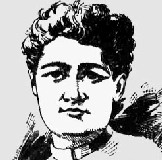
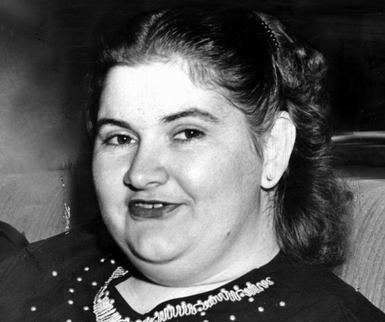
| Forensic Heading / Aliases | Lena Baker |
| Legal Identity | Lena Baker |
| Confirmed Victims | 1 (Ernest Knight) |
| Active Timeline | April 30, 1944 |
| Jurisdiction / Area of Operations | Cuthbert, Randolph County, Georgia, USA |
| Criminological Classification | Defensive homicide / Coercive control and racially segregated domestic violence context |
| Forensic Modus Operandi | Physical struggle resulting in firearm discharge (victim's own weapon) during captivity escape |
| Weapon / Mechanism of Death | Firearm (employer's pistol) / Contact or close-range gunshot wound to the head |
| Motive / Behavioral Dynamics | Escape from unlawful imprisonment, severe physical abuse, and death threats |
| Judicial Outcome | Capital murder conviction by all-white male jury (1944); execution via electric chair (1945); posthumous full and unconditional pardon (2005) |
1. Background and Psychopathy
Lena Baker was born on June 8, 1901, into a family of impoverished African American sharecroppers near Cuthbert, Randolph County, Georgia. Growing up amid extreme economic deprivation and structural racism in the Jim Crow-era American South, she labored intensely in cotton fields from an early age. Her youth and early adulthood were marked by severe financial insecurity, menial labor, and localized social ostracism linked to intermittent poverty and substance use coping mechanisms.
2. Crime Spree
In 1941, Baker was hired by Ernest Knight, a 67-year-old local farmer with a notorious reputation for brutality and aggression, to care for him following a leg injury. Over subsequent months, Knight subjected Baker to severe coercive control, utilizing alcohol as leverage to force her into a sexual relationship and holding her as a virtual captive. On April 30, 1944, after Baker attempted to permanently escape his confinement, Knight tracked her down, brought her back to his gristmill by force, and threatened to kill her if she tried to leave again. During the ensuing physical confrontation, Baker managed to gain possession of Knight's firearm, which discharged and caused a fatal head wound.
3. Investigation and Forensic Pursuit
Immediately following the fatal incident, Baker walked to the home of local coroner J.A. Cox to report that she had shot Knight during a struggle. Despite her cooperative demeanor and explicit disclosures regarding her prolonged captivity and death threats, local law enforcement approached the investigation through a lens heavily skewed by prevailing racial biases. The physical evidence at the gristmill and Knight's well-documented history of domestic violence were largely marginalized.
4. Trial and Judicial Proceedings
Baker's capital murder trial commenced on August 14, 1944, presided over by Judge William "Two Gun" Worrill before an all-white, all-male jury. The entire judicial proceeding concluded in a single afternoon. Her court-appointed defense counsel mounted a negligible defense and subsequently abandoned representation after filing an initial appeal. The jury deliberated briefly before returning a guilty verdict carrying a mandatory death sentence, completely disregarding her claims of self-defense against a brutal captor.
5. Psychiatric Evaluation and Outcome
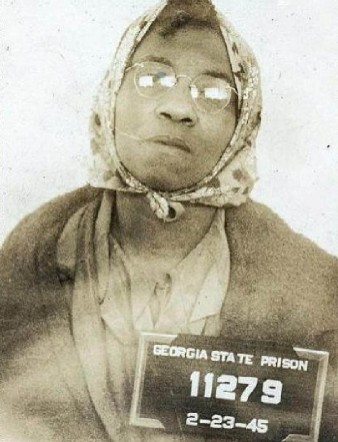
Transferred to the Georgia State Prison in Reidsville, Lena Baker faced her execution on March 5, 1945. She was put to death via electrocution in the chair known as "Old Sparky," remaining the only woman executed by the state of Georgia. Her final recorded statement before execution maintained her stance of self-defense and spiritual peace: "What I done, I did in self-defense, or I would have been killed myself... I am ready to meet my God." Initially interred in an unmarked grave, her case drew renewed scrutiny decades later through the dedicated efforts of her descendants and civil rights advocates. In August 2005, the Georgia Board of Pardons and Paroles granted her a full and unconditional pardon, formally acknowledging that the original 1944 verdict was a severe miscarriage of justice and stating that a manslaughter charge would have been far more appropriate.