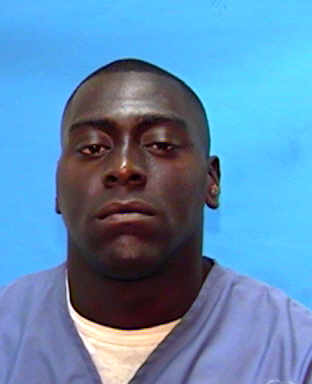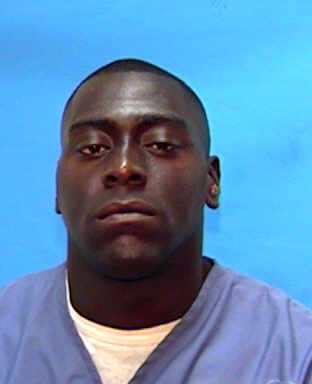





Forensic & Criminological Matrix
| Parameter | Forensic Detail |
|---|---|
| Forensic Heading / Aliases | The Woodward Corridor Killer, The Highland Park Strangler |
| Legal Identity | Benjamin Thomas Atkins |
| Confirmed Victims | 11 murdered (1 survivor identified) |
| Active Timeline | December 1991 – August 1992 |
| Jurisdiction / Area of Operations | Highland Park and Detroit, Michigan (United States) |
| Criminological Classification | Serial rapist-killer / Mission-oriented sexual predator |
| Forensic Modus Operandi | Approach along prostitution corridors, crack consumption, violent sexual assault, and manual strangulation in derelict buildings |
| Weapon / Mechanism of Death | Mechanical asphyxia by manual strangulation |
| Motive / Behavioral Dynamics | Misogynistic rage, extreme childhood trauma (sexual abuse and maternal prostitution exposure), severe crack addiction |
| Judicial Outcome | Sentenced to 11 consecutive life terms without parole in April 1994. Died in custody from AIDS-related complications in September 1997 |
1. Background and Profile
Benjamin Thomas Atkins was born on August 26, 1968, into an environment defined by severe neglect and institutional instability. He spent much of his youth moving through group homes and juvenile detention facilities. His psychological development was profoundly distorted by witnessing his mother perform commercial sex work in the front seats of vehicles while he was kept in the back seat.
At the age of ten, Atkins suffered repeated sexual abuse by a caseworker assigned to his care. This profound childhood trauma, coupled with an early and severe addiction to crack cocaine, fostered a virulent antisocial personality marked by deep-seated misogyny. Prior to his murder spree, Atkins worked sporadically as a pizza cook while living a transient lifestyle along the urban periphery of Detroit and Highland Park.
2. Crime Spree and Modus Operandi
Between December 1991 and August 1992, Atkins executed one of the most compressed serial murder sprees in modern American history, taking the lives of 11 women over nine months. His primary hunting ground was the Woodward Avenue corridor, an urban zone heavily impacted by economic decay and drug abuse.
His criminal methodology was consistent:
- Targeting: He approached vulnerable women engaged in survival sex work or suffering from drug addiction, offering them narcotics or money.
- Relocation: He led his victims into abandoned, secluded structures—such as the abandoned Monterey Motel, where three bodies were discovered on a single day in February 1992—or buildings scheduled for demolition.
- Sexual Assault and Asphyxiation: After ingesting crack or subduing his victims, he committed severe sexual assault before strangling them to death. In subsequent statements to homicide detectives, Atkins expressed a profound hatred for women as his primary psychological driver, adding that he killed his victims to eliminate witnesses.
3. Investigation and Task Force Operations
The discovery of multiple bodies hidden in derelict buildings prompted the formation of a joint task force comprising the Highland Park Police Department, the Detroit Police Department, the Michigan State Police, and the FBI.
The critical breakthrough occurred through the testimony of Darlene Saunders, a 35-year-old woman who survived a brutal assault and attempted murder by Atkins in October 1991. Saunders provided investigators with a detailed physical description of her attacker, whom she knew by his street name, "Tony."
In August 1992, task force detectives conducted covert patrols along Woodward Avenue with Saunders inside an unmarked vehicle. Saunders spotted Atkins walking along the street, allowing officers to make an immediate arrest on aggravated sexual assault charges.
4. Legal Proceedings and Outcome
During initial interrogations, Atkins attempted to deny involvement by claiming his homosexuality precluded any interest in female victims. However, Detroit Homicide Sergeant Ronald Sanders established psychological rapport with Atkins, encouraging him to unburden himself.
Over a 12-hour interrogation, Atkins confessed to all 11 homicides, providing specific details regarding crime scenes and pointing officers to an unrecovered victim buried in a secret basement beneath a vacant garage. He demonstrated no remorse for his actions.
Atkins stood trial in Detroit Recorder's Court. In April 1994, despite defense efforts to present mitigating evidence regarding his horrific childhood, the jury found him guilty on all counts. He was sentenced to 11 consecutive life sentences without the possibility of parole.
5. Psychiatric Evaluation and Death in Custody
Forensic psychiatric evaluations categorized Atkins as an antisocial personality with severe psychopathic and sadosexual traits. His lethal fixation on sex workers served as a displacement mechanism for underlying rage directed toward his maternal figure and past abusers.
On September 17, 1997, four years into his life sentences, Benjamin Thomas Atkins died at age 29 at Duane Waters Hospital inside the Egeler Correctional Facility in Jackson, Michigan, due to complications from HIV/AIDS. His death rendered all pending judicial appeals moot.